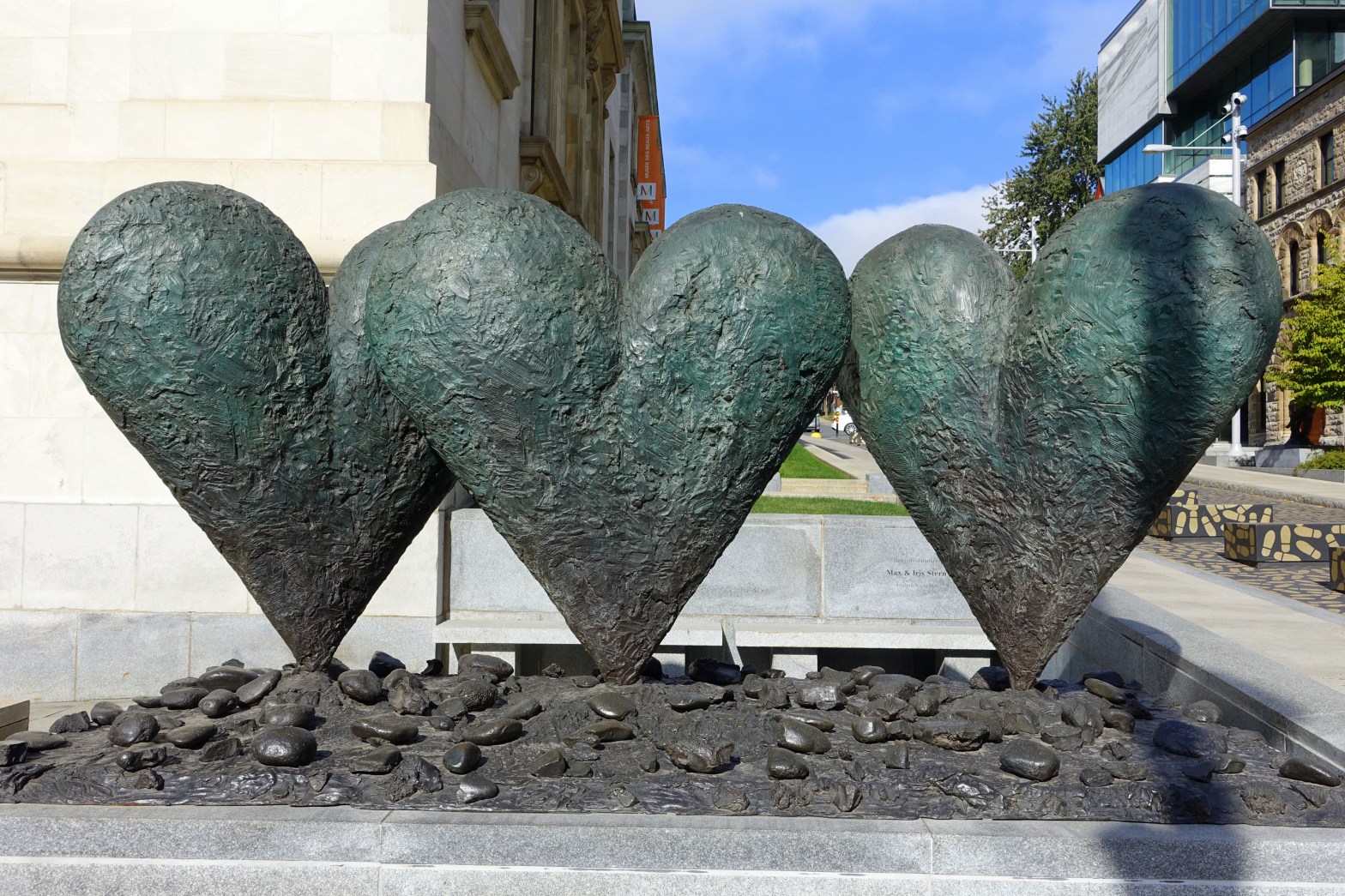
“Some say the heart is just like a wheel
When you bend it, you can’t mend it
And my love for you is like a sinking ship
And my heart is on that ship out in mid-ocean”
This is the first verse of a song by the French-Canadian Duo, Kate and Anna Mcgarrigle. For me, it sums up perfectly the human need to use the heart as a metaphor for love, pain and human connection. The song epitomises the emotion that we all recognise as ‘heartache’, a condition that many of us experience during our lifetime.
This is the story of the heart, both as an amazing engine developed over millions of years of evolution, but also the heart as a a universal metaphor for the human condition in all cultures, through religion, spirituality, philosophy, art and literature. The heart appears at the centre of all human endeavour.
We use the heart to measure our emotional temperature. There are hundreds of phrases employing the heart as a metaphor for our deepest emotions. Some of the most common examples are ‘heart of stone’ ‘following your heart’ ‘change of heart’ ‘heart of gold’ ‘wears his heart on a sleeve’ ‘take heart’ ‘heartless’ ‘
All life is there, the good, the bad and quite often the ugly. The ways of the heart are myriad. No other organ in the human body evokes such passion, the brain is a cold and calculating instrument, compared to the heart.
The human heart is a wondrous instrument, a pump like no other on earth. It beats 100,000 times every day, pumping a massive 2,000 gallons of blood round the body, 5 litres of blood a minute as it transports life giving oxygen to the body’s vital organs, sustaining the life of its host.
It never ceases its work, second after second, hour after hour, day after day, during our lifetime, until one day it suddenly stops and the long adventure is over.
We never give it a second thought, as we carry on with our busy lives. Or we don’t, until something happens that causes this wonderful organ to malfunction and it starts to fail.
This is not just an academic essay; for me it is intensely personal, as I have recently been diagnosed with a serious heart condition. I had previously spent all of my life, hardly giving a second thought about the heart and how this magical pump was keeping me alive, night and day. Suddenly, I was confronted with my own mortality, a victim to the whims and caprices of a failing heart, save only for a cocktail of drugs, limiting the damage, and hopefully saving my life for a considerable time to come.
Being in this situation, I decided it was time that I learnt a bit more about the heart, both in its inner anatomical and scientific workings, but also in its use, since the dawn of humanity, as a metaphor for the human condition and man’s deepest emotions. It remains a powerful symbol, even in our cynical modern world and I needed to get to the heart of the matter.
Early man had a cardiocentric view of life, believing that the heart, not the brain, was the most important organ in the body, literally at the centre of every human, the fountain of life and the seat of all emotions. This is where the eternal soul resided. This obsession with the heart started 6,000 years ago in what is now regarded as the cradle of civilisation in ancient Mesopotamia, lying between the rivers Euphrates and Tigris, in what is now modern day Iraq.
A few thousand years later, in Ancient Egypt, it was believed that after death, a ritual known as ‘The Weighing of the Heart’ would be carried out to determine the fate of the deceased individual in the afterlife.
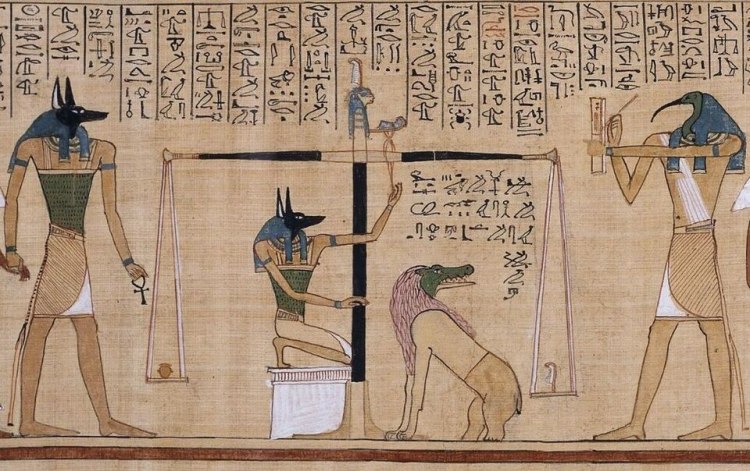
In the above scene, the heart is being weighed on the scale against the feather of truth, by the jackal-headed ‘Anubis’. The ibis-headed ‘Thoth’, scribe of the gods, records the result. If his heart is lighter than the feather, due to his good deeds in life, he is allowed to pass into the afterlife, while awaiting rebirth. If not, he is eaten by the waiting ‘Ammit’, hereby permanently destroying the soul of the deceased.
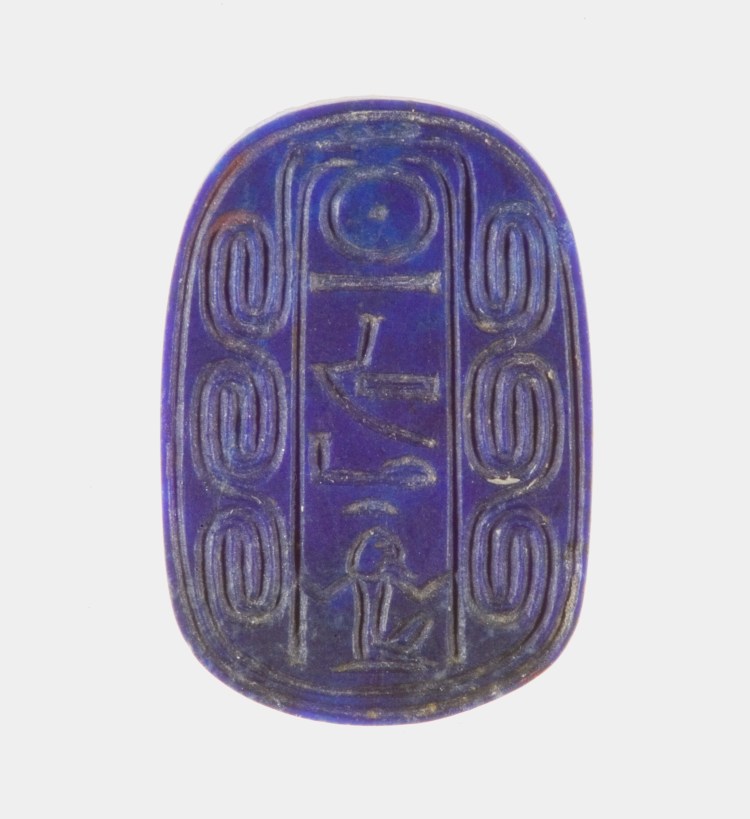
As a result, ancient Egyptians were highly focused on protecting the heart after death. Although all other organs were removed from the body during the mummification process, the heart was kept in the body, but given extra protection, by placing amulets or beetle shaped scarabs, inscribed with spells, above the mummy’s chest, in preparation for the weighing ceremony. I find the Scarab below in Lapis Lazuli intensely beautiful and moving, and it is not difficult to imagine the belief, that this powerful object could protect the soul of the deceased in the afterlife.
The famous Greek Physician, Galen, who flourished in the pre-Christian Rome came up with many revolutionary ideas that influenced medicine for centuries, some even to this day. However, his hypothesis about the workings of the heart, were totally wrong (he regarded the heart as a type of furnace, with the purpose of the heart to warm the blood), but due to his disproportionate influence on Western medical science, his views persisted for the next 1500 years.
It was during this long period of time that the heart developed into the metaphor for humanity, encompassing all our hopes and fears, a vessel for the expression of all our emotions, good or bad. In medieval culture, the heart shape that we know today first began to appear. In his fascinating book, “Heart: A History” Sandeep Jauhar writes:-
“The ❤️ shape, called a cardioid is common in nature. It appears in leaves, flowers and seeds many plants, including silphium, which was used for birth control in the early Middle Ages and may be the reason why the heart became associated with sex and romantic love…”
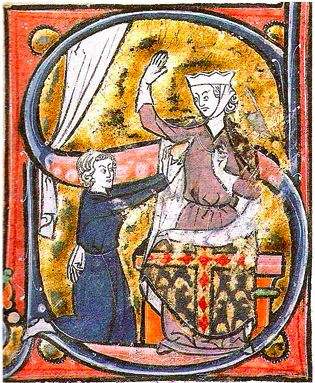
One of the earliest visual descriptions of a heart symbol, can be found in a manuscript from the 13th century, entitled the “Roman de la poire”. As the title implies, the so called heart, resembles nothing more than a pear. This is, however, the first instance of a lover giving his heart away. It is one of the most potent symbols to this day, to ‘give your heart to someone’ is to offer your whole being to that person.
It wasn’t until the Renaissance, that the medical view of the heart as hypothesised by Galen began to change. It began with the greatest genius of the High Renaissance, Leonardo da Vinci, painter, draughtsman, engineer, scientist, theorist, sculptor, and architect and much more. Leonardo’s detailed anatomical sketches of human and animal hearts in the early 1500’s, show for the first time, in great detail, that the heart is a pump with four distinct chambers, and he discovered how cardiac valves function, describing for the first time how the heart muscles create a swirling vortex of blood.
None of his conclusions about the heart were published in his lifetime and did not come to light until over two centuries after his death. Further information about Leonardo’s fascinating discoveries about the heart can be found in a BBC article entitled “What Leonardo taught us about the heart”
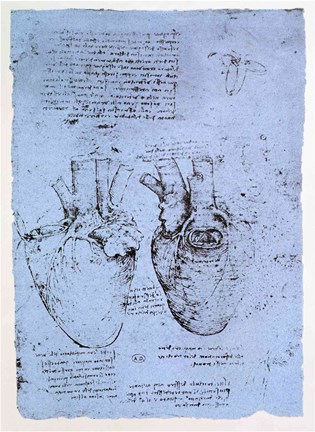
However, it was not until about century after Leonardo’s wonderful anatomical drawings, that Galen’s theory about the workings of the heart were eventually overturned, by a brilliant English anatomist called William Harvey, who published his conclusions in 1628 that the heart is a pump causing blood to circulate continuously around the body in a closed circuit. This paved the way for all later scientific and medical developments.
It is inevitable that all the great religions should feature the heart as a central motif in their belief system. It is no surprise that Christianity contains some of the most vivid and sometimes shocking imagery. The Sacred Heart of Jesus is a Catholic devotion, using the heart of Jesus as a symbol of God’s love. The heart of Jesus is depicted as a bleeding and flaming heart often pierced with an arrow, flowing with blood, as in this card below.
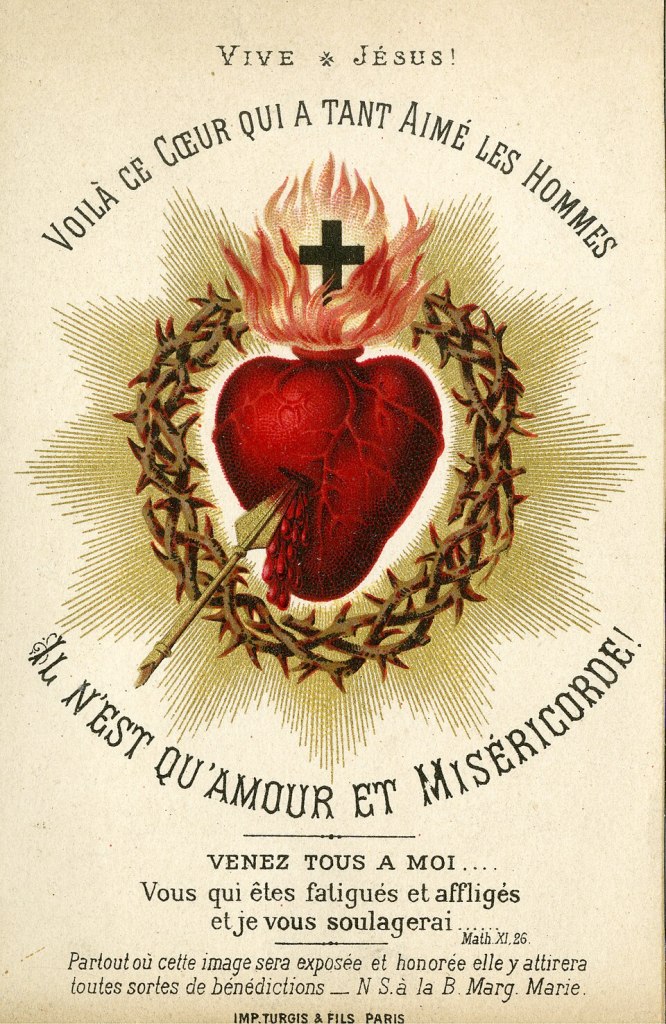
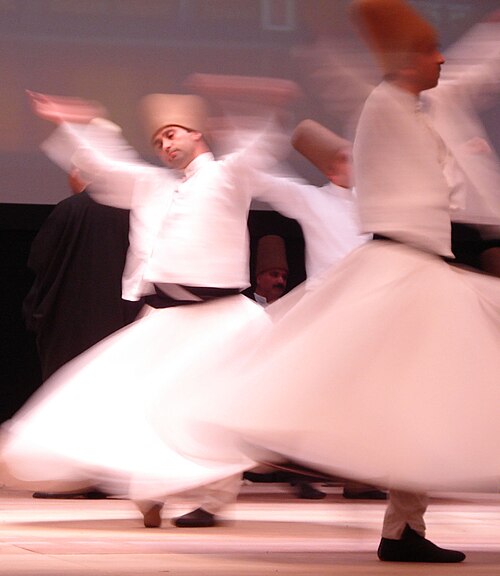
I must admit that the type of imagery above makes me feel slightly queasy. I am not a particularly religious person, but I am much more attracted to the Sufi tradition, where the heart is seen as the spiritual centre of being, a gateway to the divine. In their whirling dances, seen below, Sufis use this type of meditation to draw closer to God.
No discussion of the heart can be complete without reference to the world’s greatest playwright, William Shakespeare. The heart is mentioned by Shakespeare approximately 1000 times in his plays and sonnets. Many of the common phrases in use today about the heart first originated in a Shakespeare play
That strange expression ” To wear your heart on your sleeve” meaning to show your true feelings and emotions openly for everyone to see, rather than hiding them inside, can first be found in print, in Shakespeare’s Othello, where the villain Iago says “But I will wear my heart upon my sleeve for daws to peck at: I am not what I am.” Iago is suggesting that it is dangerous to show ones true self to the world and he would rather be deceitful than weak. Today, this expression has a much more positive connotation, and most people would take it as a compliment that you are open about your feelings.
In the second half of the 20th century there have been enormous strides made in the treatment of heart disease from stents for coronary artery disease, wonder medications and electrical devices to treat heart failure and ultimately, in the worst cases, heart transplants. For people interested in the grisly history of these heart innovations, I would recommend, once again, “Heart: A History” by Sandeep Jauhar.
In this book there are incredible tales of experimentation, people who pushed the boundaries of medical research and science through fearless trial and error. What I took away, mostly, from this book was that many of the early Cardiologists who carried out ‘cutting edge’ research (no pun intended), often on themselves, were unbelievable risk takers and in some cases, I would argue, of questionable sanity. I trust that the Cardiologists working today are rather more measured when dealing with their patients.
Of course, we have always known instinctively that the heart was not just a machine, pumping blood round the body like an automaton. Humans have always known somehow, that our emotions were the key to understanding of how the heart functions. Sandeep Jauhar writes that:
“Over the years I have learned that the proper care of my patients depends on trying to understand (or at least recognise) their emotional states, stresses, worries and fears. There is no other way to practice heart medicine. For even if the heart is not the seat of the emotions, it is highly responsive to them. In this sense, a record of our emotional life is written on our hearts. Fear and grief, for example, can cause profound myocardial injury. The nerves that control unconscious processes, such as the heartbeat, can sense distress and trigger a maladaptive fight-or-flight response that signals blood vessels to constrict, the heart to gallop, and blood pressure to rise, resulting in damage.
In other words, it is increasingly clear that the biological heart is extraordinarily sensitive to our emotional system. – to the metaphorical heart, if you will.”
So I feel myself privileged and lucky to have been born in an age of great innovation, in the treatment of heart disease. What a few years ago would have been a death sentence, is now a manageable condition, albeit requiring a few adjustments to my lifestyle and acceptance of my limitations.
When I was recently diagnosed with Heart Failure, I was first of all shocked, but after recovering from the diagnosis, I was not particularly surprised. For over 50 years, I have lived in the shadow of my Father’s early death, in 1969, from coronary heart disease. He suffered a heart attack, which took him to Hospital, but what actually killed him was probably a cardiac arrest a few days later. If this had happened today, he might have lived for many more years.
In conclusion, I must listen to what my heart is telling me. After many years of ignoring this vital organ, I must learn to understand how it works, to be its friend and partner, and work with it for both of our futures. In the words of Rumi, that great 13th century Sufi mystic and poet:
“Your heart knows the way. Run in that direction.”
Notes
1 Cover picture – Three Hearts on a Rock, by Jim Dine, 2002, bronze – Montreal Museum of Fine Arts – Montreal, Canada
2 Heart a History – Sandeep Jauhar – published by Oneworld Publications Ltd. 2018


Wonderful and moving John. Keep writing with such heart for a long time to come
LikeLike