Featured

Painting in Wool

The Extraordinary Life of John Craske
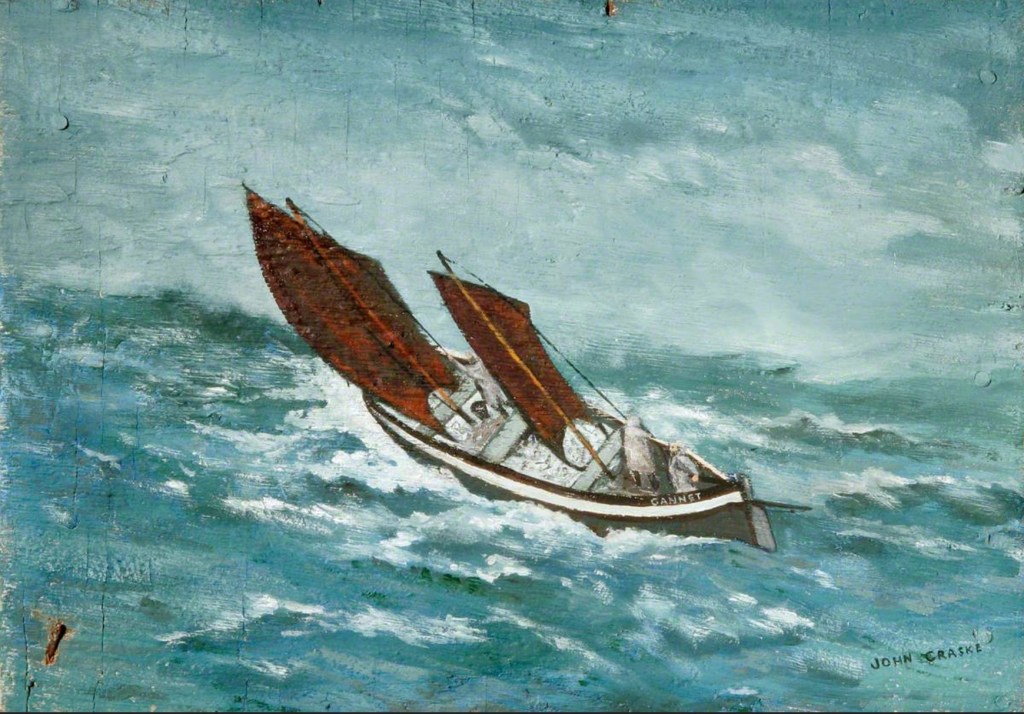
One of John Craske’s first paintings, painted on the lid of a bait box (Courtesy of Sheringham Museum)

As he fell in and out of conscious, John dreamt of the sea, he remembered his life on the Sheringham fishing boats, the hard lads with their salty language and humour, the sheer pleasure of the wind and rain against his face, it was the best life he had ever had and the only time that life was worth living. These times were now over and, maybe, he felt his own life was also over. But he kept a kernel of hope, deep in his unconscious, and that seed flowered and became a means of survival, a solace and a thing of beauty.

I have been visiting Sheringham on a regular basis for more years than I care to remember, from the time my parents moved to the area in the 1990s. But, much to my shame, it is only recently that the name John Craske has come to my notice. But since then, I have learnt more and more about this fisherman, who turned to art in tragic circumstances, as a means of recovery and survival, producing marvellous pictures of the sea, both in watercolours and then embroideries, when his already fragile health began failing him.

Sometimes people are born in the wrong place at the wrong time. In 1928, renowned artists Ben Nicholson and Christopher Wood walked past a small fisherman’s cottage in St. Ives, and spied a retired fisherman Alfred Wallace painting seascapes by the hundreds, to escape his loneliness, following the death of his wife. Wallace became well known through his association with the St. Ives artists and his work is now famous throughout the world. Replace Alfred Wallace with John Craske and the story might have been totally different.

As a result, the work of John Craske is almost unknown and it is only in more recent years that his star has started to rise, following the publication of ‘Threads’ by Julia Blackburn, a beautiful book restoring Craske’s reputation as a truly underrated ‘Outsider’ artist, whose work should be more widely known and appreciated.

John Craske was born in Sheringham in 1881 from an established fishing family in the town. The Craske family had been fishermen in Sheringham for as many generations as people could remember, it’s what they did. By the time he was 14, John was out on the boats in all weathers, facing the might of the North Sea, a deep sea fisherman.

This early picture of John, shows a rather sensitive young man, perhaps not cut out to be a fisherman.

Photo of a very young John Craske

The Norfolk singer Harry Cox was born in 1881, the same year as John Craske and this old Norfolk folk song ‘Windy Old Weather’ recorded by the Folklorist Alan Lomax, gives you a feel of what it was like working on the fishing boats, in all weathers. John may well have heard, and even sang, this popular Norfolk song, while on board one of these trawlers.

“It was stormy old weather, windy old weather, 
When the wind blows, we all pull together.”

A group of Sheringham Fisherman from the early 20th Century

At the beginning of the 20th century, times were becoming increasingly tough for the Sheringham fishermen, due to the increase in tourism in the town, and for a few years the Craske family moved up to Grimsby, where the fishing was better. However, in 1905, the Craskes did the unthinkable, they bowed to the inevitable and moved inland to Dereham, where they became fishmongers, eventually opening a shop in Dereham.

In Dereham, John met Laura, his life companion, and after they were married, John ran a business travelling round Norfolk, selling fresh fish to the local community, from his pony. He worked long hours, to make ends meet and his health started to suffer, as he had always been somewhat frail.

It is ironic that according to sources, the surname Craske, which is of pure East Anglian origin, supposedly derives from the Latin “Crassus”, meaning “one who is hale & hearty, in good health and spirits”. That description certainly did not apply to poor John Craske.

However, it was the First World War that did for him. Towards the end of the war he was ‘passed fit to fight’, but within a short time he contracted influenza, which resulted in a state of collapse from which he never properly recovered. During this first period of total stupor and insensibility, he was sent to an asylum in Norwich, but eventually it was felt he could be discharged and be cared for by his family. He was initially diagnosed with a brain abscess, but with no real evidence to back this up.

But what was he actually suffering from? According to accounts, he had long periods of total insensibility where he lay in a ‘stupor’, semi conscious and unable to speak, from which he would then awake to a type of semi-normality. There have been all kinds of theories from a type of brain tumour or the effects of diabetes, which he did indeed suffer from later in life.

There is no doubt, however, that he suffered various symptoms for the rest of his life and had to be constantly nursed and protected from the world by his devoted wife Laura. In the aftermath of the Covid epidemic, some of the symptoms appear strikingly similar to some forms of Long Covid, together with the connection between his bout of influenza and his subsequent debilitating tiredness and weakness, which also show similarities to serious recorded cases of ME/CFS (Myalgic encephalomyelitis or chronic fatigue syndrome).

Following the death of his Dad in 1920, John had a further relapse and was mostly confined to a wheelchair. Laura decided to improve his spirits by moving to coast at Blakeney for several months, where they borrowed a small boat from a friend and they went sailing together in the relatively calm waters of the Blakeney estuary. This greatly improved his health and when he returned home, Laura bought him some paint and encouraged him to start making pictures, to remind him of the sea.

Estuary at Blakeney, 2015 (Photo by John Bostock)

Again, over the next few years, his health deteriorated again and, in 1929, when he became confined to his bed for long periods of time, he started sewing using a frame made up from an old deckchair. This was the start of a new stage in his life as an artist.

John Craske might have disappeared into total obscurity, only known by his immediate family, but for a chance encounter with a well known poet, Valentine Ackland who visited him at the end of the 1920s after buying a model boat made by him. She became entranced by his paintings. And introduced the Craskes to her lover, the well known novelist Sylvia Townsend Warner, who opened many doors for John Craske, leading to a number of exhibitions in London and New York. Later in her life Warner donated a number of paintings to her friend, the singer Peter Pears, who greatly admired the works and they are now in the hands of the Britten Pears Foundation at the Red House Museum in Aldeburgh.

This brief period of fame did not last long and the life and work of John Craske once again faded into relative obscurity, until a new generation of admirers, including Julia Blackburn, in her biography, Threads, began raising the profile of this fisherman artist, in the 21st century.

On a recent trip to Sheringham, I was determined to make up for all those years of ignoring John Craske and I wanted to see as many Craske artworks as I could. My first stop was Sheringham Museum. I was not disappointed, on the first floor there is a corner dedicated to John Craske, with many of his early watercolours and a number of his embroideries, most of which have been donated by his relatives.
John Craske ( Courtesy of Sheringham Museum)

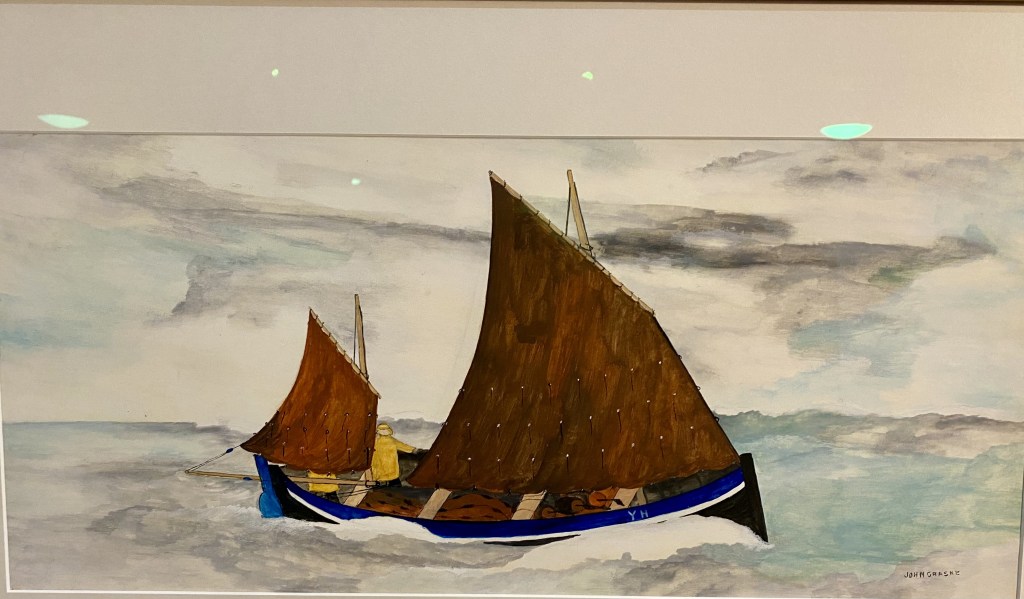
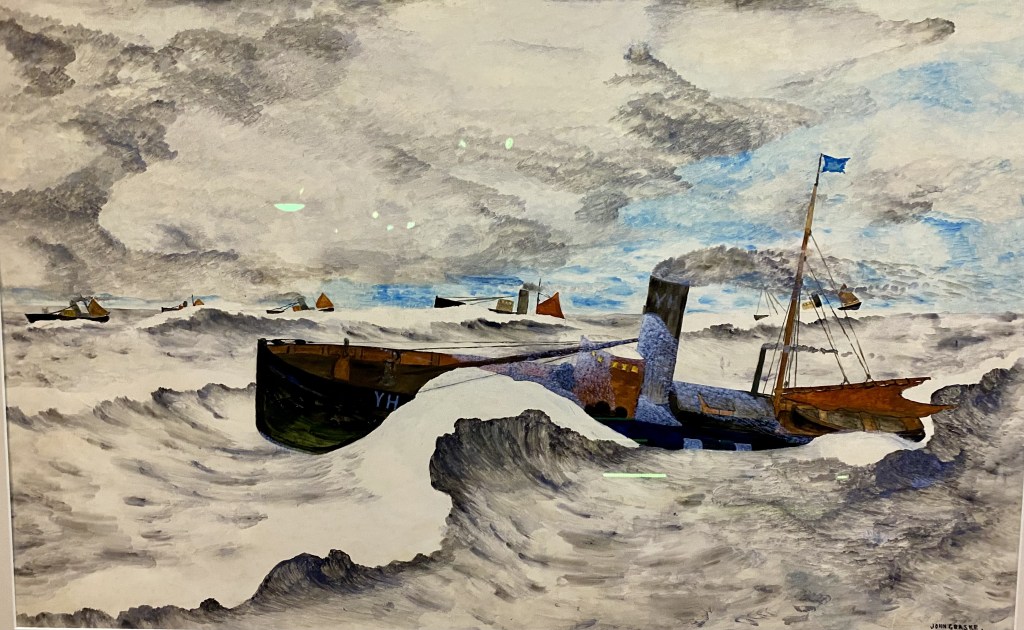
Looking at all this material in one place is very enlightening, the early sea paintings, in a limited colour palette, are very moving and give an incredible feel of how it feels to be out in rough seas, with the pitching and tossing of the waves. It is difficult to believe that Craske was a totally self taught artist, together the extraordinary fact that these paintings are based purely on his memories of being at sea.

There are also the embroideries, which are totally unique. There is a long tradition of sewing by Fishermen, after all they made and repaired the nets that they used to ply their trade. And there is also a tradition of embroideries by fishermen, normally of boats, which generally fall into the category of folk art. But John Craske’s work is on a totally different level. The work below is called ‘Smile at the Storm’ showing a lighthouse and a lifeboat rescuing a sailor in stormy seas. Craske creates an incredible feel for the rough seas, by his use of stitching, building up the waves to create almost a 3D image.

Smile at the Storm – John Craske (Courtesy of Sheringham Museum)

His wife Laura wrote about this embroidery:-

“That picture is hanging in the front room. It is a tempest at sea and there is lightening in the sky, and a wreck, and a lifeboat with one man saved. And John put on it ‘With Christ in the vessel we’ll smile at the storm’. I never look at that picture but that I live that scene over again”

Detail of Boat from ‘Smile at the Storm’, showing the ship pitching and rolling in the storm (Courtesy of Sheringham Museum)

I was also greatly taken by ‘Basket of Fish’ an allegorical picture showing the reliance on fishing for the survival of the coastal community.

‘Basket of Fish’ – John Craske (Courtesy of Sheringham Museum)

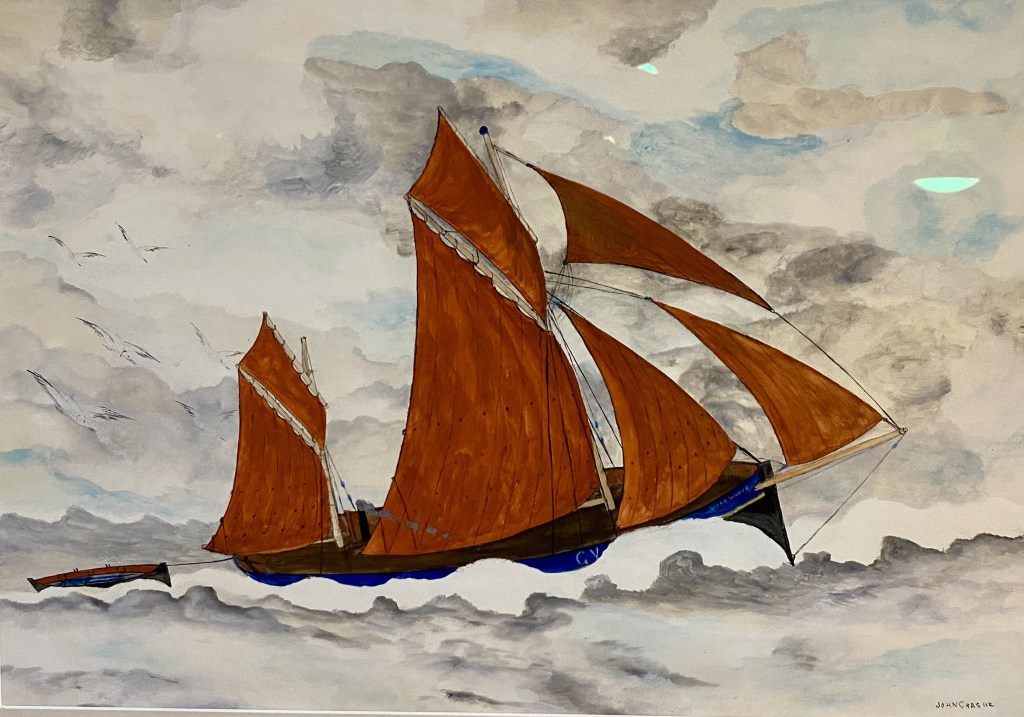
There are also a couple of Craskes on display at the the Glandford Shell Museum near Blakeney. The Shell museum is unlike any other museum, you’ll ever find. Housed in a lovely old Norfolk building, it has, as you would expect shells by the thousand, but also many other items of interest, including fossils, archeological finds and much more, a true museum of curiosities. And, of course there are the Craskes. There is a lovely watercolour of a schooner listing in heavy seas, and a stunning panoramic embroidery of the coast, bringing to life, from John’s memory, the time that he had spent sailing there after his illness. A true Tour De Force.
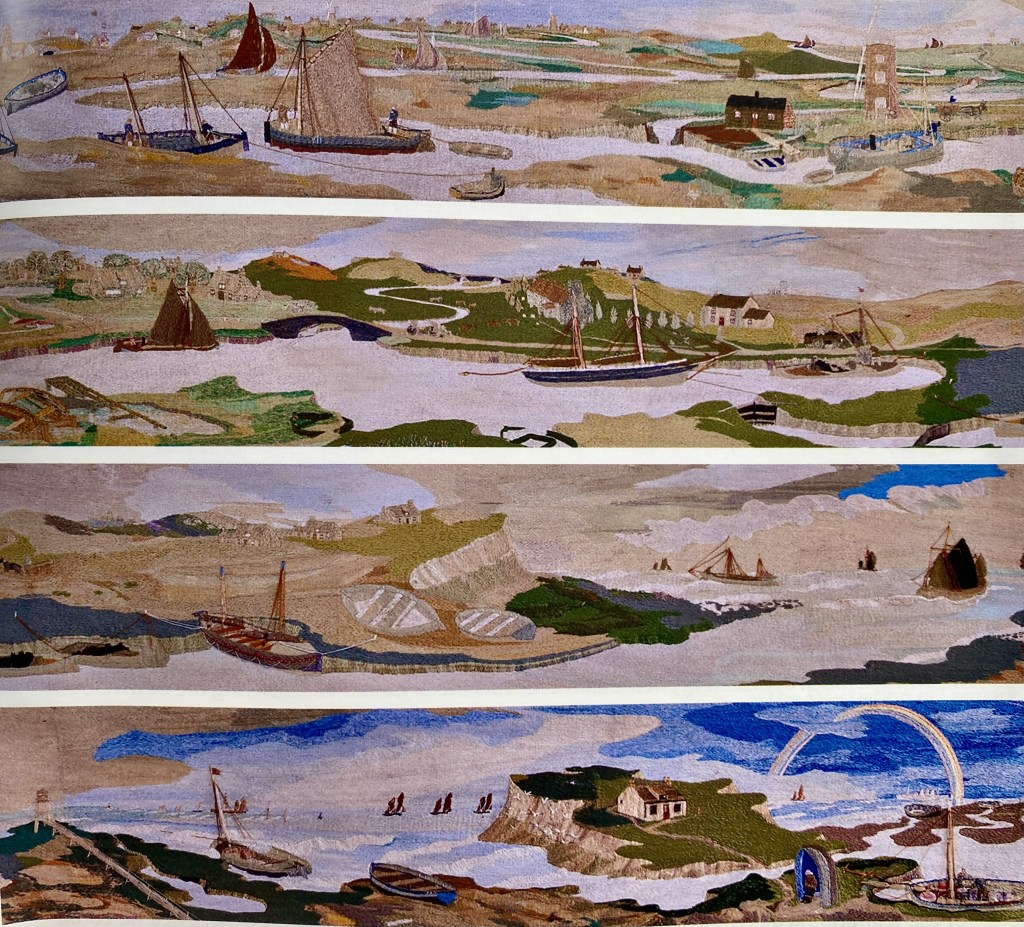
Panorama of the North Norfolk Coast (Courtesy of Glandford Shell Museum)

Even more extraordinary, was an embroidery which Craske was working on towards the end of his life between 1940 and 1943 depicting the retreat at Dunkirk. This monumental work, a modern day Bayeux tapestry, based purely on radio reports and photographs, shows a world of mayhem and terror as men queued up on the beaches to be rescued. Craske had moved from depictions of life at sea into a mythic realm and had become a storyteller in wool. This work was unfinished when he died and is now in the possession of Norwich Museum.
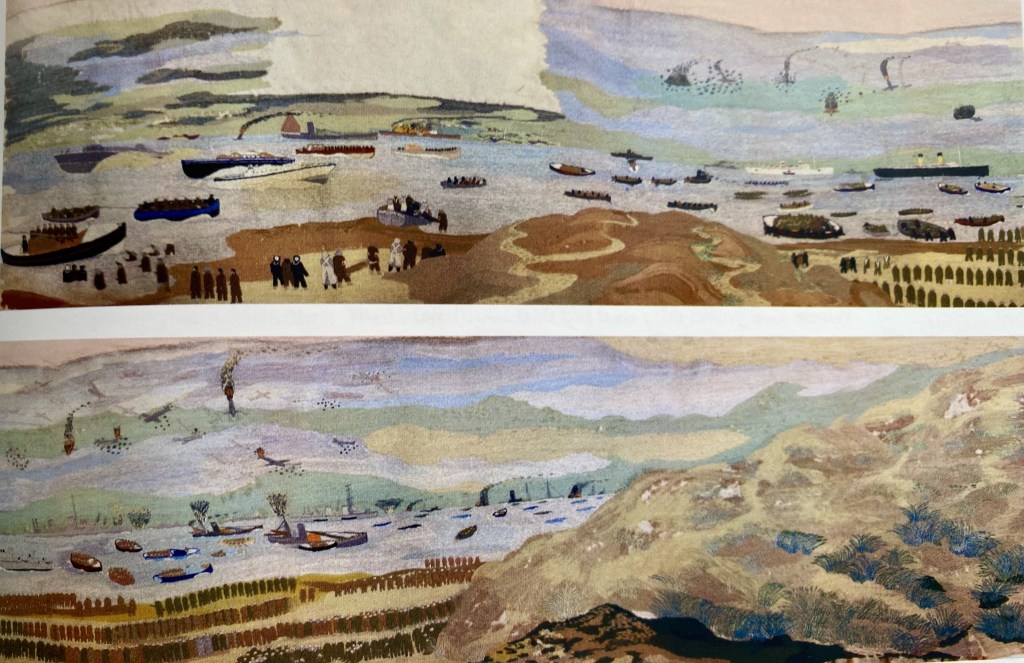
The Evacuation of Dunkirk (Courtesy of Norwich museum)

On my last evening in Sheringham, I walked down to the seafront and looked at the handful of fishing boats that remain, a sad reminder of a once thriving industry with over 200 boats. I compared it to my home town of Hastings, which still has a thriving fishing fleet, home to the largest beach-launched fishing fleet in Europe and meditated on how fortunes rise and fall.
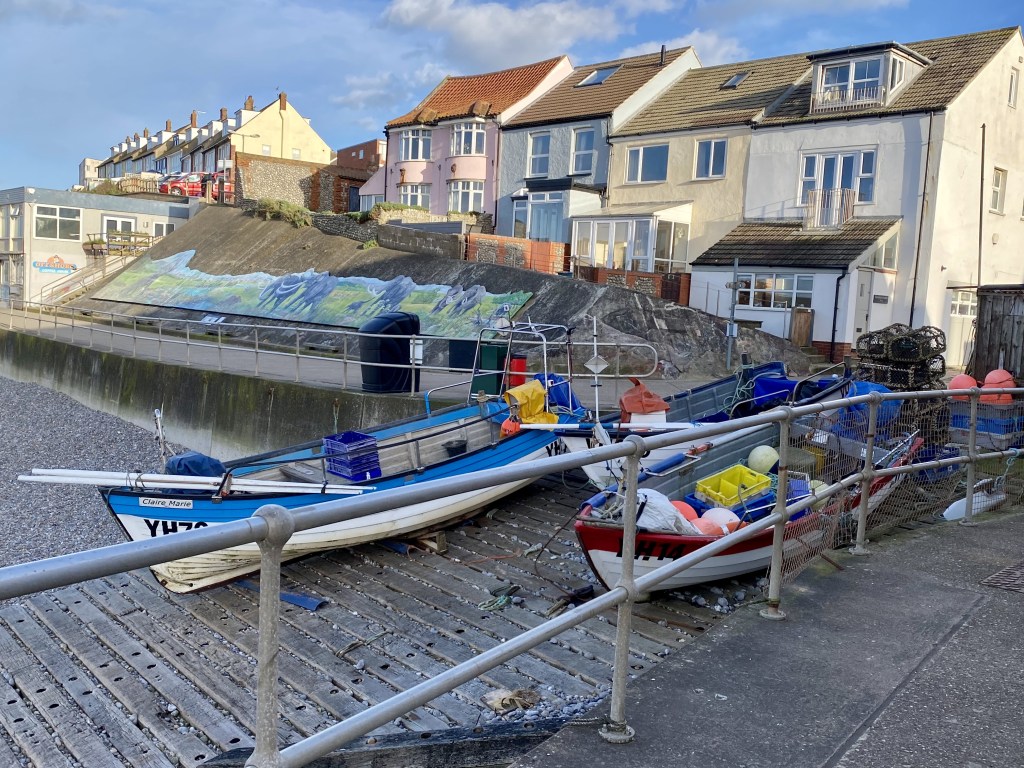
The remnants of Sheringham’s fishing fleet – April 2024 (photo John Bostock)

I tried to imagine Sheringham at the turn of the 20th century, the world in which John Craske lived, full of tough, hardy and rugged men. Although, he loved the sea as much as life itself, John was perhaps too delicate a soul for the things that life threw at him and he spent the rest of his life, living inside his head, reliving his time at sea through paint and embroidery. But he was also nothing, without the love and support of Laura, who nursed him uncomplainingly during every downturn.

Painting and Embroidering was an existential need for John Craske, giving him a meaning for his frail life. His heroic life needs to be recognised, not just in East Anglia, but in the wider artistic community, a true original and worthy companion to that other great fisherman artist, Alfred Wallace.
Featured

Rye and Romney Marsh: Landscape of Mystery

There are some areas of the country, which appear as though they’ve been there forever. Rye and it’s surrounding area in the South of England, feels such a place, unchanged for a 1000 years. Of course, this is just an illusion, as the town and the surrounding landscape have always been in a state of flux.

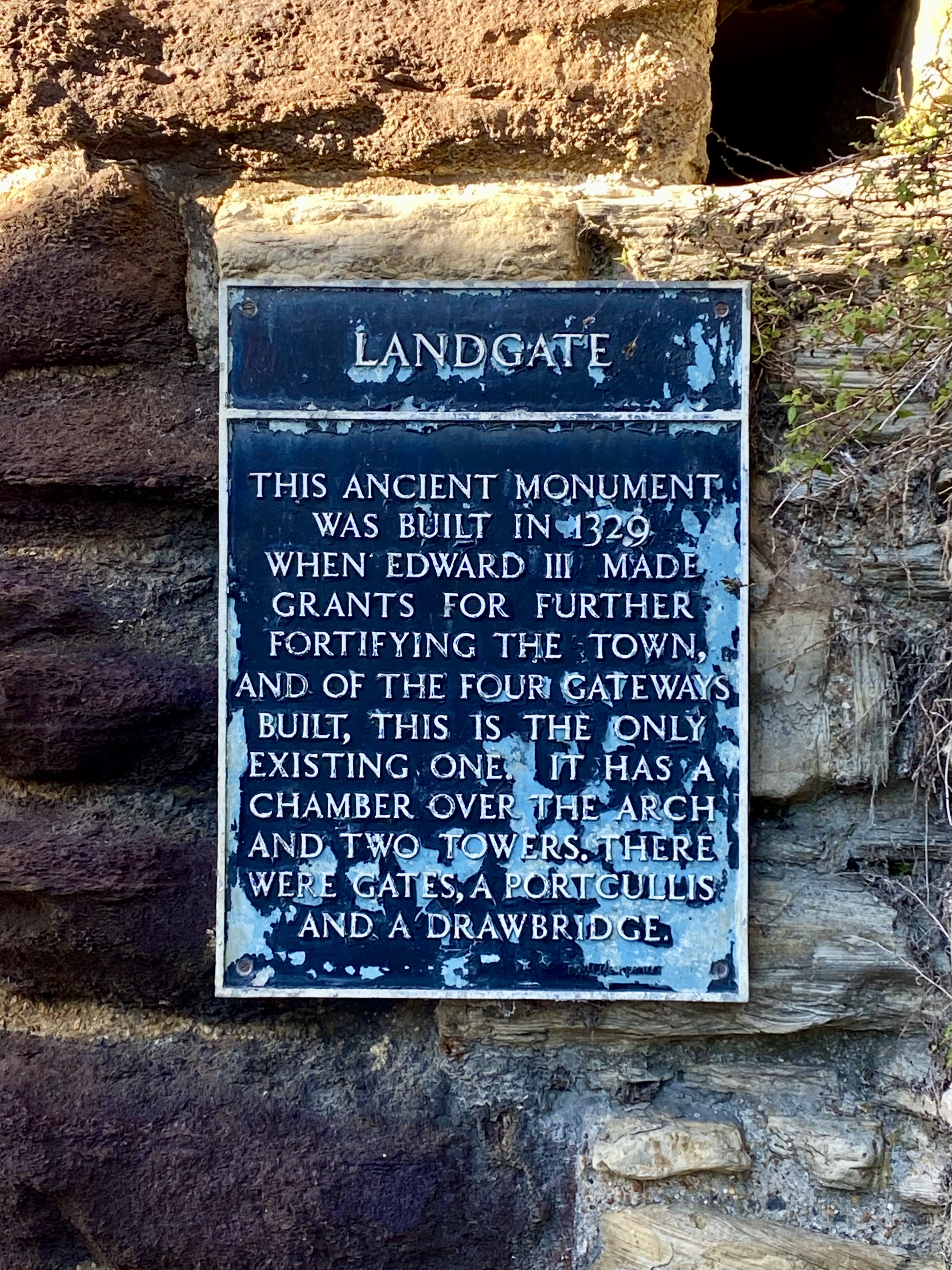
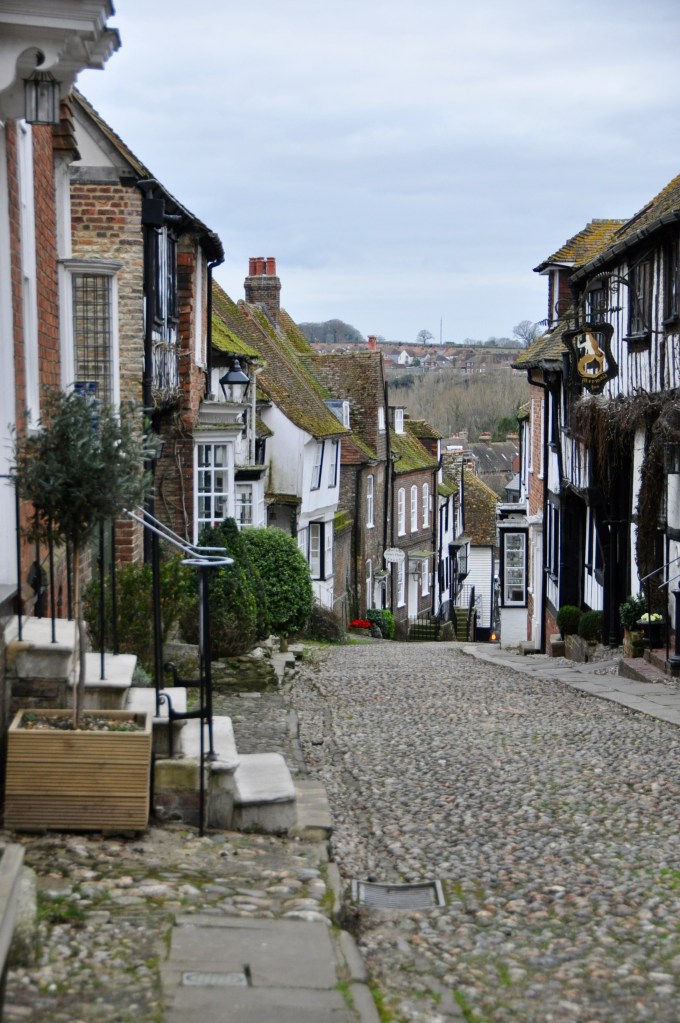
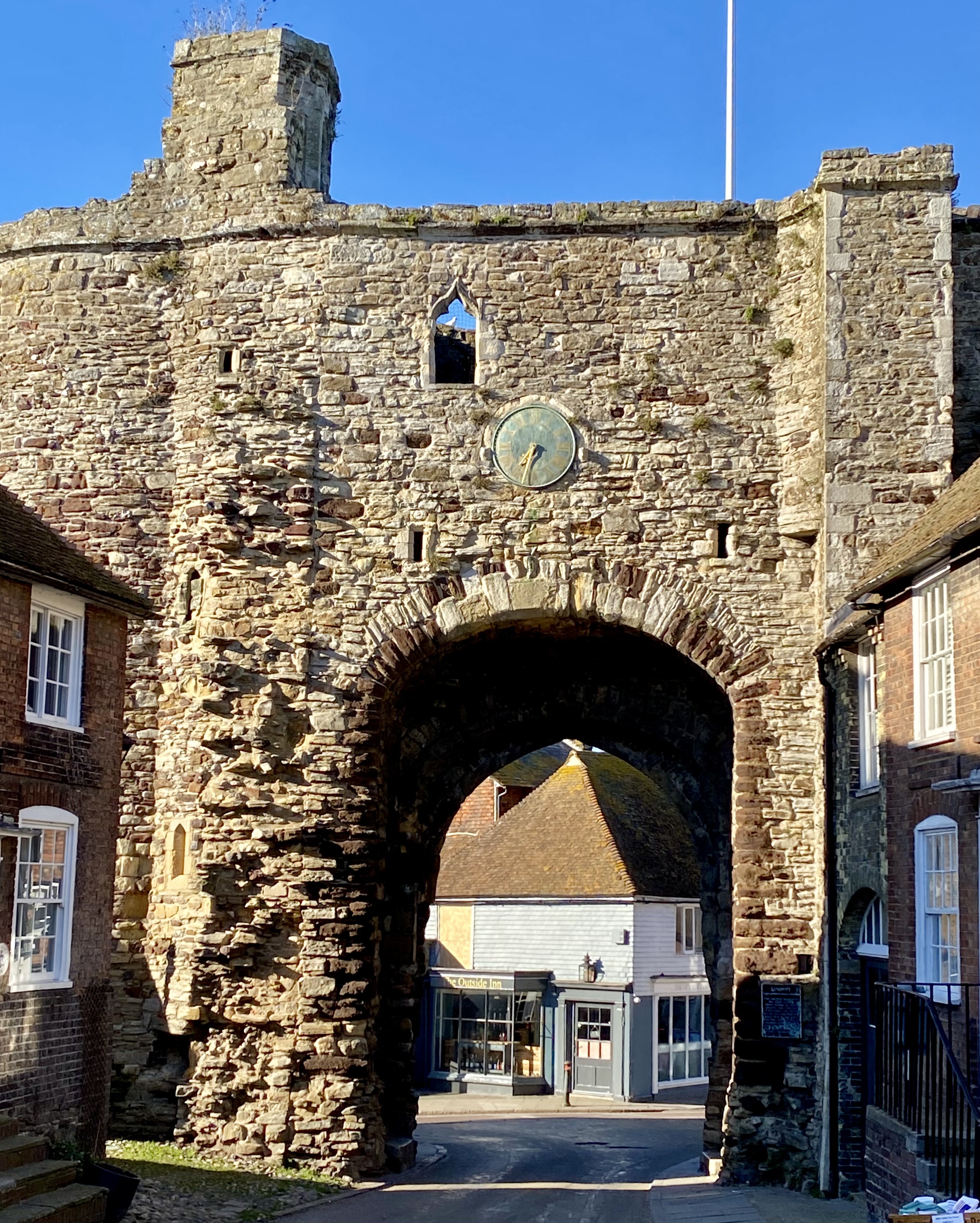
As you approach Rye by road, the town can be seen perched on a hillside, topped by the famous medieval church of St. Marys, an oasis in the midst of a flat, man-made, landscape. It was not always thus, go back in time a few hundred years and Rye was once a thriving seaport and an island, you moored your boat and climbed the narrow, winding streets up to centre of the town, through one of the four land-gates built in the early fourteenth century, of which only one still stands today, built to fortify the town again the French invaders.

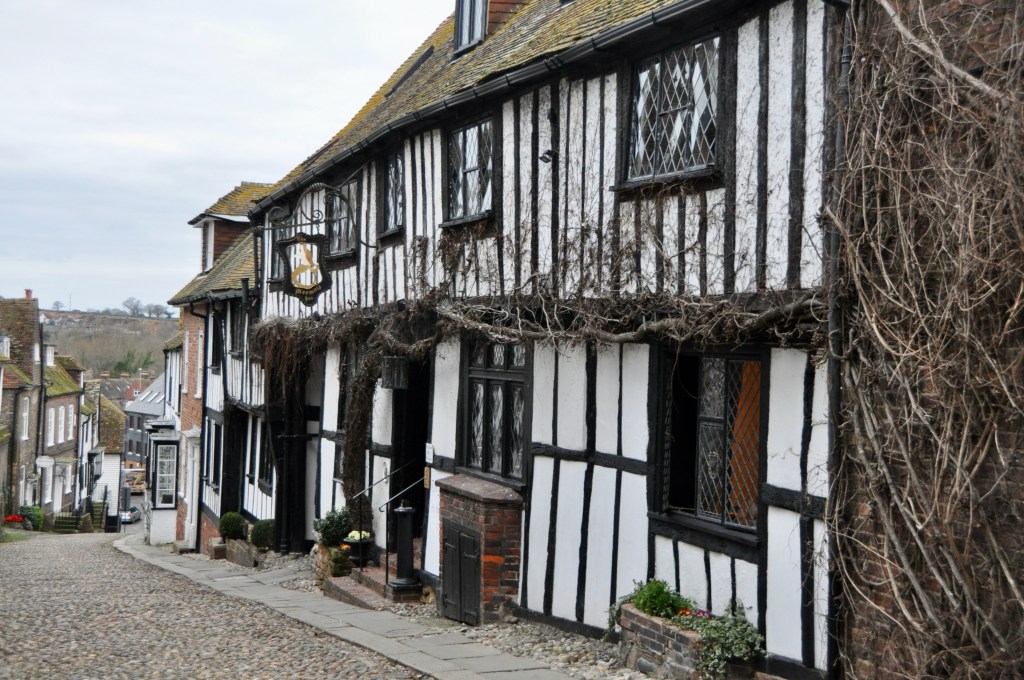
When Queen Elizabeth the First visited Rye in 1573, she stayed overnight at the famous Mermaid Inn, which at that time was already 150 years old. She might well have sailed over from Tenterden, which at that time had access to the sea and was famed for its ship building.

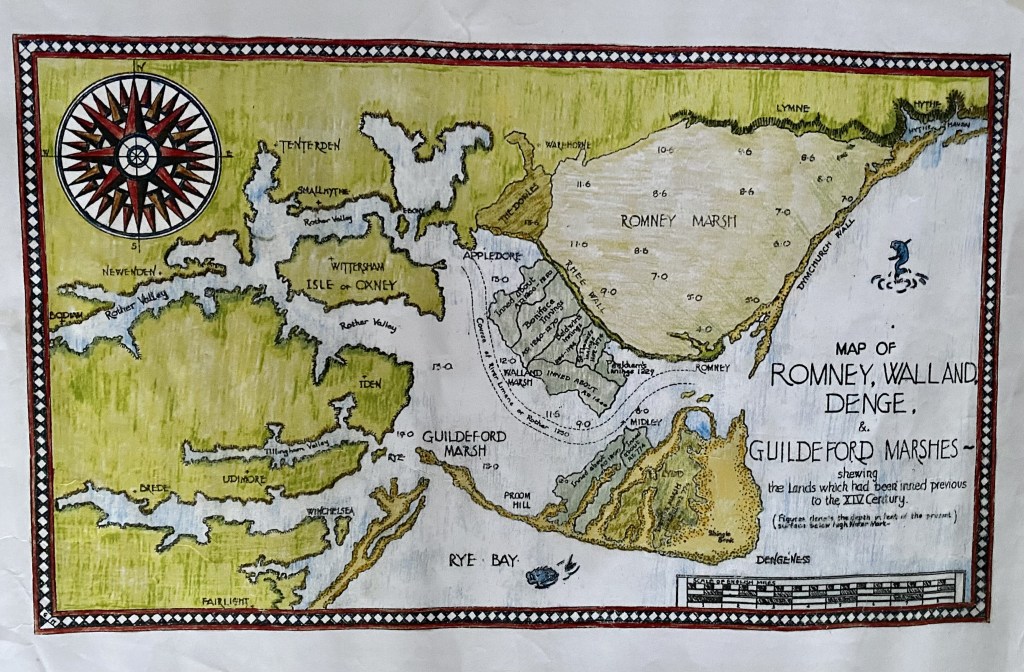
A map from the 15th century shows how the landscape has changed over the centuries, the area was once an inland waterway of rivers and inlets, with Rye and Winchelsea small islands cut off from the mainland. Over the centuries, the land has been slowly reclaimed, with additional coastline being formed by the formation of shingle beaches as a result of longshore drift. 2

There is no question that Romney Marsh is one of the most distinctive and unique landscapes in the country, an area so strange that it has been called the Fifth Continent.  In the words of The Ingoldsby Legends, a book of 19th century ghost stories and the supernatural, written by country parson, Richard Barham3:-

“The World, according to the best geographers, is divided into Europe, Asia, Africa, America and Romney Marsh”

Wikipedia refers to Romney Marsh as a sparsely populated wetland area in the counties of Kent and East Sussex in the south-east of England. It covers about 100 square miles (260 km2). The Marsh has been in use for centuries, though its inhabitants commonly suffered from malaria until the 18th century. Due to its location, geography and isolation, it was a smuggler’s paradise between the 1600s and 1800s. The area has long been used for sheep pasture: Romney Marsh sheep are considered one of the most successful and important sheep breeds. Criss-crossed with numerous waterways, and with some areas lying below sea level, the Marsh has over time sustained a gradual level of reclamation, both through natural causes and by human intervention.

This rather mundane description belies the beauty and strangeness of the place. As the mist comes down, as it does so often in the marshes, you feel yourself pulled back to earlier times with tales of sheep stealing, murder, witchcraft and smuggling. This is truly an eerie and wonderful landscape.

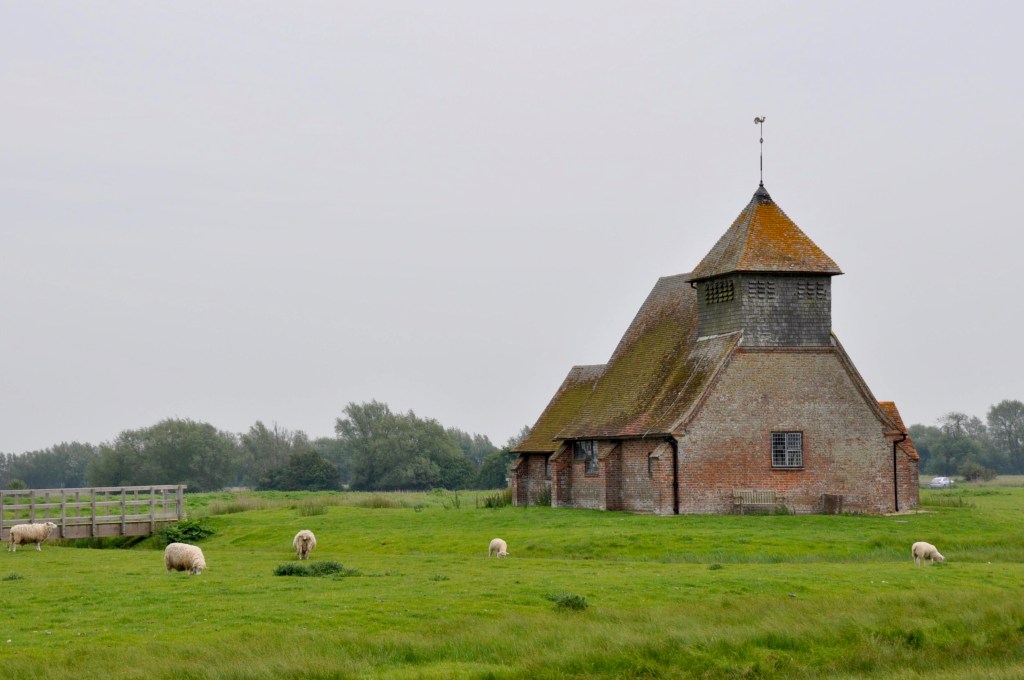
And, of course there are the churches. Today fourteen remote churches are scattered across the marshes, but at one time there were, at least twenty four, one for every small hamlet, often consisting of only a few families. For me, the jewel in the crown of these churches is St. Thomas Becket in Fairfield, sitting alone and forlorn in the middle of the marsh, surrounded by grazing sheep, often cut off in winter, accessible only by a narrow raised bank.

St Thomas Becket, Fairfield

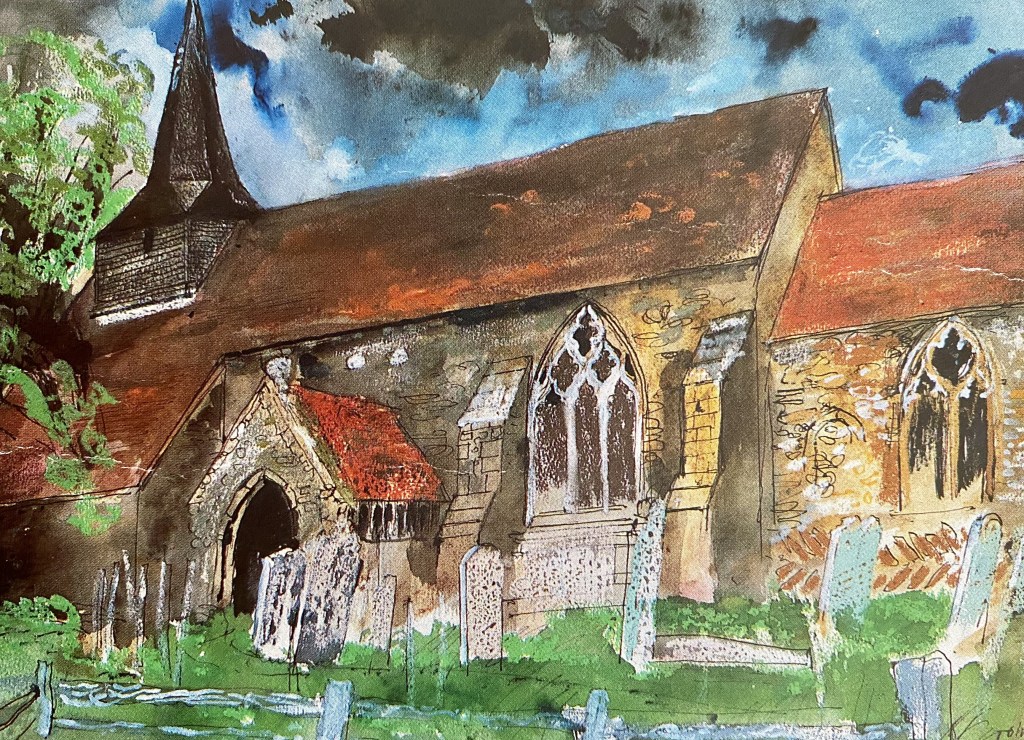
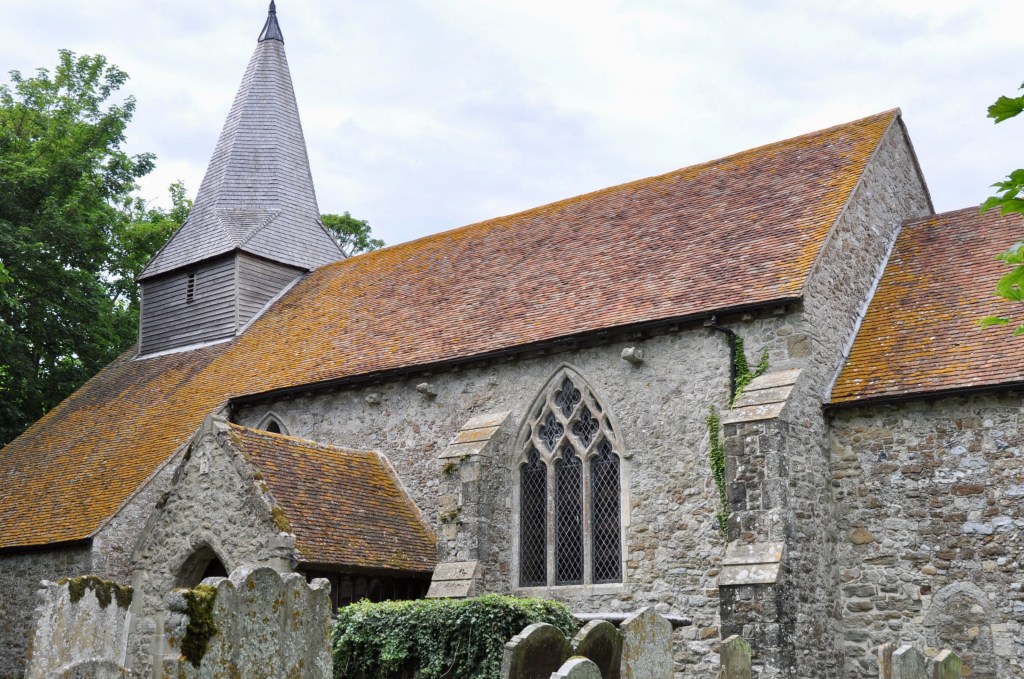
It is well known that John Piper, that quintessential Neo-Romantic artist, had a love of old churches and the wild countryside, so it’s not surprising that he painted most of the churches on Romney marsh and even produced an illustrated book about the area for King Penguin. This is his atmospheric and romantic painting of St. Eanswythe in the hamlet of Brenzett; compare it to an ordinary photograph of the same view and it reminds you of how great art can transform the rather ordinary into something extraordinary.

John Piper – St Eanswythe, Brenzett
Recent photograph of St. Eanswythe largely unchanged since Piper’s painting

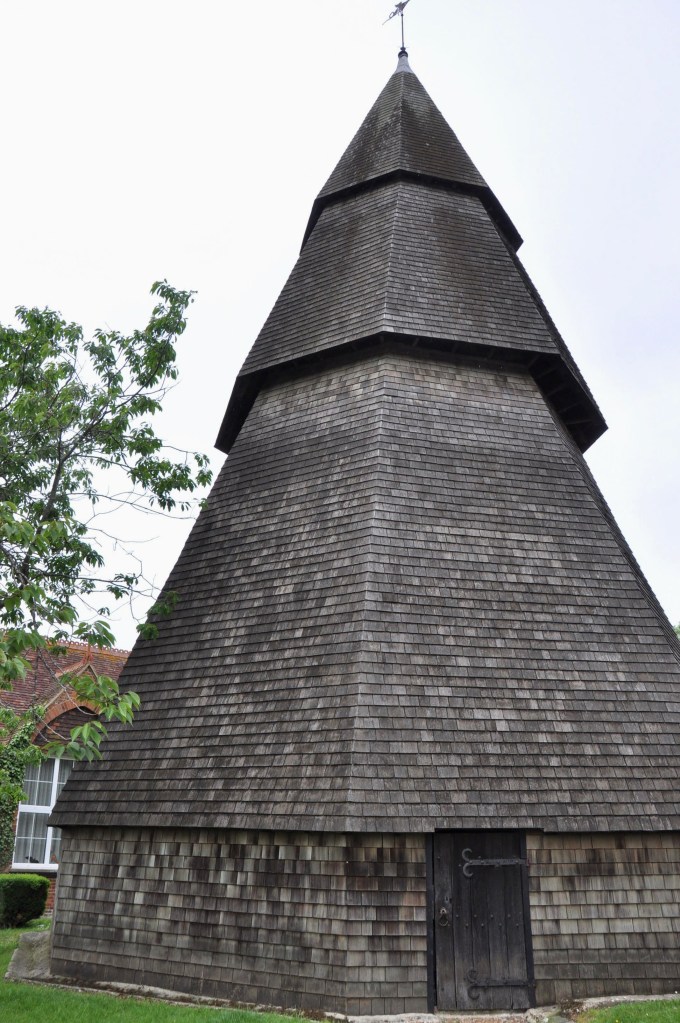
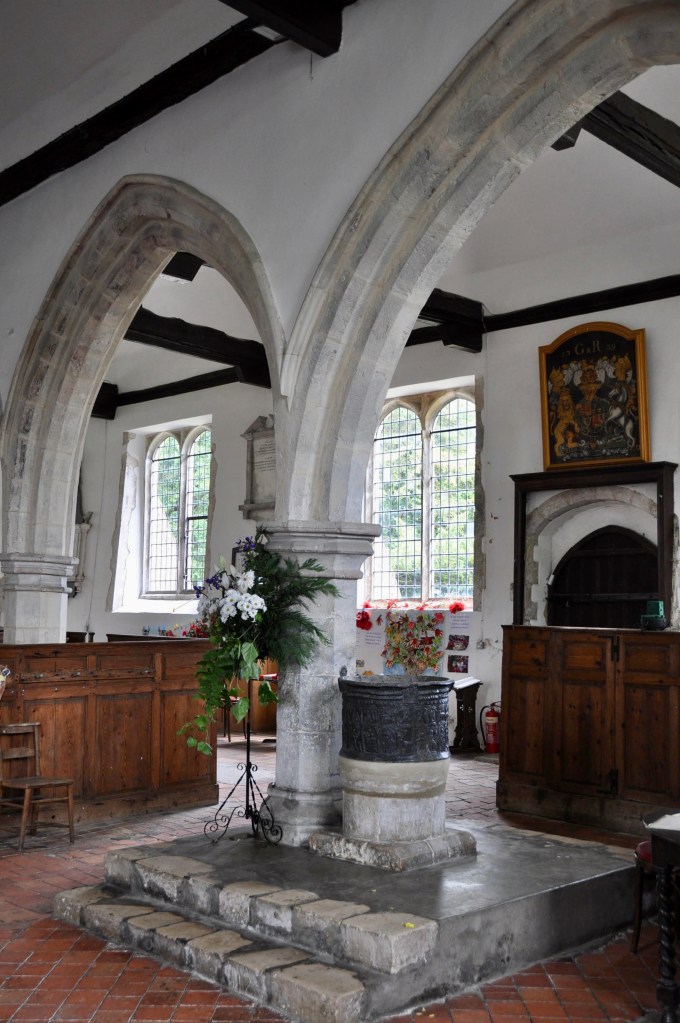
Another iconic church well worth the visit is the Church of St Augustine in the hamlet of Brookland. On arrival, the first thing that strikes you, is the extraordinary sight of a large timber bell tower detached from the main structure of the church. What is going on here? As can be imagined, by its very nature, marshland is inherently unstable and a decision was made in the 13th century to build the bell tower, and in 1450 it was clad in timber for the first time. The present cedar cladding dates from 1936. Inside the church there is an intricate mechanism, connected to the bell tower, to enable the ringing of the church bells.

Ancient Bell Tower, St.Augustine, Brookland

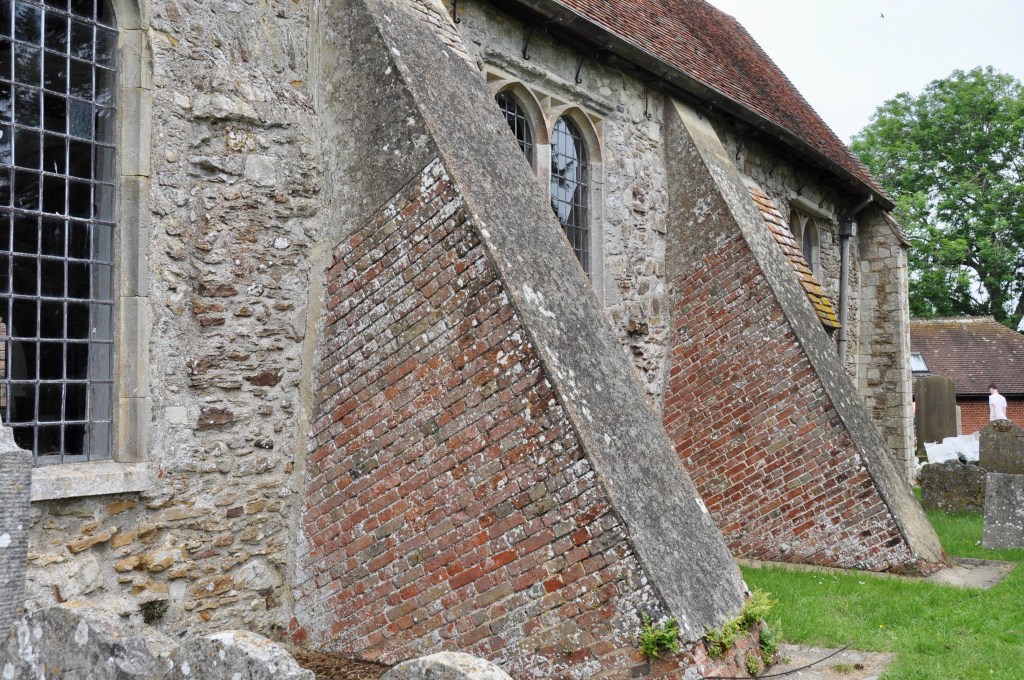
As you enter the church, you realise that the separation of the bell tower and the church was all in vain, the internal and external walls are leaning at a precarious and frankly frightening angle, leaving you feeling slightly queasy. The only thing that is preventing the church from collapsing altogether are the massive buttresses, which have been constructed to the outside of the building.

The sloping internal walls of the church

Massive buttresses preventing the church wall collapsing

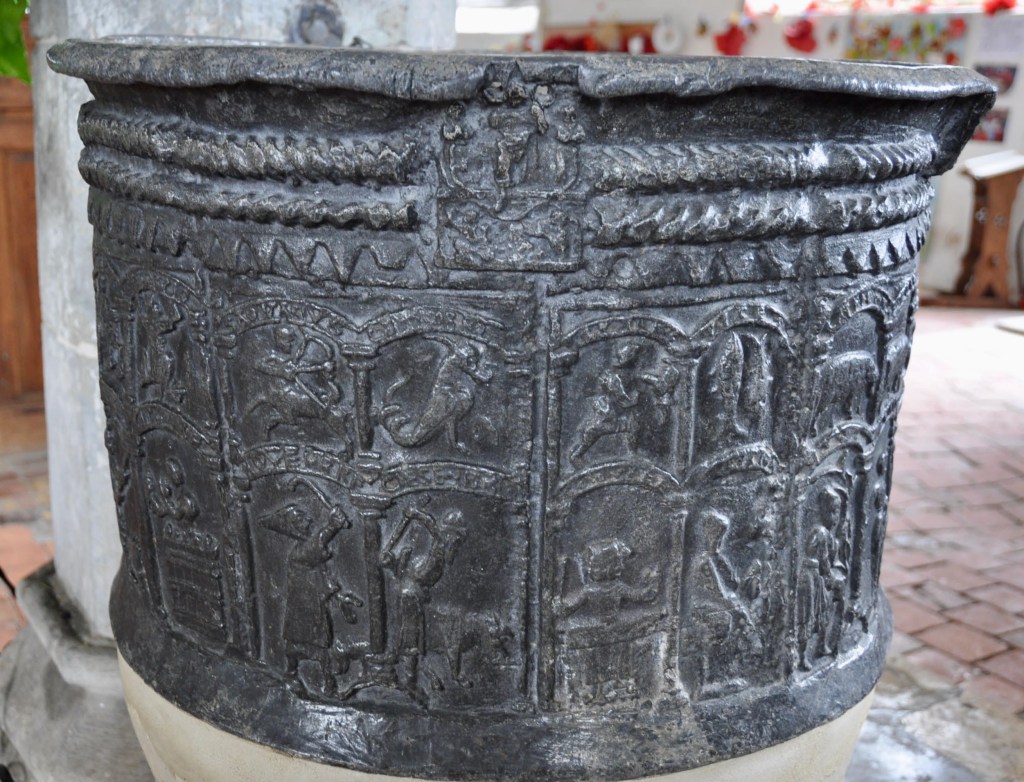
Before taking leave of the church, it is worth mentioning the massive lead font, which was made about 1200. This impressive vessel is decorated with a series of images, the upper course shows the signs of the zodiac, and on the lower course the agricultural labours appropriate to each month of the year are depicted. It is extraordinary to imagine this being cast over 800 years ago and looking almost as good as the day it was made.

Smuggling was rife along the whole of the South coast, but the remoteness of Romney Marsh made it a prime target for the smugglers during the 18th century and the ideal place to hide their booty were the many isolated churches across the marsh. Many a country parson turned a blind eye to the contraband stored away in their church, either willingly or unwillingly.

As the final verse of Rudyard Kipling’s famous poem ‘A Smugglers Song’ states:-

“Five and twenty ponies,
Trotting through the dark –
Brandy for the Parson, ‘Baccy for the Clerk.
Them that asks no questions isn’t told a lie –
Watch the wall my darling while the Gentlemen go by !”

This is just a taste of the marvellous churches on the marsh, but for those who want to investigate further, there is a wealth of information about churches and all things Romney Marsh on the History of Romney Marsh website.

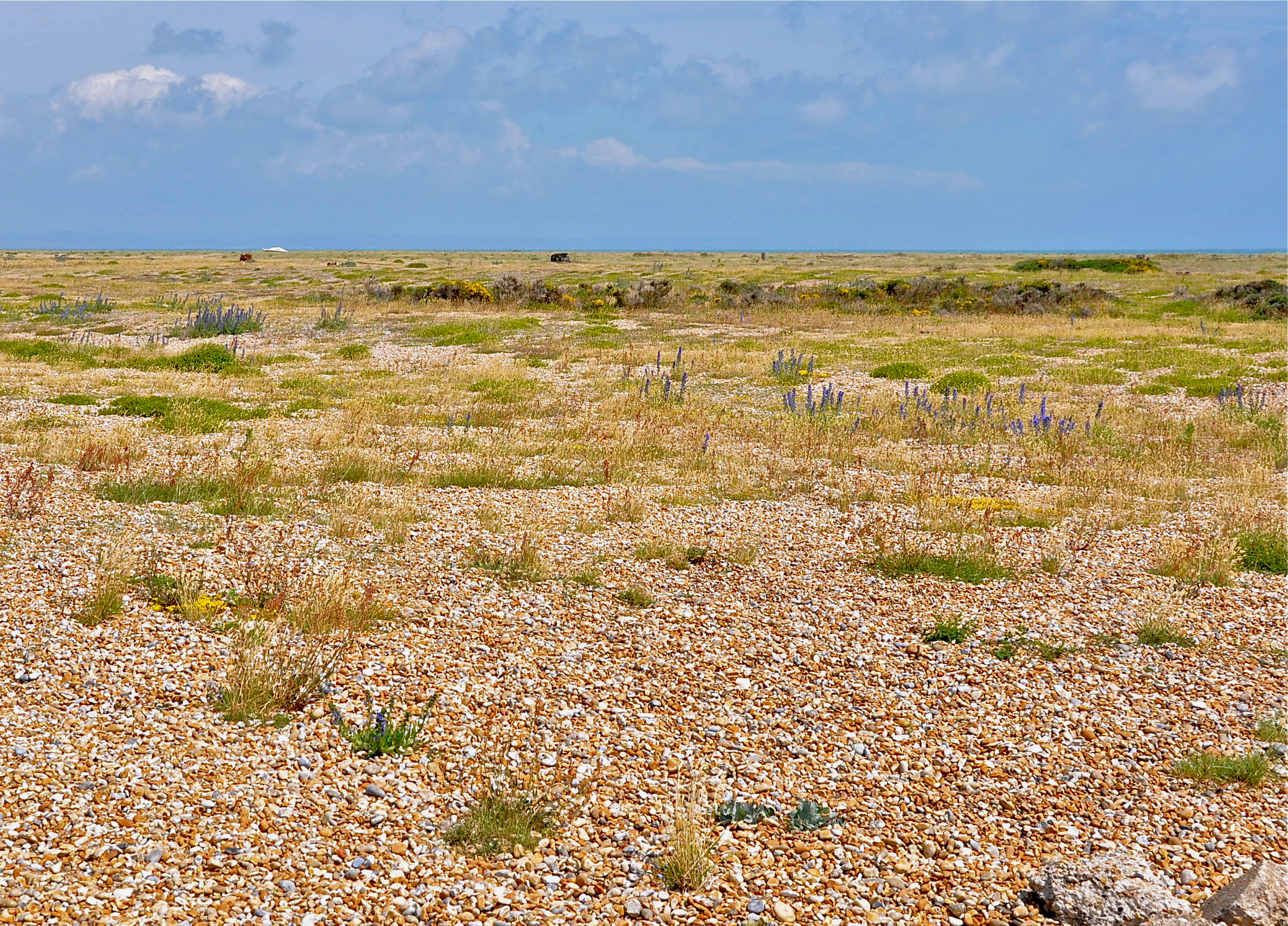
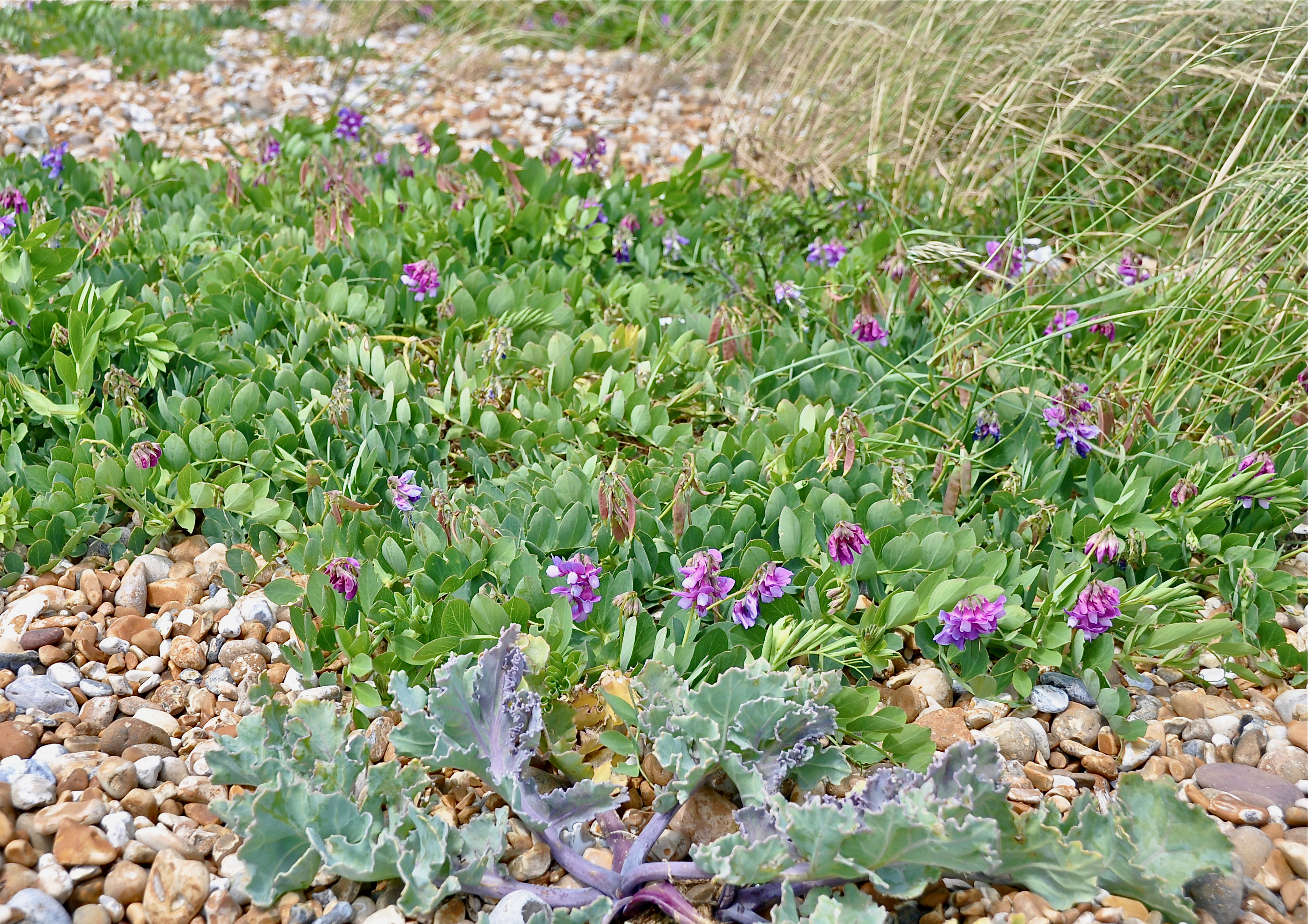
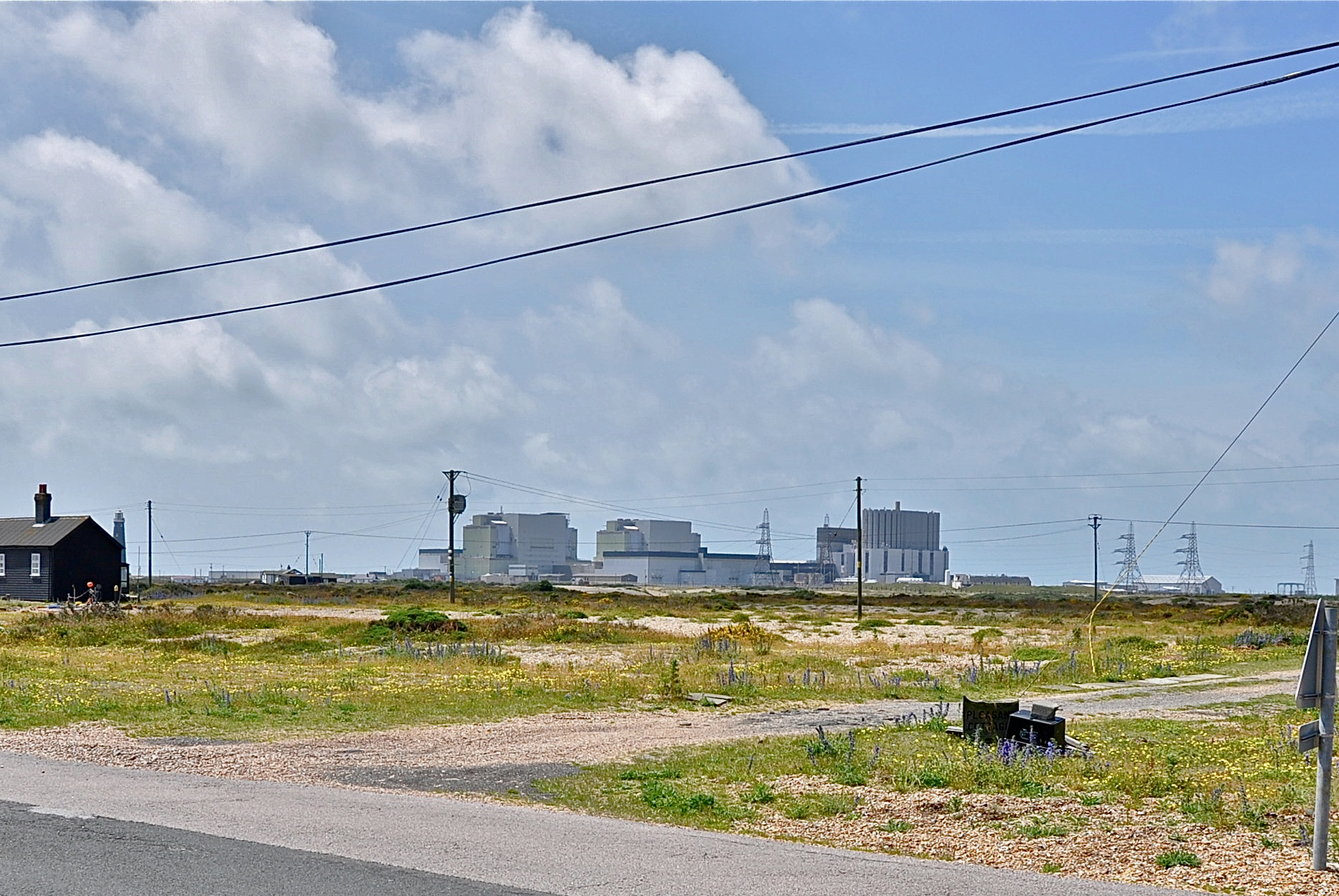
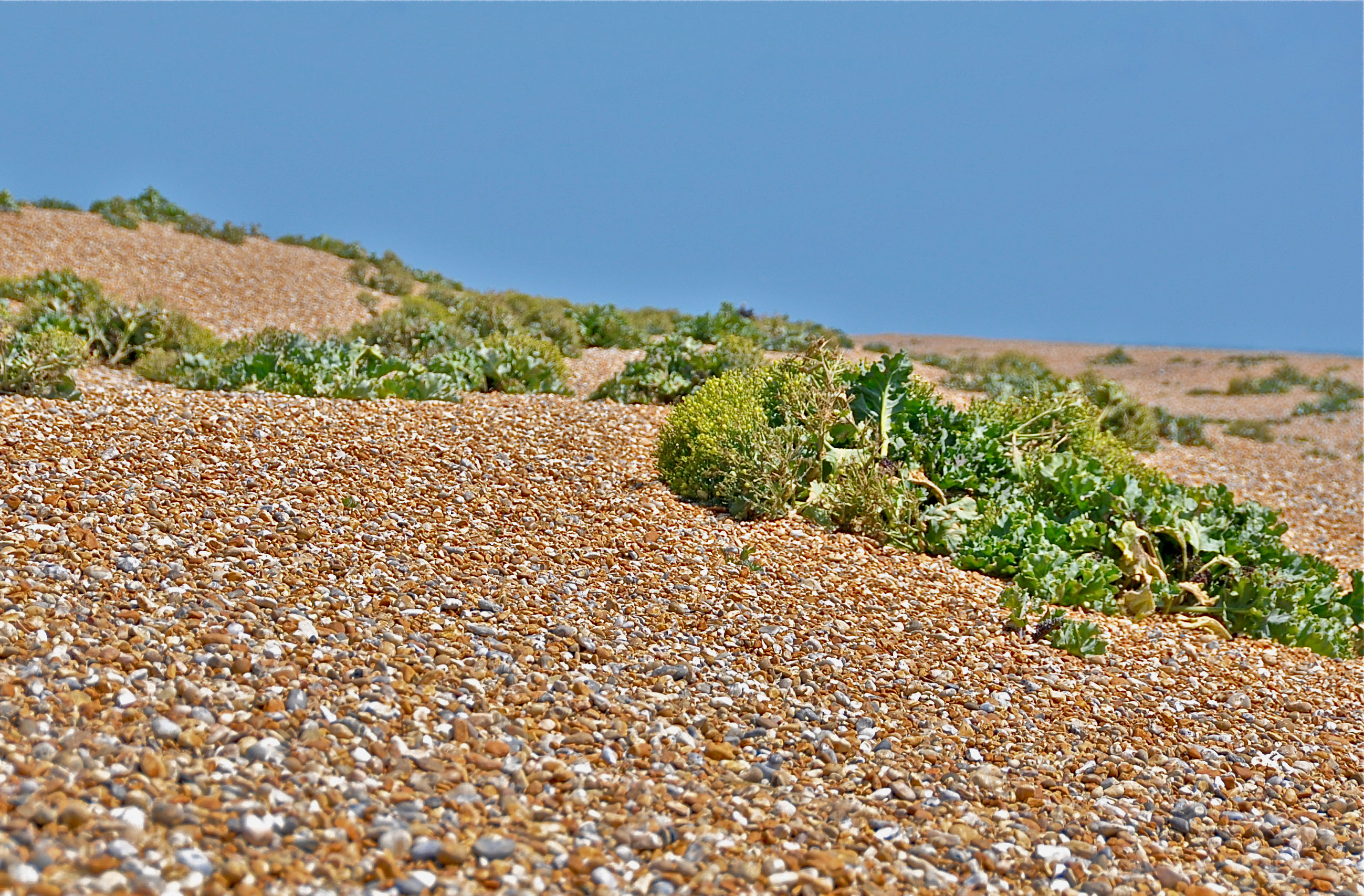
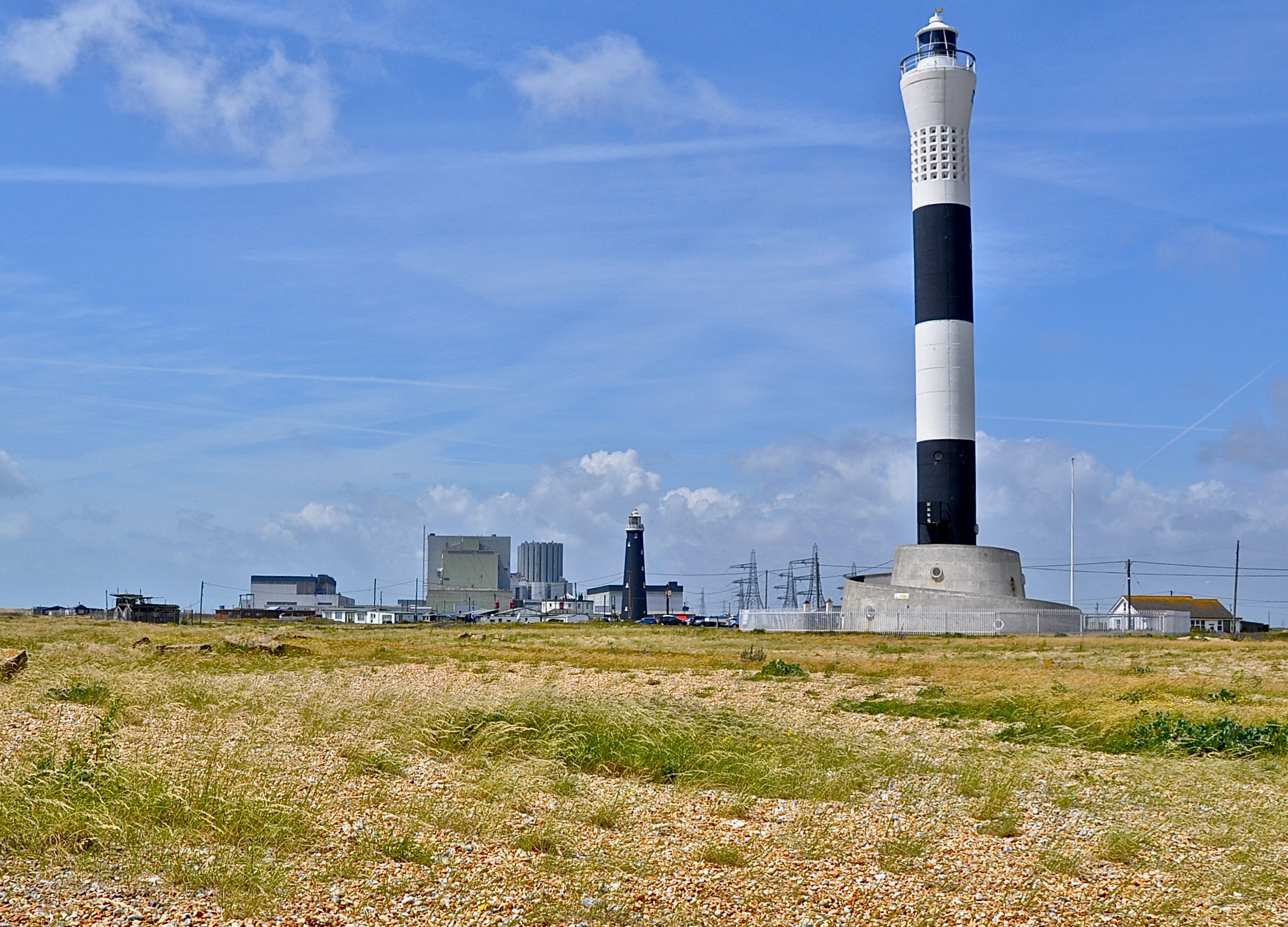
Before leaving Romney Marsh, a special mention should be made of one of the jewels in the crown of the marsh, the desert that is Dungeness. Although, referred to as a desert, Dungeness is not a true desert in the meteorological sense, but in all other senses it has strong similarities with a desert landscape, being an arid area with large desolate tracts of shingle beach.

This is a place of singular beauty with scattered cottages, abandoned and decaying boats. a pub, two lighthouses and not forgetting the forbidding presence of the Nuclear power station, which is in the process of being de-commissioned. The area has also been designated as a site of special scientific interest, being home to 600 species of plants, a third of all types found in the UK. At certain times of the year, the beach is covered in a carpet of wild flowers, in every colour imaginable. The wild beauty of Dungeness can be seen in the pictures below, but only a visit can capture the true atmosphere of Dungeness.

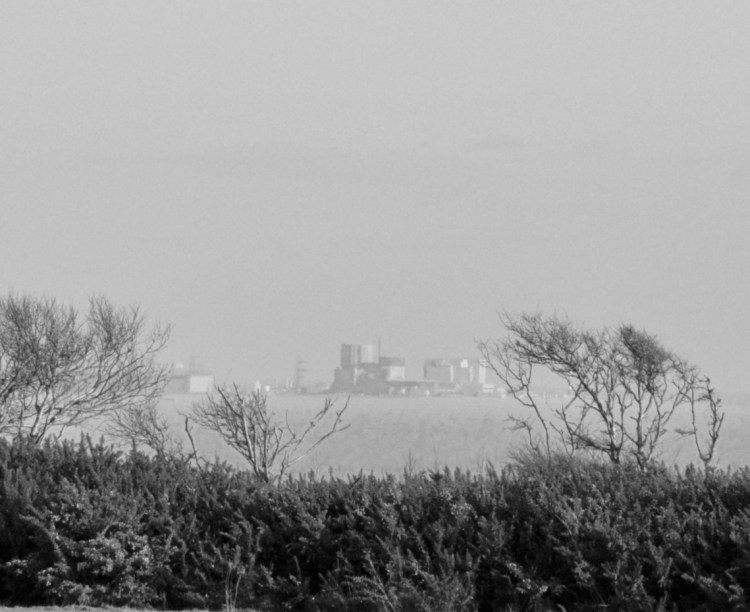
The ghostly and ominous presence of Dungeness Power Station taken from Hastings Country Park

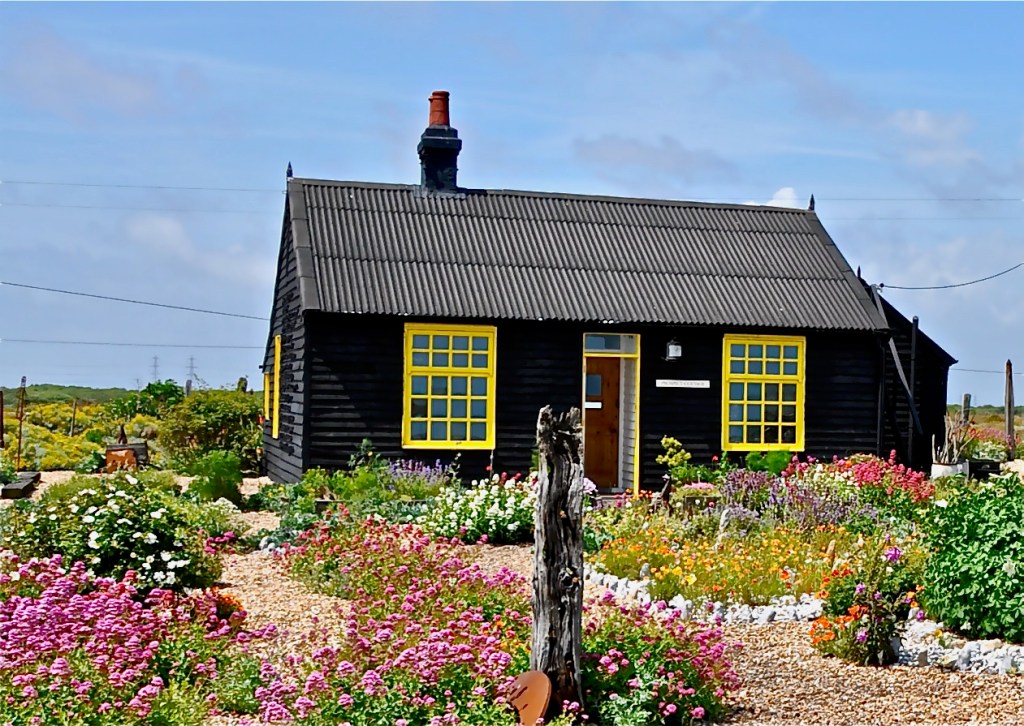
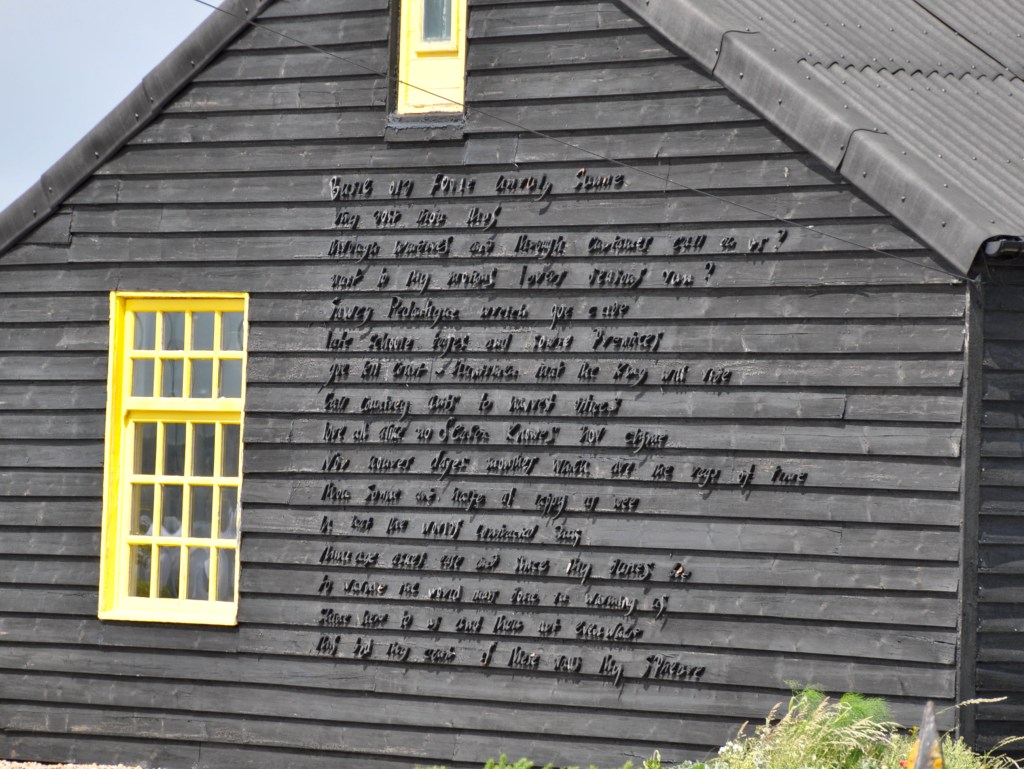
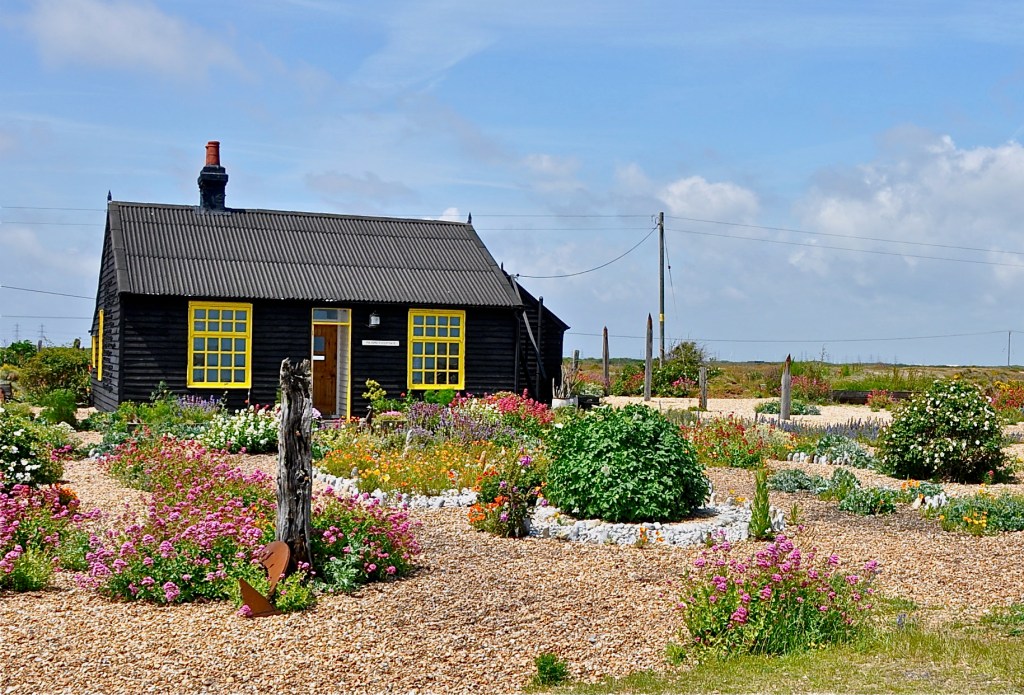
The icing on the cake of all these wonders is Prospect Cottage, home and last resting place of that all round renaissance man Derek Jarman, artist, poet, writer, filmmaker and latterly gardener, where he created his world famous garden. On the side of the cottage, Jarman had part of John Donne’s famous poem ‘The Sun Rising’ inscribed.

“Busy old fool, unruly sun,
Why dost thou thus,
Through windows, and through curtains call on us?
Must to thy motions lovers’ seasons run?
Saucy pedantic wretch, go chide
Late school boys and sour prentices,
Go tell court huntsmen that the king will ride,
Call country ants to harvest offices,
Love, all alike, no season knows nor clime,
Nor hours, days, months, which are the rags of time.”

Following the death of Jarman in 1994, his partner, who inherited Prospect cottage, continued to cherish the house and garden until his own death in 2018, when it was put on the market, its future uncertain.

However, following a fundraising campaign, the cottage has now been saved for the nation and future generations can now continue to enjoy its beauty and charm, yet one more reason to visit the wilderness of Dungeness.

Prospect Cottage in full bloom

There has always been a close connection between the marsh and Rye and the link has often been the smuggling trade, as previously mentioned. The most notorious of the smuggling gangs in the area was the Hawkhurst gang, who operated all along the South Coast from Kent to Dorset between 1736 and 1749 terrorising and murdering people along the way. They spent many evenings holed up in the Mermaid Inn in Mermaid Street, pistols cocked ready for any sort of trouble, the 18th century equivalent of the Kray brothers.

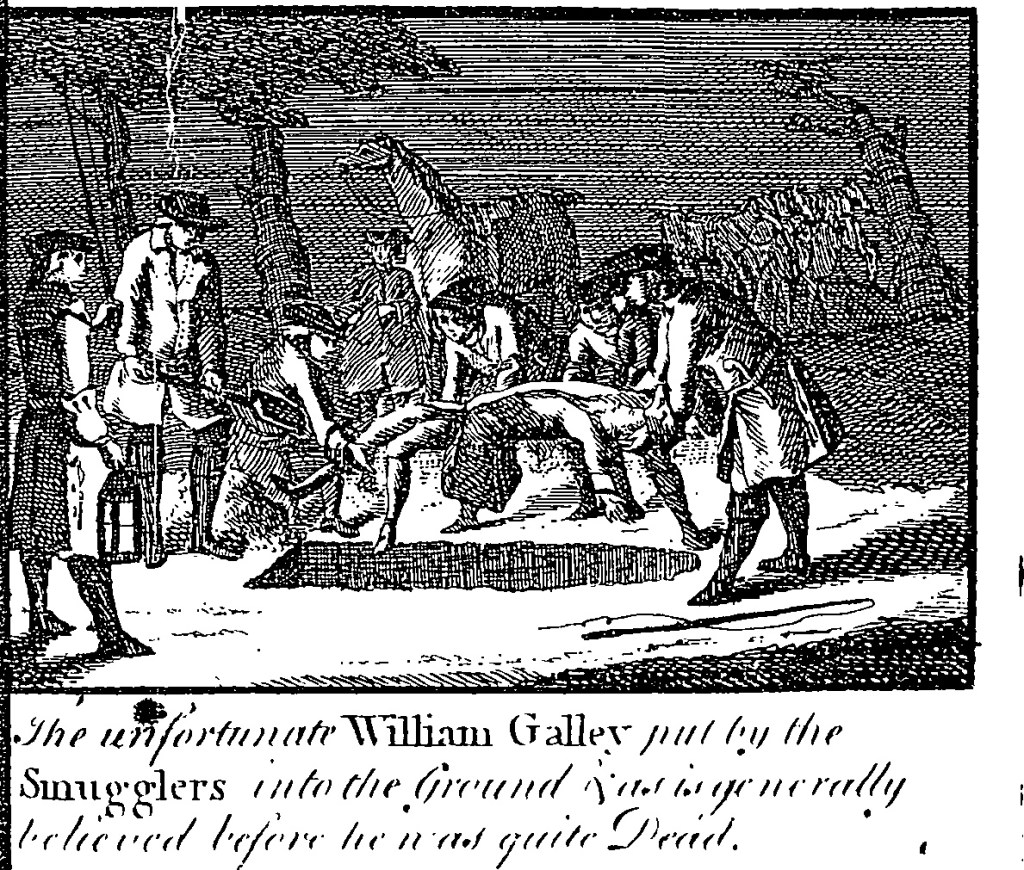
Their murderous activities, protected by the fear of the local community, eventually went too far, after they murdered a customs officer, William Galley and a shoemaker, Daniel Chater who had betrayed the gang. They killed the two men in the most brutal manner, firstly burying William Galley alive and then throwing Chater down a well and dropping large stones onto him. The ringleaders were tried in Chichester and hanged and by the end of their reign more than 75 of the gang were either executed or transported to Australia. So ended the grim stranglehold of one of the worst smuggling gangs in British history.

The dreadful end of William Galley as portrayed in one of the broadsheets of the time

You can’t talk about Rye and its surroundings without mentioning the artists who were inspired by the landscape and architecture of the area. We have already discussed John Piper’s fascination for the marsh and the great First World War artist Paul Nash spent many years after the war in the region, recovering from the horrors that he had seen and finding solace in the landscape of the marsh.

In more recent times, the landscape artist Fred Cuming, another Neo-Romantic, painted the marshes obsessively, using his home in Rye as a base. But the Rye artist who I love the most is the great Edward Burra, who lived in and around Rye for all of his life. Burra struggled with ill health and pain caused by rheumatoid arthritis and a debilitating blood disease, which meant that he was unable to paint in a conventional manner and was forced to paint in watercolour on flat surfaces.

In his early years, he travelled widely to places such as Marseilles and Harlem, painting street scenes and the night life with humour and bawdiness, together with some surrealism thrown in for good measure. However, in later life, as his health deteriorated, he began a second career as a wonderful landscape artist, painting scenes of great beauty, but always rather menacing, giving off an air of discomfort and uneasiness.

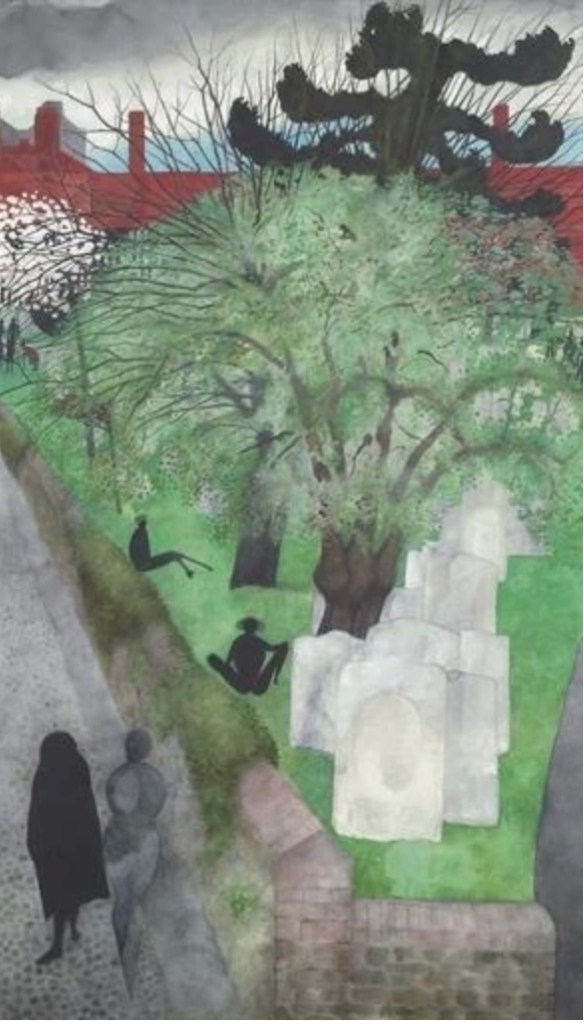
Burra had an ambivalent relationship with Rye throughout his life, which he called ‘Tinkerbelle Town’ and he disliked it’s tendency to tweeness. However, he stayed there all his life and I think he also saw another darker side of Rye, with its tales of ghosts and murderous smugglers. This seemed to come out in some of his art. One of my favourite paintings of his is of the churchyard in Rye, and he has chosen to make this picturesque graveyard in the heart of Rye a rather sinister place full of foreboding, the sky is dark and stormy and the walking figures appear as some sort of ghostly presence with the two seated figures look like revenants that have just risen out of the graves. This is not the cosy Rye that most people know and love.

To read more about some of the supernatural happenings in Rye, reference is made to a previous article of mine The Ghosts of Lamb House

The Churchyard, Rye – Edward Burra (1959-61) copyright Jerwood Collection
A more recent view of the churchyard with not a ghost in sight

I realise that my personal impressions of Rye and Romney marsh have barely scratched the surface of the history, geography and wildlife of this extraordinary corner of England. I have made no mention of the towns of Hyde, New Romney, Dymchurch, Lympne, Camber and the area of Jury’s Gap, which harbours a dark history. These and other tales will have to wait for another time.

Footnotes

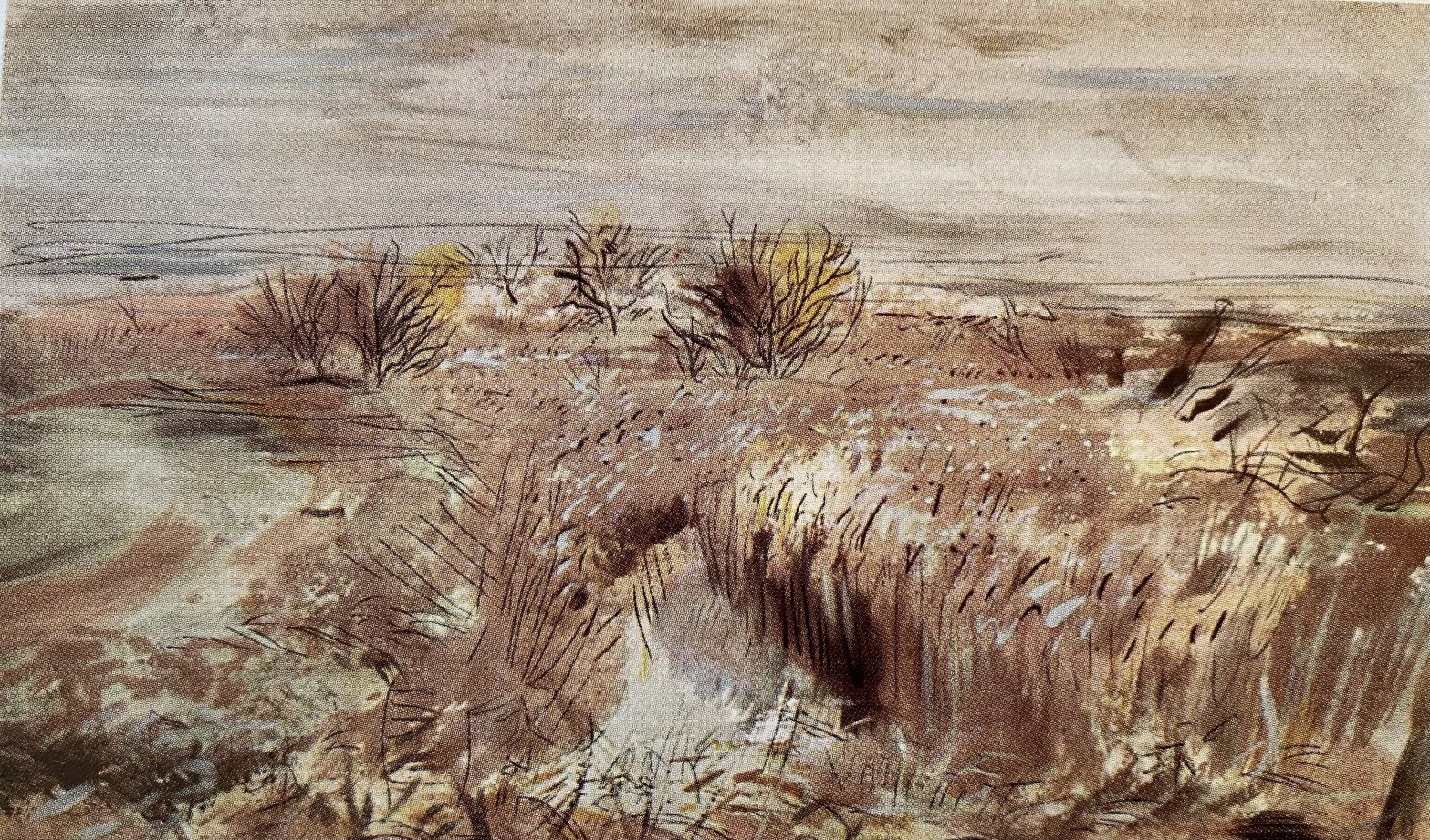
1. The featured image at the start of the article is a painting by John Piper ‘The Marsh near Appledore’ featured in the King Penguin Book – Romney Marsh published in 1950.

2. Longshore Drift – Longshore drift from longshore current is a geological process that consists of the transportation of sediments (clay, silt, pebbles, sand, shingle) along a coast parallel to the shoreline, which is dependent on the angle incoming wave direction. Oblique incoming wind squeezes water along the coast, and so generates a water current which moves parallel to the coast. Longshore drift is simply the sediment moved by the longshore current. (from Wikipedia)

3. Although almost unknown today, the ‘Ingoldsby Legends’ were written by a so-called Thomas Ingoldsby of Tappington Manor, who later turned out to be a clergyman called Richard Barham and they were published in magazine form form 1837, eventually being compiled into one volume, where it became immensely popular. out of the stories and poems were based on legends and myths from Romney Marsh and the surrounding areas.

Doggerland in the Age of Anxiety

from Sheringham beach

gazing out to Sea.…..searching

for Doggerland

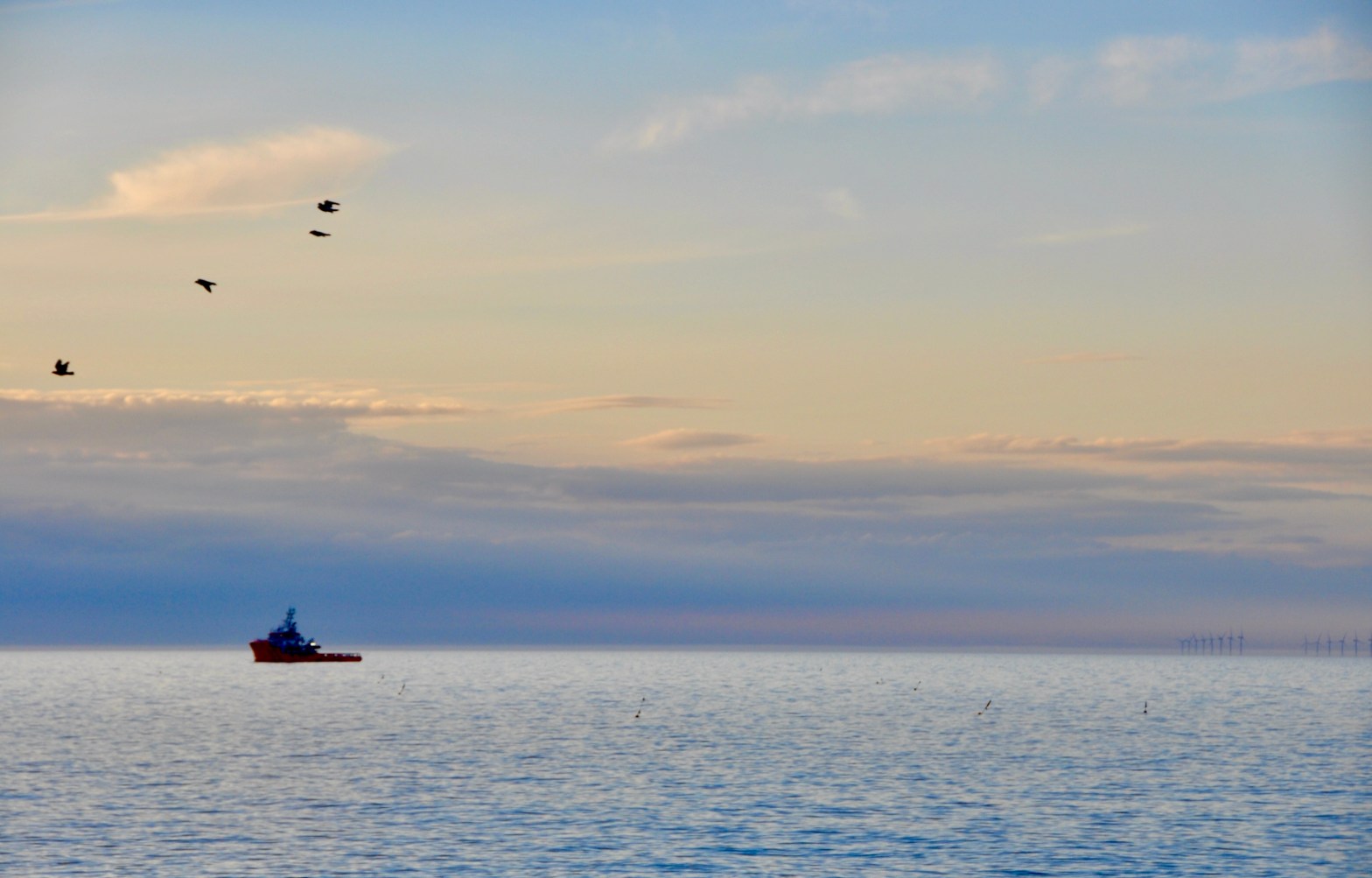
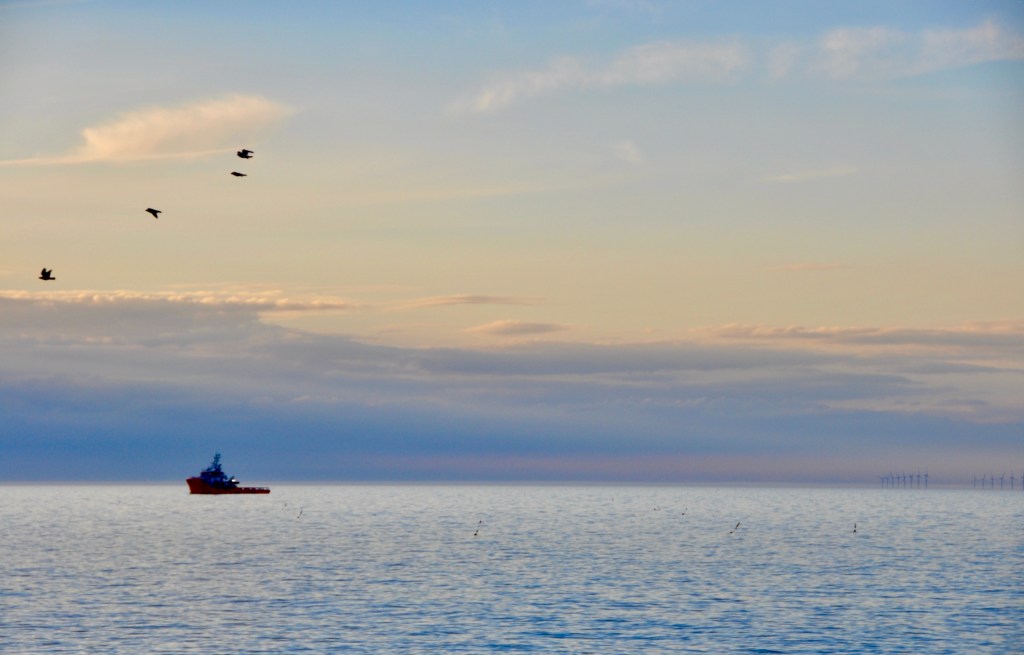
Looking out to sea, from the shoreline along the Norfolk and Suffolk coast, there is nothing moving, except for the occasional ship and the ghostly outlines of distant windmill farms, as far as the eye can see.

Ghostly outlines of windmill farm in North Sea

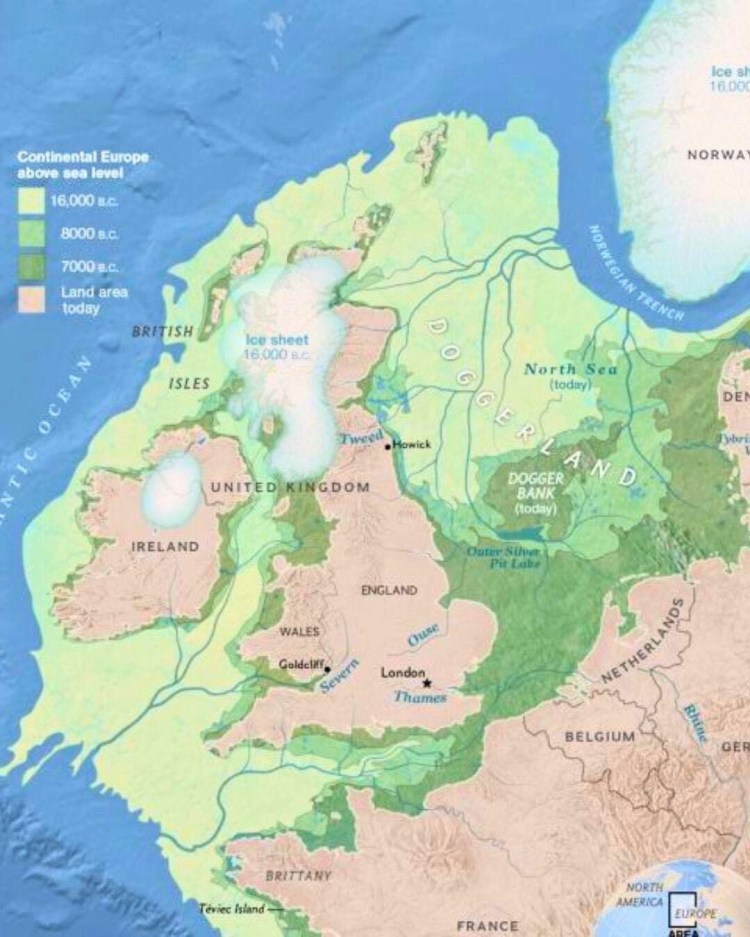
The rest is a vast empty expanse of ocean. But, as you look out, imagine that this area of the North Sea was once an enormous land mass stretching out to Holland and Germany, all the way up to Scandinavia, where for the last million years, in between frequent global warming and cooling, hominins have frequented the area.

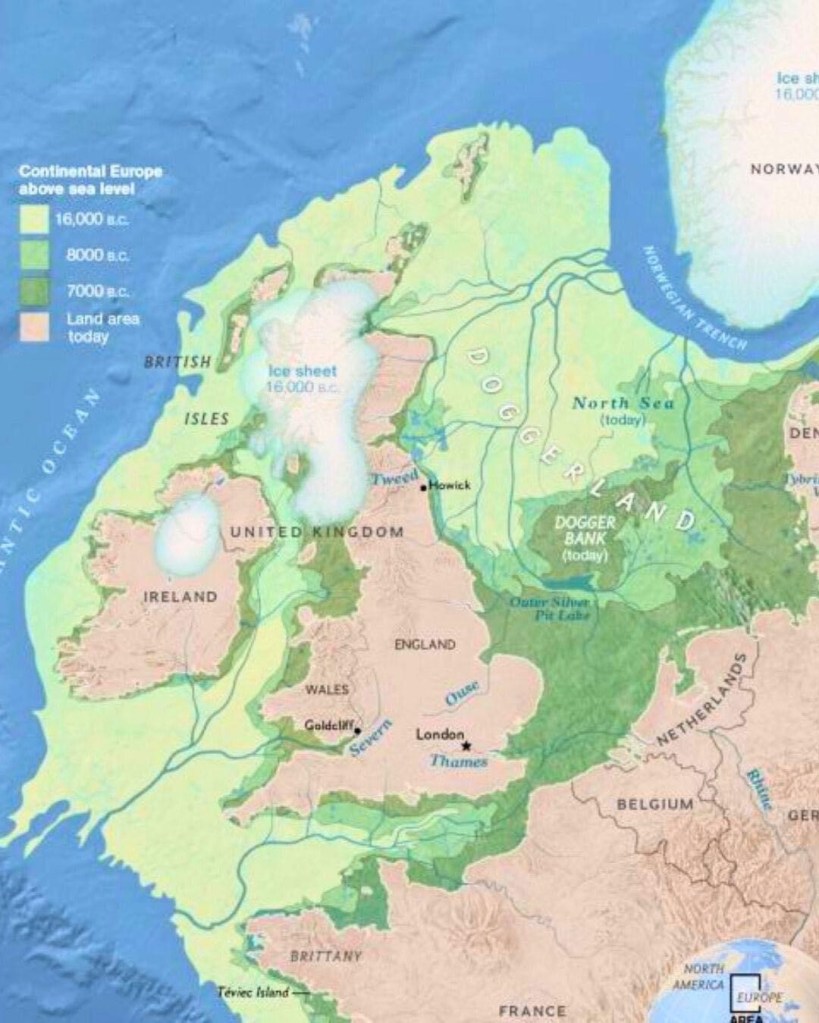
Picture a landscape that has frequently changed during the millennia, dependent on the climate conditions, from Mammoth steppes, to frozen tundra where vast herds of reindeer roamed. More recently from about 15,000 years ago, with rising temperatures and sea levels, the area became an enormously rich and fertile wetland, full of food, an ideal area for the hunter gatherers who lived here in relatively large numbers. And so it continued, up to the time that the rising sea levels eventually submerged the whole area about 8,000 years ago.

This is the story of a buried treasure trove of collective memory, a place called Doggerland, with a meaning and resonance for us today, in our age of anxiety and man made climate breakdown, a metaphor for loss and perhaps hope.

I’m visiting Happisburgh beach in Norfolk trying to imagine life here, nearly a million years ago, during the height of the last ice age, close to where the Thames once flowed. This was one of the many periods of slightly warmer weather as the glaciers receded. It was a land of grassland and pine forests, populated with deer, mammoth and even rhinoceros. And it was here, in this landscape, in 2013 that evidence was found of the first human species to reach the Northern climes.

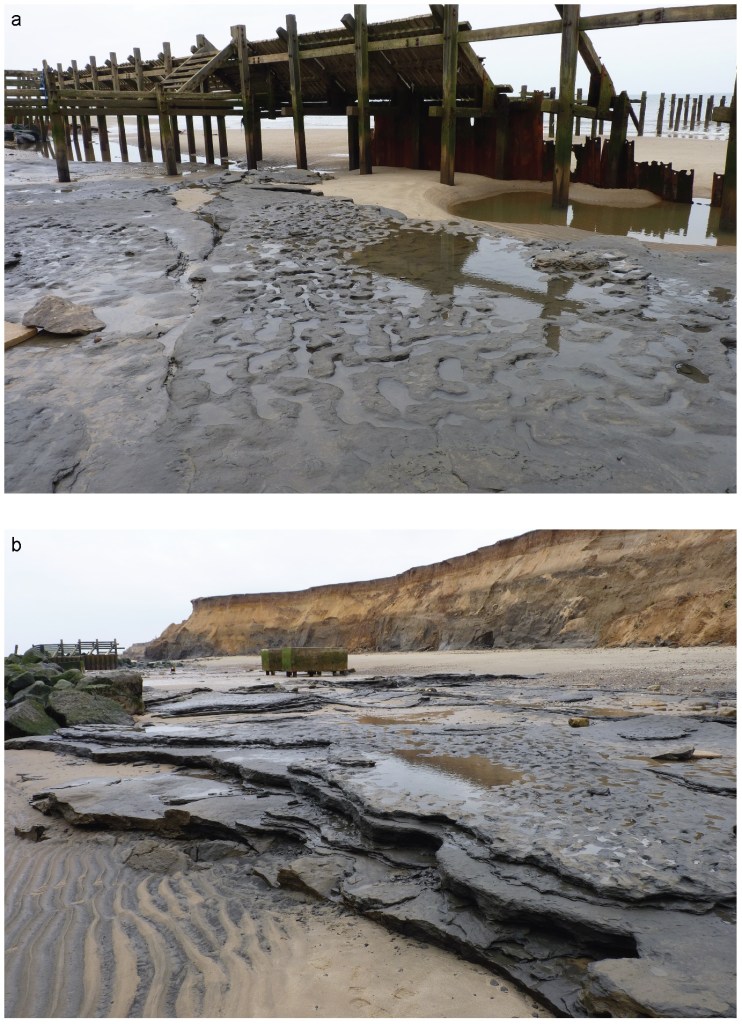
At that time Homo Sapiens had not yet emerged from Africa, but in 2013 an astonishing discovery was made that one of the earliest human species, ‘Homo Antecessor’, had been walking along our beaches. On this remote Norfolk beach of Happisburgh (pronounced Haze-bruh) in Norfolk, a set of fossilised footprints were discovered that date to the Lower Palaeolithic period around 950–850,000 years ago. They were photographed in 3D before being destroyed by the tide shortly afterwards. Resulting research, identified them as the oldest known hominid footprints outside Africa.

The prints show what appears to be family groups, adults and children walking together. What were their thoughts and how did they live? Speech, as we know it today, was still hundreds of thousands of years away in its evolution, so it is intriguing how they communicated?

Photographs of Area A at Happisburgh.a. View of footprint surface looking north. b. View of footprint surface looking south, also showing underlying horizontally bedded laminated silts. Photos: Simon Parfitt.

I find the fact that these traces even appeared for a brief time, before disappearing again forever, incredibly moving and poignant, a folk memory of an ancient time.

footprints in the mud

echo down the ages

traces of humanity

Half a million years ago, another human species, ‘Homo Heidelbergensus’ arrived on the scene, just to disappear again 50,000 years later, when life became uninhabitable in Britain for millennia, as a result of the onset of another ice age.

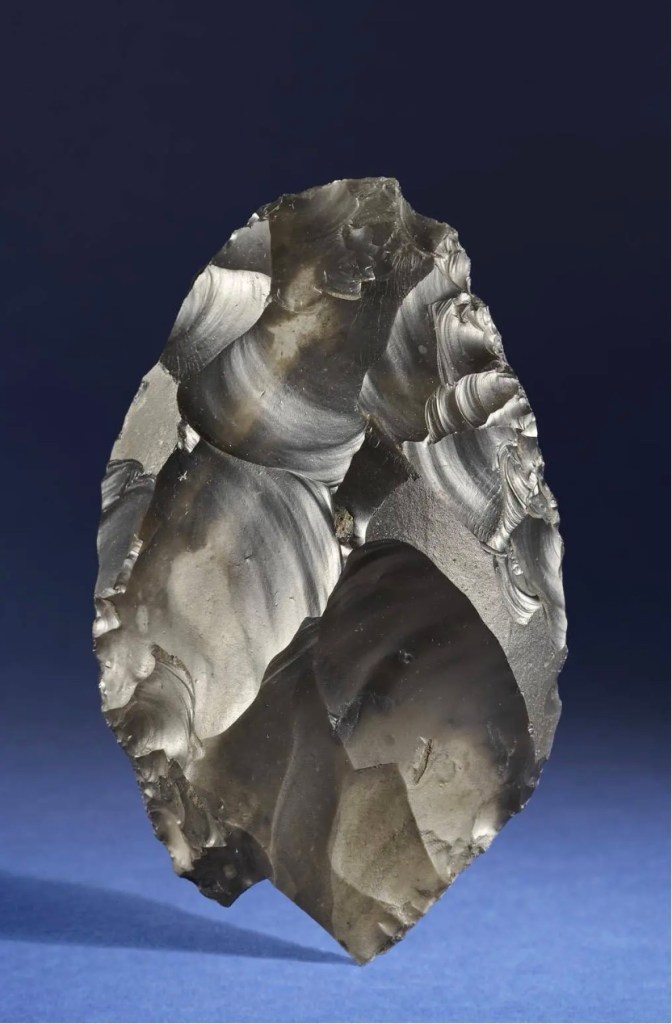
A stunning hand axe carved in black flint, the oldest hand axe ever discovered in North West Europe, was also found in Happisburgh from this period; it had lain there on the foreshore for 500,000 years. This axe shows clearly the intelligence of these early human species, not only is it immensely practical, but it has been carved to bring out the aesthetic qualities of the flint. It is an object of great beauty.

Happisburgh hand axe discovered on the foreshore in 2000
(Rights Holder: Norfolk County Council. Licensed under a Creative Commons Attribution 2.0 Generic License)

Then about 400,000 years ago, our most recent close relatives, the Neanderthals ‘Homo Neanderthalensis’, started visiting the area on and off, through various changing climatic conditions. Neanderthals used to have a bad press, being largely depicted as unthinking brutes, mainly due to their thick eyebrow ridges, making them look slightly ape-like. The truth is that Neanderthals were a highly developed hominin species, equally as intelligent, if not more so, than early Homo Sapiens.

Our own species, ‘Homo Sapiens’ eventually appeared on the scene about 40,000 years ago, but a permanent presence in Britain only commenced about 15,000 to 13,000 years ago, when the most recent ice age ended and the glaciers started melting. This was a period of a rich environment, the age of the hunter gatherers, a fertile landscape of forests together with wetlands and salt marshes, with plentiful food supplies. It was a remarkable place that attracted large numbers of people during this Mesolithic golden age.

They were able to adapt to the unpredictability of the rising waters. To them it was a normal way of living and they changed and moved, as the landscape altered. This way of life continued for many centuries, but the waters still continued to rise. About 8000 years ago, around 6,150 BC, there was a catastrophic event off the coast of Norway called the Storrega landslide, which caused a series of Tsunamis all down the Doggerland area, drowning the landscape. This was the beginning of the end and over the next few centuries, the waters continued to rise as more ice melted, and by about 4,000 BC the last remaining and highest part of Doggerland, the Dogger Bank, disappeared for ever under the North Sea. All that was left was the myth and the legends.

Map showing Doggerland from 16,000 B.C. until the Present time

This was also the end of the Mesolithic period and the last of the hunter gatherers. From now on, across Britain and Europe, the Neolithic farmers moved in, migrating from the Middle East and beyond, changing the way of life in this part of the world for ever.

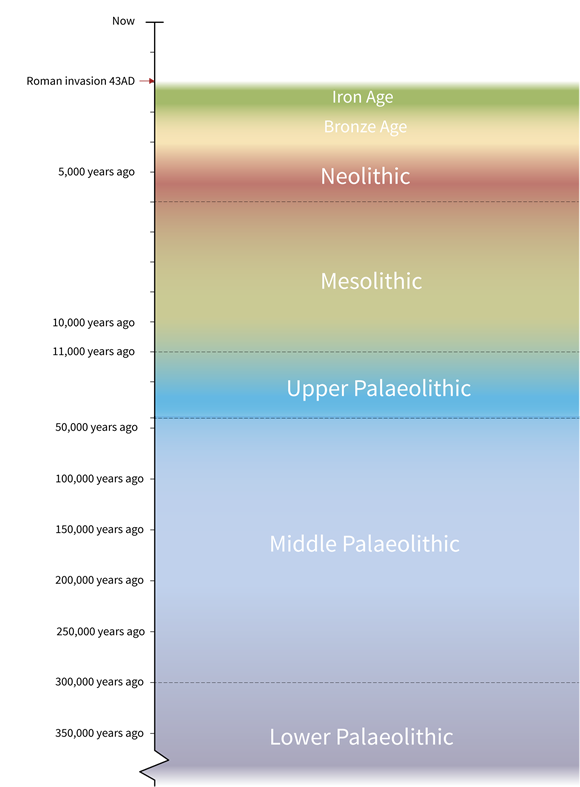
It is worth, at this stage, to reflect on the timescales of prehistory involved, which can be difficult to comprehend. The Stone Age is divided into the Old Stone Age (Palaeolithic), the Middle Stone Age (Mesolithic) and the New Stone Age (Neolithic). Because of the enormous length of the Palaeolithic (from around 3.3 million years ago until 11,000 years ago), it is also divided into 3 eras, Lower, Middle and Upper) – see chart below:-

Although, for us humans, this appears to be an enormous period of time, in the context of Deep Time, it is but a nanosecond. If you consider that the Dinosaurs walked the earth up to 65 million years ago, it gives a brief idea of the enormous time scales involved.

The myth of Doggerland had lain dormant for many centuries, but it was not until the 19th century that fishing boats from Holland and England started picking up traces of Doggerland in their nets, often around the Dogger Bank, the highest point in the North sea. Fossils of mammoths, aurochs and other animals had been found over the years, together with bones of humans, and a vast array of tools, building up a picture of continuous occupation over the millennia.

It was not until the 1990s, that this area was studied in more detail. It was given the name Doggerland, by an archeologist called Bryony Coles, named after the Dogger Bank, which in turn had been named after the 17th-century Dutch fishing boats called ‘doggers’.

In 2001 a fishing boat discovered a spectacular fossil, the first of its kind in Doggerland. It was the skull fragment of a Neanderthal. Up to that time, only Neanderthal tools had been found in the area.

The skull fragment from 2001, with the typical thick eyebrow ridge found in Neanderthals

The owner of the skull fragment was named ‘Krijn’ by the scientists and with the use of computer analysis, a reconstruction of this young Neanderthal was made and given a very fetching smile. Krijn has obtained a sort of immortality.

The Reconstruction of Krijn, the Doggerland Neanderthal

Ever since I heard about ‘Doggerland’ it has captured my imagination, and no one has painted a more evocative picture of this land better than Julia Blackburn in her wonderful book ‘Time Song – Searching for Doggerland’ which is part history, part archeology and part autobiography. This is her description of Doggerland:-

“I’m writing about a country called Doggerland. It emerged after the last Ice Age and with the warming of the climate it became a wonderfully fertile place of rivers and lakes, gently rounded hills and sheltered valleys, reed beds and salt marshes in the lowlands , trees on higher ground and a profusion of life: fish, birds, animals and humans as well. These were people who left few traces of their passing. They hunted with weapons made from wood, bone or stone; they had canoes cut from the trunks of trees; they had dogs working with them and sometimes buried their dead alongside their dogs. But as the ice went on melting the sea levels rose dramatically – you can’t believe how fast , it could be more than two metres within a century – so the land was inundated or made inaccessible. Seven thousand years ago, Doggerbank was still there as an island and then it too was gone.”

Every living thing is dependent on water, as much as the air we breathe, to sustain life. We all live on relatively small areas of land, making up only 29% of the total surface of the planet, the rest approximately 71% are the vast oceans surrounding us. We are truly a watery planet.

Furthermore 97% of the Earth’s water can be found in our salt water oceans. Of the tiny percentage that’s not in the ocean, about two percent is frozen up in glaciers and ice caps and only a minuscule 1% can be found in fresh water lakes. Water is, therefore, on one hand, paradoxically, surrounding us on all sides, but on the other hand an incredibly scarce resource, in order sustain life on earth. It is no wonder that it obsesses us.

I have always had an ambiguous relationship with the sea, loving it and fearing it in equal measure. I have seen the immense power of the ocean, when a storm hits and attacks the coast. I have been in rip tides, when I have felt that I might be pulled under in seconds and never emerge. Once, many years ago, I was on a beach in the Middle East and, together with a colleague, saved a young Arab boy from drowning, when he got out of his depth and panicked. I knew then that life can disappear in an instant, without warning, when we take the ocean for granted. Since that time, I have treated the vast watery wilderness out there with a wary respect. I both love and fear the ocean surrounding us.

As a young man, and long before I had even heard the term “global warming”, I read a lot of science fiction. One book, written in 1962, stood out for me at that time.“The Drowned World” by J.G.Ballard was set in a post apocalyptic future where solar radiation had made human life uninhabitable except for the North and South Poles. The action is set in London, which is totally underwater, due to the rising sea levels. A group of scientists based in Greenland are carrying out a scientific study of the fauna and flora of this strange landscape. Like much of Ballard’s visionary writing it was way ahead of its time and over 60 years after the book was first published, it gives a troubling feel of what the future holds for us on earth.

“Sixty feet below the cutter a straight grey promenade stretched away between the buildings, the remains of some former thoroughfare, the rusting humped shells of cars still standing by the curb. Many of the lagoons in the centre of the city were surrounded by an intact ring of buildings, and consequently little silt had entered them. Free of vegetation, apart from a few drifting clumps of Sargasso weed, the streets and shops had been preserved almost intact, like a reflection in a lake that has somehow lost its original.”

In recent years there has been growing interest in Doggerland, not only from scientists and archeologists, but also from writers, artists and people from all walks of life. It is as though Doggerland is serving as a metaphor for loss, change and fear in an increasingly dangerous world.

We are living in the age of anxiety and entropy. Chaos leads to heightened uncertainty and fear; climate change, habitat loss, pandemics, vicious wars, tyrants and dictators, mass migration, all contribute to our feelings of helplessness and loss of control. We are sailors tossed on an uncertain sea.

I have come to realise that the growing interest in the fate of Doggerland feeds into our deepest primeval anxieties of drowning, displacement and loss of homeland, a world where there are no longer any rules and chaos reigns.

Recently, the writer Ben Smith captured this anxiety, that results from loss and displacement, in his novel “Doggerland’. The action takes place on an enormous decaying windmill farm in the middle of the North Sea, set in an indeterminate near future, where the land has been submerged by rising waters, just like Doggerland before it. There are just two protagonists, who struggle to maintain the windmill farm as it slowly deteriorates. It is a bleak study of alienation, and a warning of what might await us all.

Last year, I was also lucky enough to encounter Helen Tennison, the theatre director and actor, who had created a thought provoking piece of participatory theatre taking small groups of people on a fascinating journey into an imagined landscape in the North Sea. Doggerland was part lecture, part history, part surreal theatre and part philosophical enquiry. In Helen’s own words:-

“it is a show about the porous nature of boundaries – political, ecological, and psychological and the liberating potential of Liminal space. Also about Doggerland. which was a real place.”
I should add that it was also very funny and entertaining.

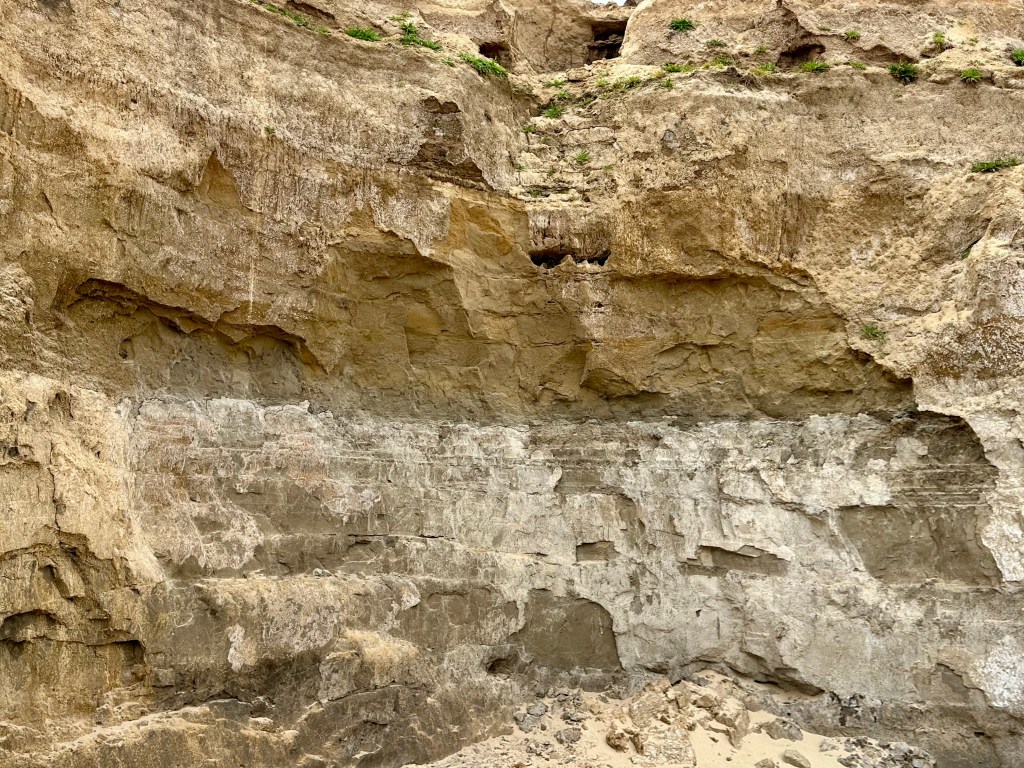
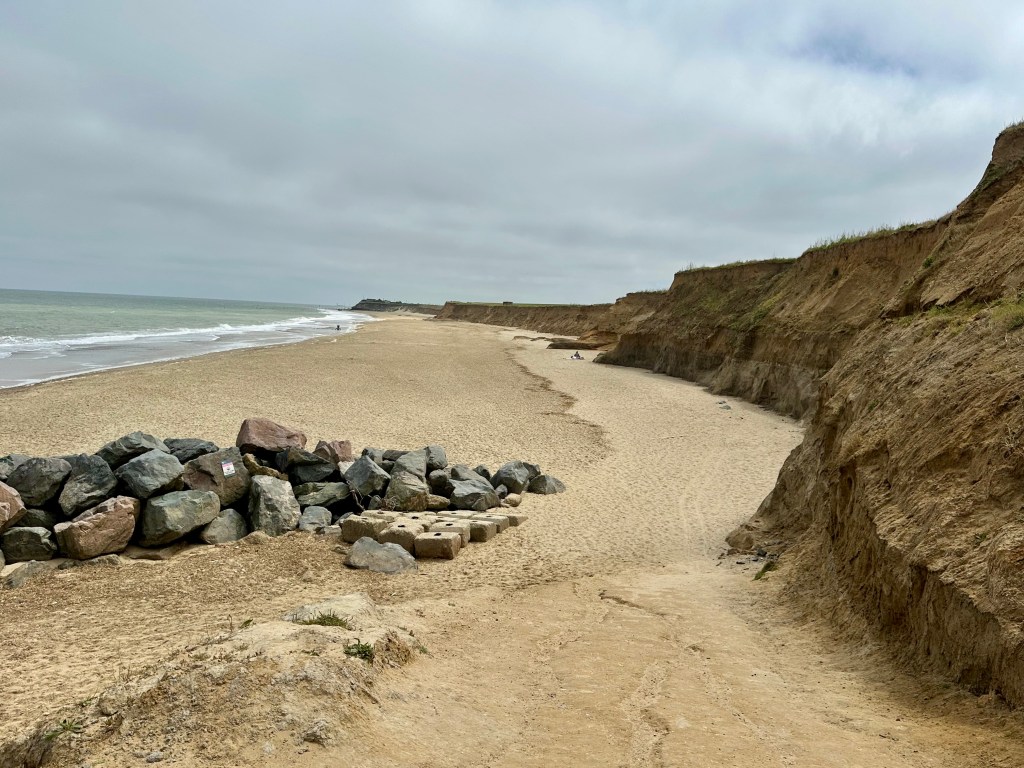
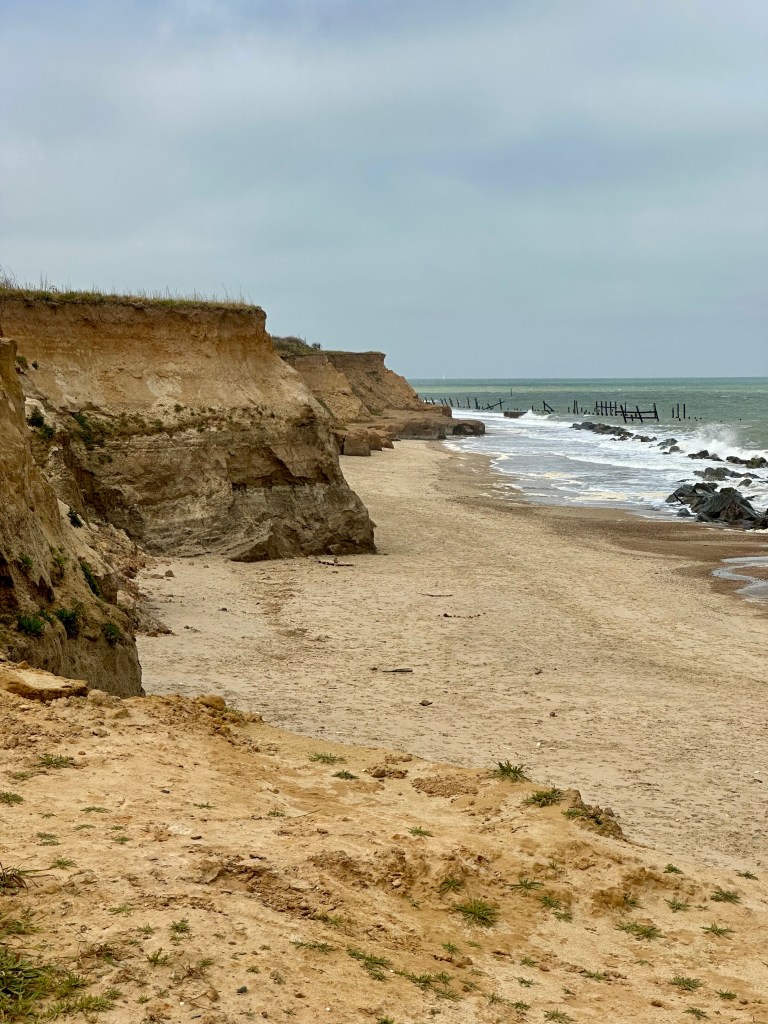
Wandering along the beach at Happisburg, I feel the immense pull of archeological history as I walk through a million years of Deep Time. The layers in the cliffs tell a story of what has gone before, but the sea is winning and every year the cliffs start to disintegrate. Happisburgh is slowly, but surely, disappearing, bit by bit, and one day it will just be a memory, like Doggerland before it.

Doggerland is more than just a long lost physical landscape, its long history teaches us that change is constant and can end disastrously. These changes mirror what is happening in today’s world with Brexit, mass migration, the rise of populism and the weakening of the world’s democracies. Add man made climate change to the mix and it appears that we are on a slippery slope to destruction.

But within this mixture, there is still a glimmer of hope. However, we manage to deal with these threats, the story of Doggerland offers us perspective. The humans of Mesolithic Doggerland, as well as earlier visitors, were immensely resourceful and adaptable, moving to safer areas, as the waters slowly engulfed them.

In order to survive, we will need to be just as resourceful and adaptable as our ancient forebears. The coming years will be a roller coaster ride, but there is always hope that ‘Homo Sapiens’ has the ability and desire to prevent the cataclysm.

the rising waters

memories of Doggerland

submerged once more

Haikus for Advent

Just before the end of November, I was at a bit of low point, as always happens at this time of year and was wondering how I would be able to deal with the run up to Christmas. Then an idea came to me, I would do an Advent Calendar, based on my photographs. I would write and post a Haiku with accompanying photograph, one for each day of Advent.

How hard could it be? As it turned out, a lot harder than I thought. During December I religiously posted a new Haiku on social media every day, a tortuous, but eventually satisfying process.

Why Haiku? Haiku was a short poetic form, traditionally written in 17 syllables, broken down into 5, 7, 5 form, that originated over a thousand years ago in Japan, but reached its fruition in the 17th century, with haiku masters, such as the celebrated poet Basho.

Since the beginning of the 20th century, Haiku has been taken up all over the world and is constantly evolving. I have since learnt, that rules are meant to be broken and I don’t have to strictly adhere to the 5, 7, 5 form as long as the Haiku flows. In a way, in today’s world of low attention spans and instant gratification, this may be the perfect form for the digital generation

This then is a compilation of my first attempts in Haiku, for better or for worse. I hope that some have hit the mark and as for the rest, I live by the maxim of the great Samuel Becket:-

‘Ever tried. Ever failed. No matter. Try Again. Fail again. Fail better.’

Advent Haiku No.1

“A wet leaf fallen,
Autumn’s gift to the earth, 
Memory of loss”

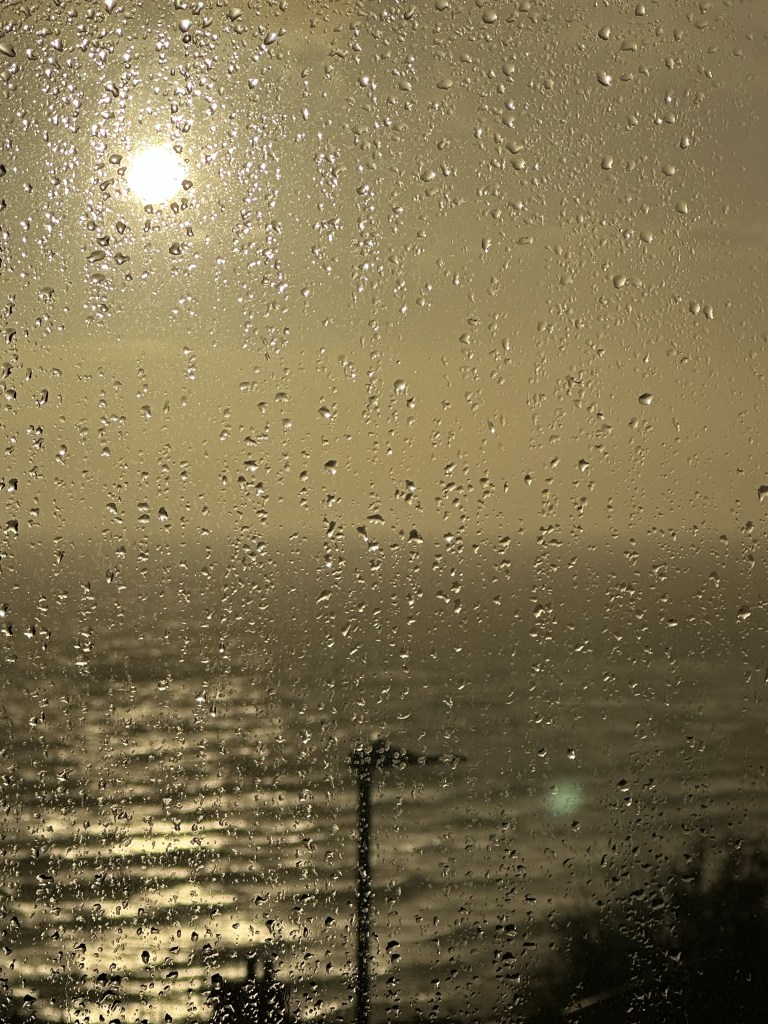
Advent Haiku No.2

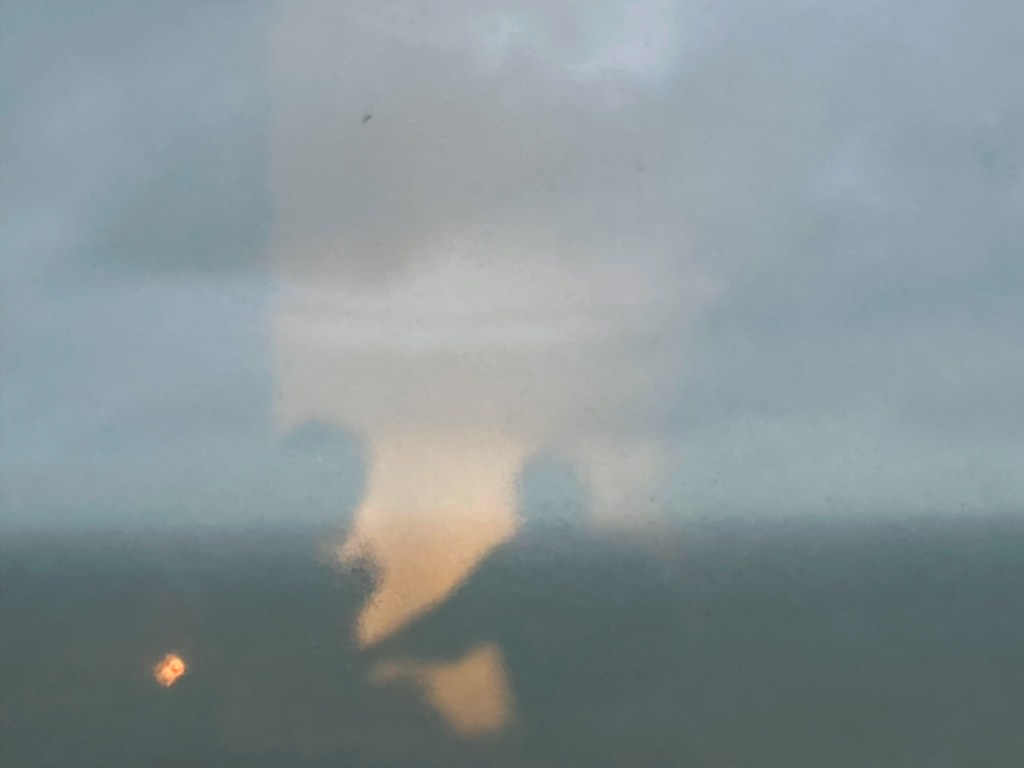
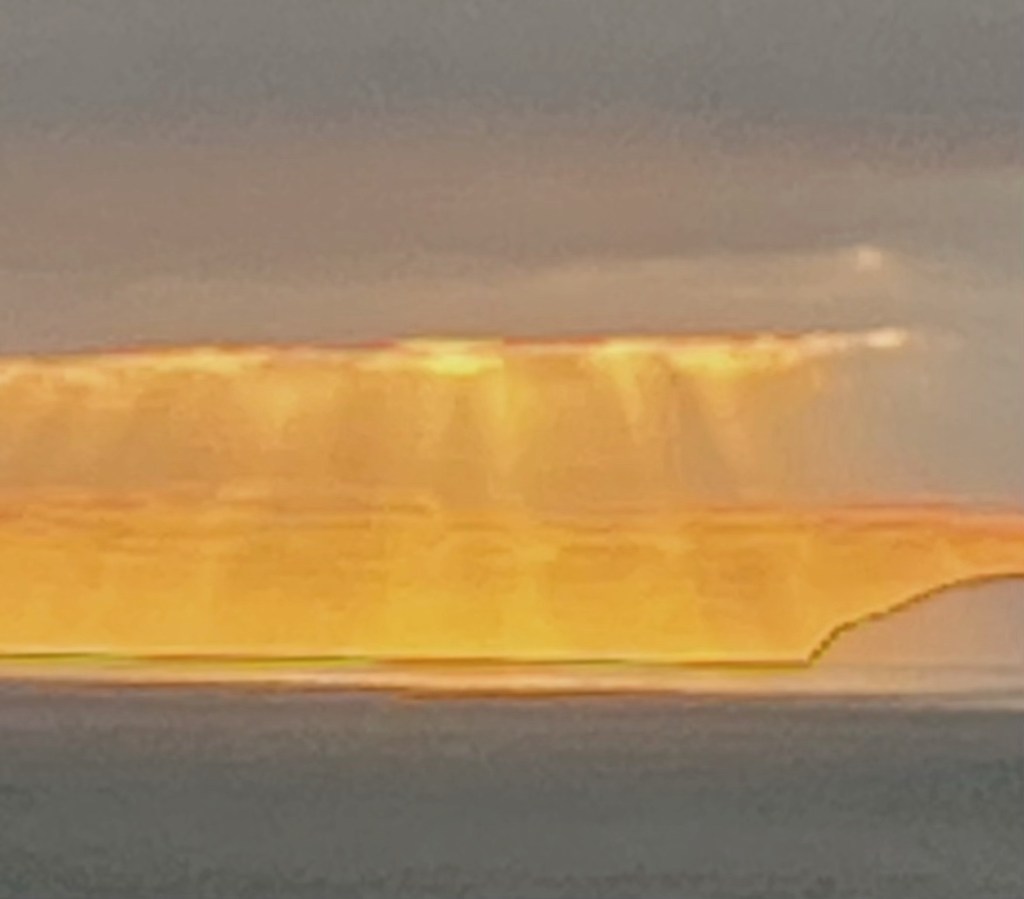
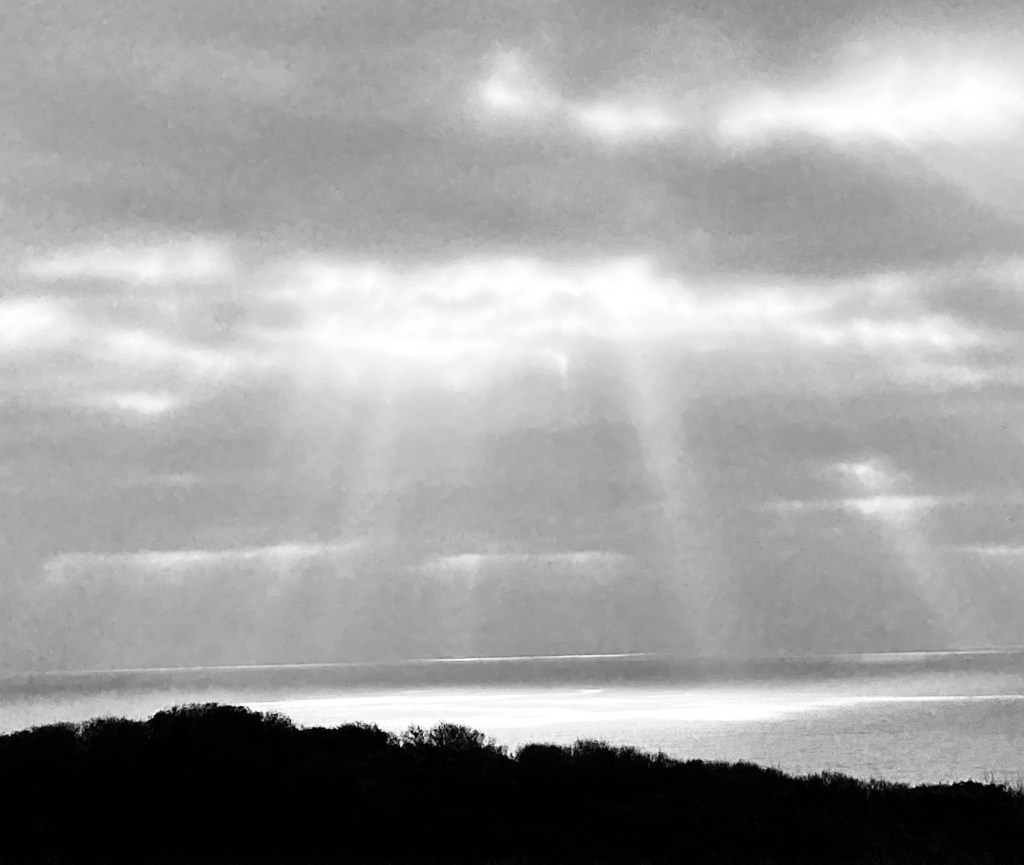
“Sun breaking through clouds,
Streaks of rain on a window,
Moment of Solace”

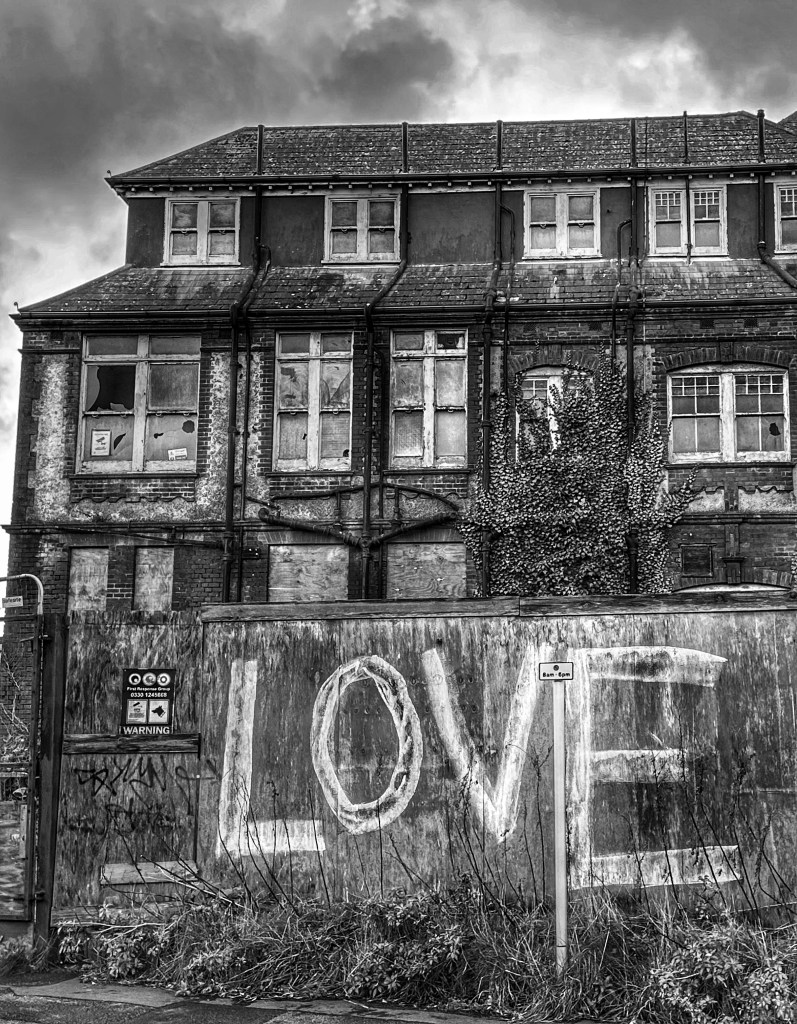
Advent Haiku No. 3

“An empty building,
Decaying and forlorn, Love
missing in action”

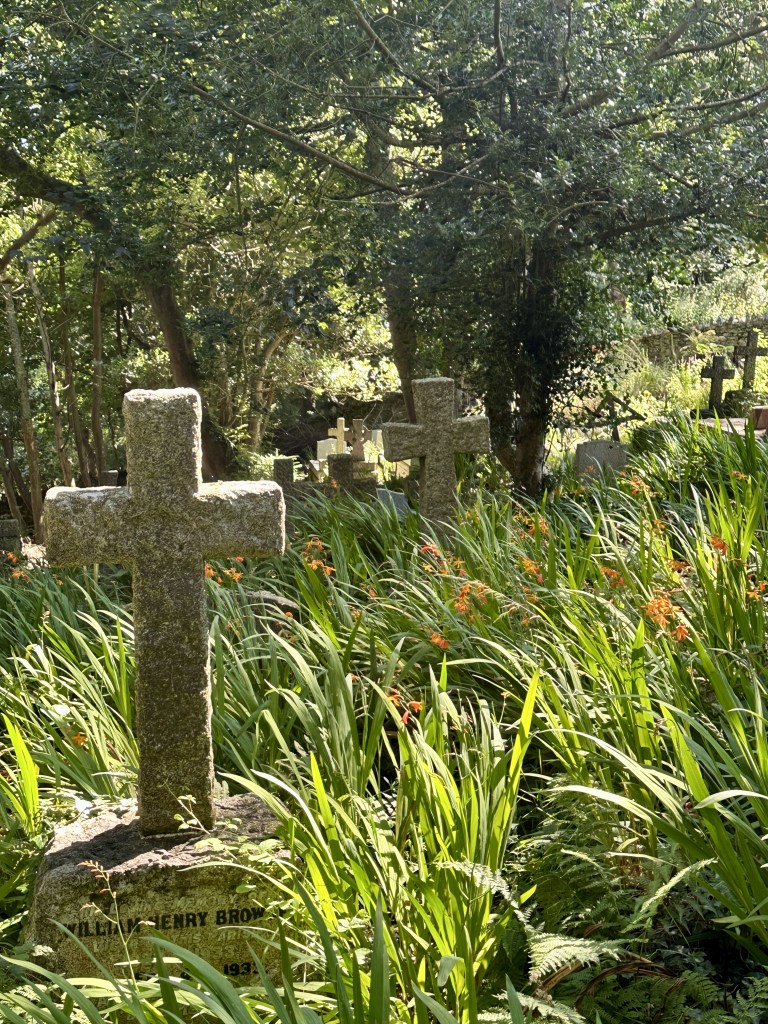
Advent Haiku No. 4

“A summer churchyard,
Monbresias praying, heads bowed,
A cross is singing”

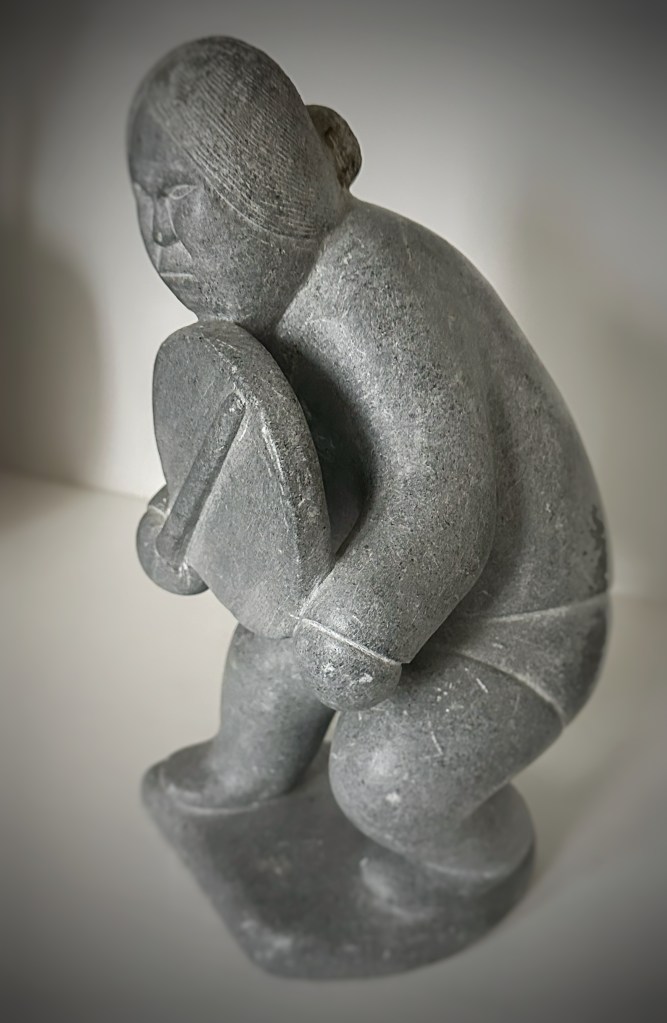
Advent Haiku No. 5

“An Inuit Shaman,
Drumming for her world, She
dreams of ice and snow”

Advent Haiku No. 6

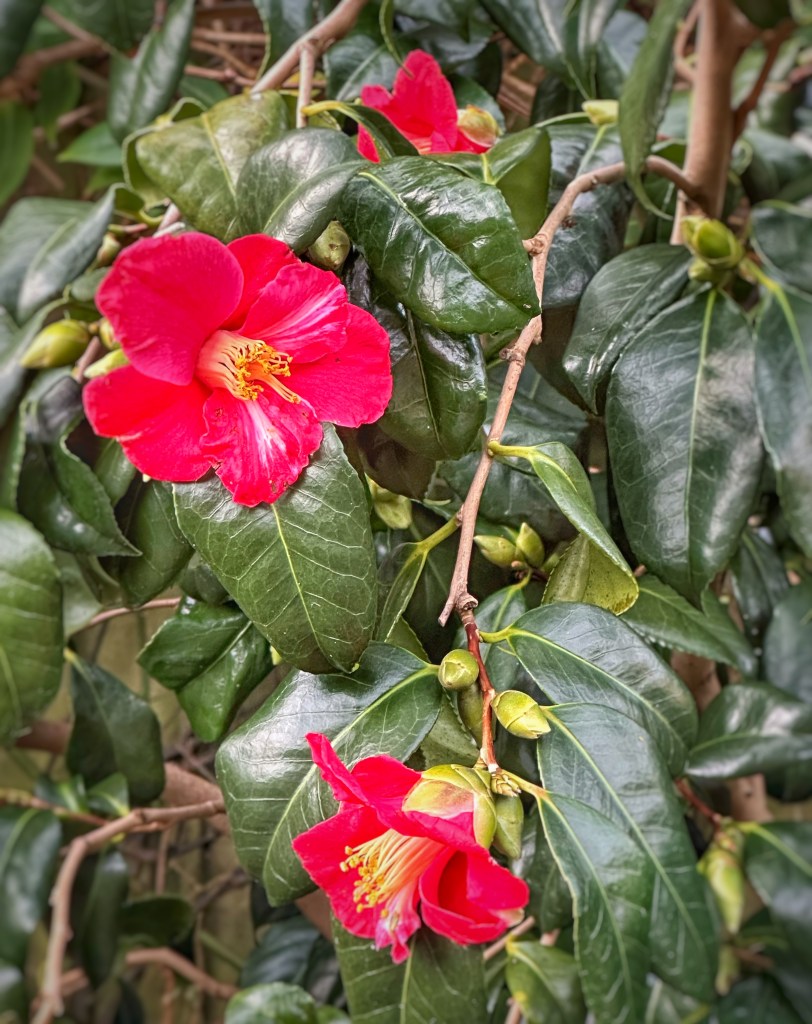
“Nervous Camellia flowers,
Trembling in anticipation, ….
The storm arrives”

Advent Haiku No. 7

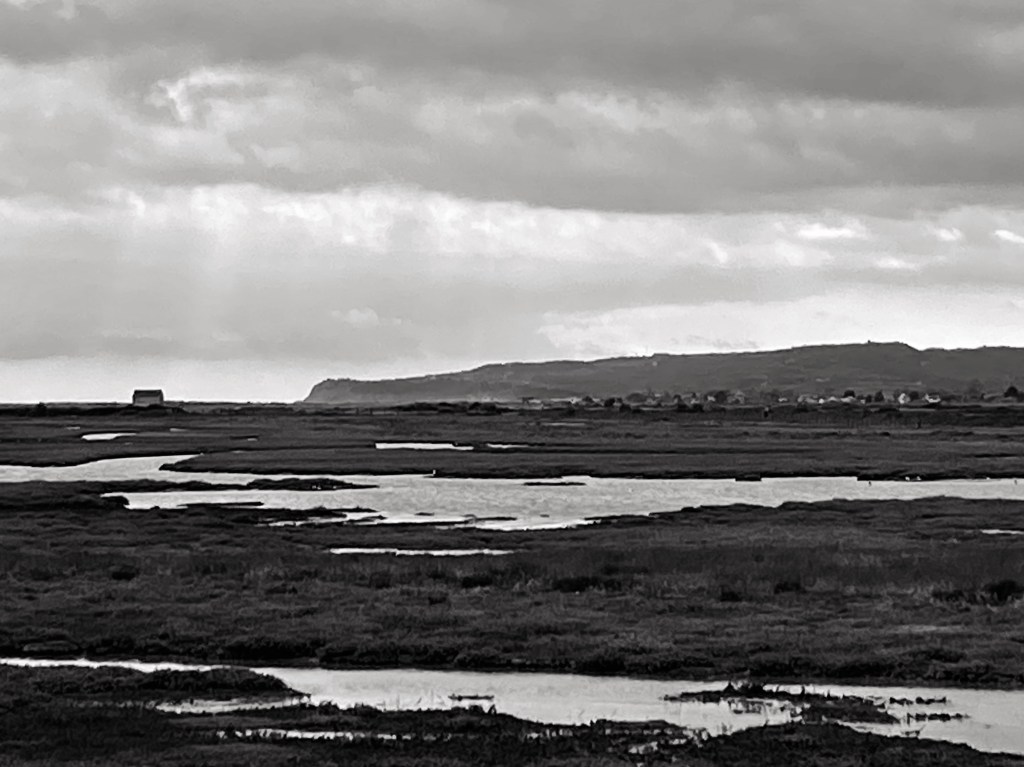
“Empty landscape,
Silence, wait…
A solitary skylark”

Advent Haiku No. 8

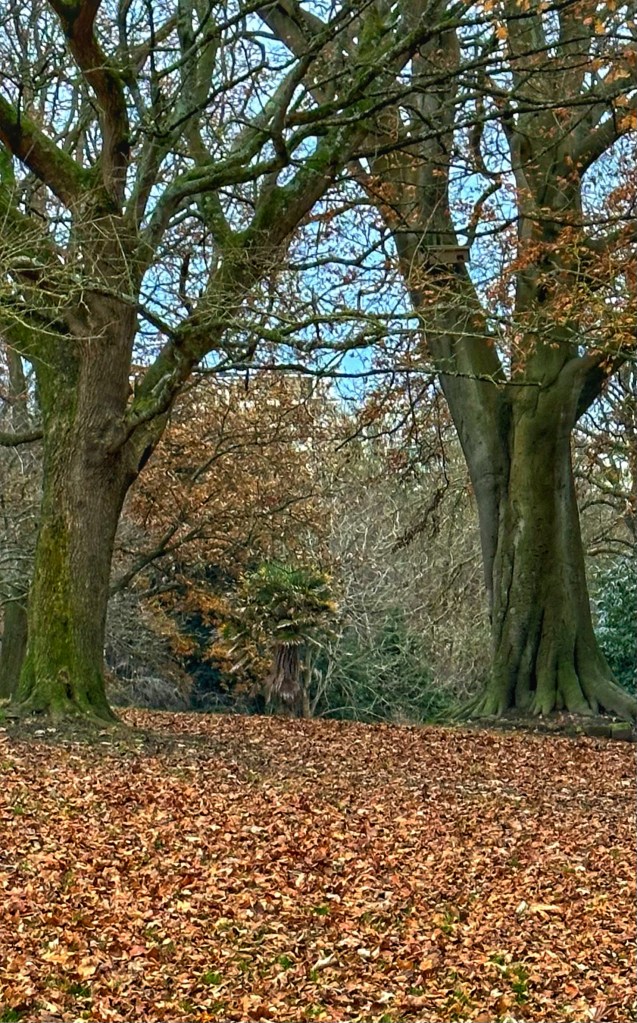
“Bare branches above us,
Walking in a field of gold, 
Banking on the spring.”

Advent Haiku No. 9

“Through the window,
Cold winter sea and sky,
Traces of warmth.”

Advent Haiku No. 10

“A bowl of chillies,
Shining red, quickly arranged,
Heat of the moment”

Advent Haiku No. 11

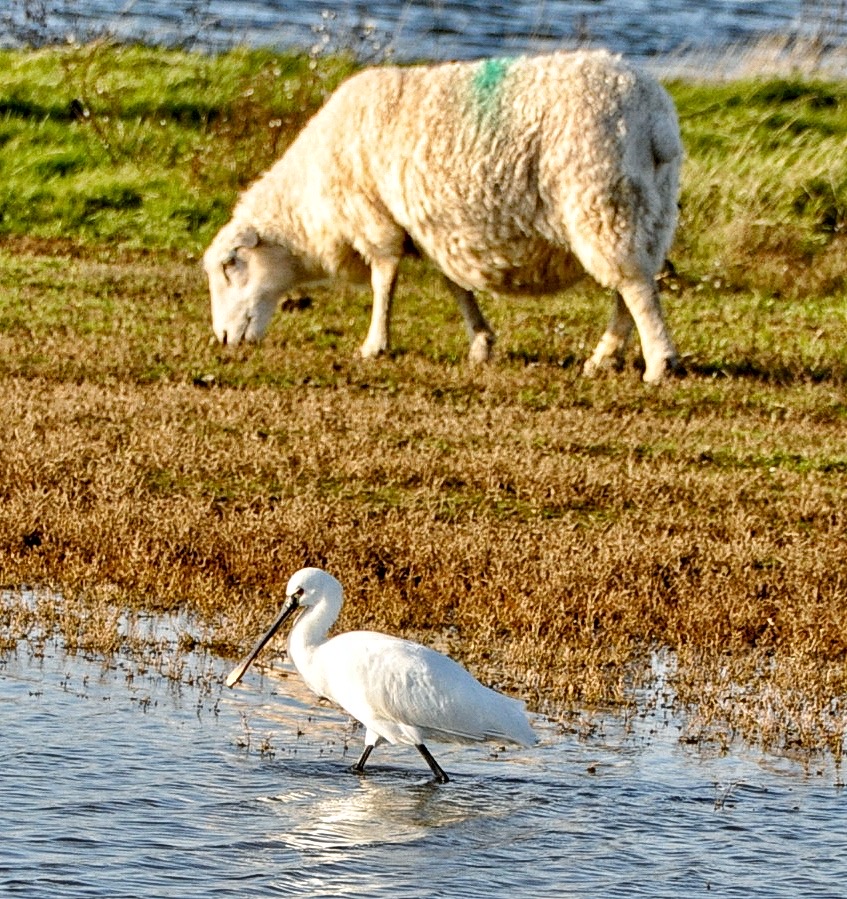
“Amongst grazing sheep,
A spoonbill poised to feed,
The gentle ripple of water”

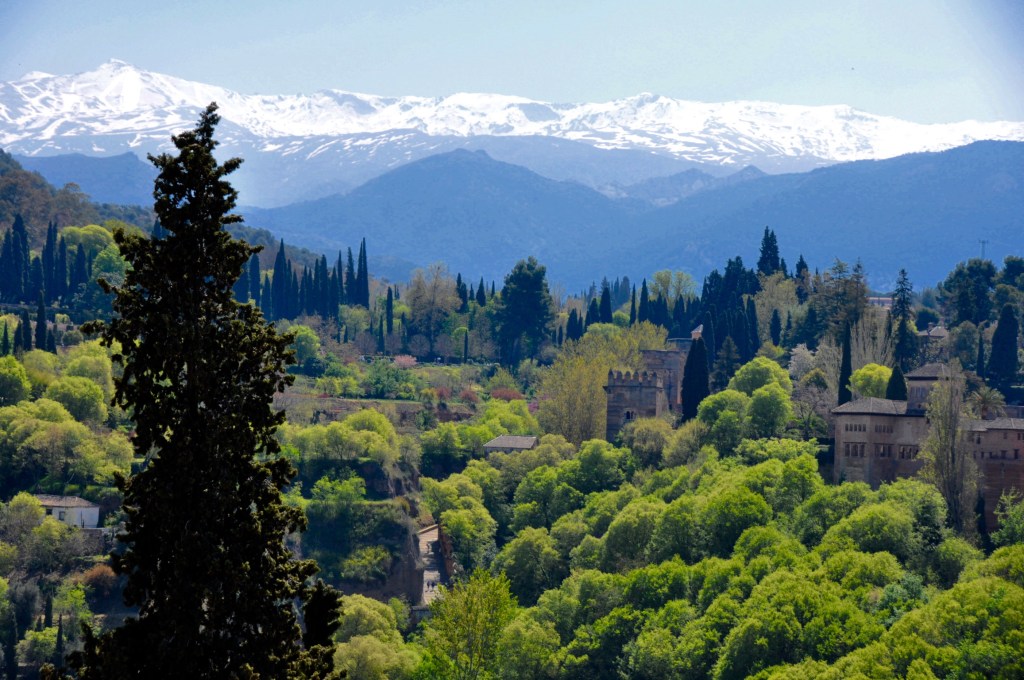
Advent Haiku No. 12

“Snow capped peaks,
Gazing sadly over Alhambra,
Last sigh of the Moor”

There is a legend that Boabdil, the last Arab ruler of Granada, when he was expelled by the victorious Spanish in 1492, turned around from the mountains, looked back at all that he had lost and gave a sigh of sadness.

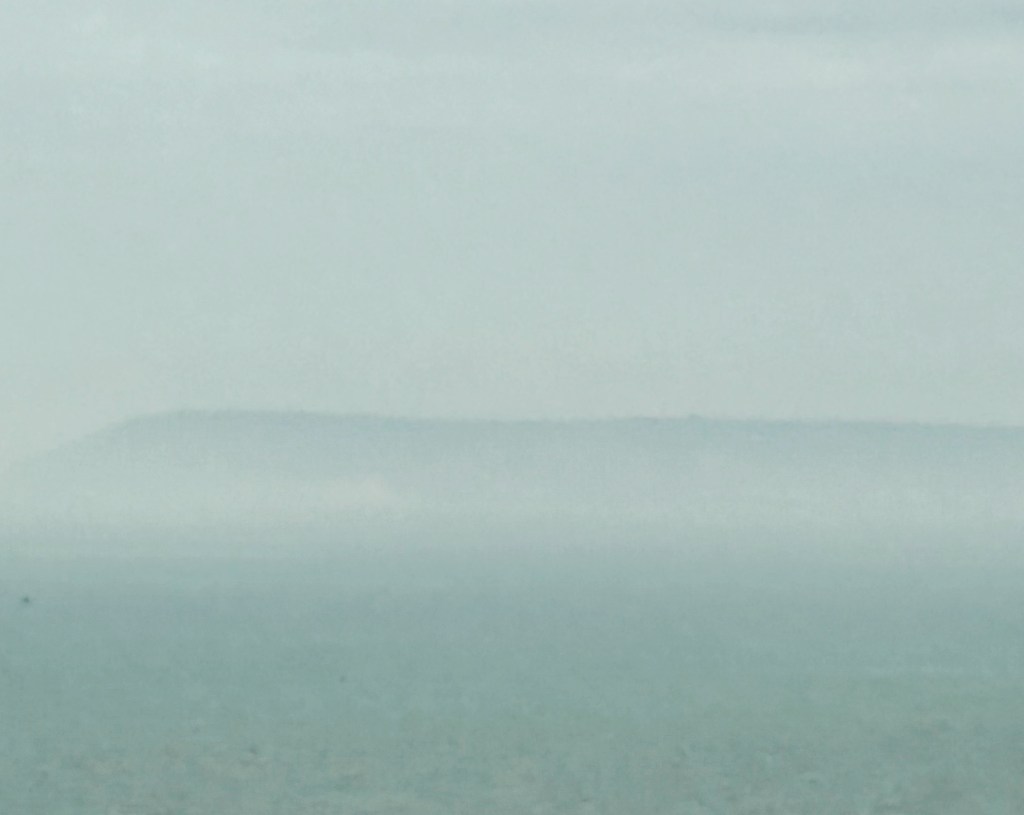
Advent Haiku No. 13

“The mist lifts slightly,
Revealing land,
The floating world.”

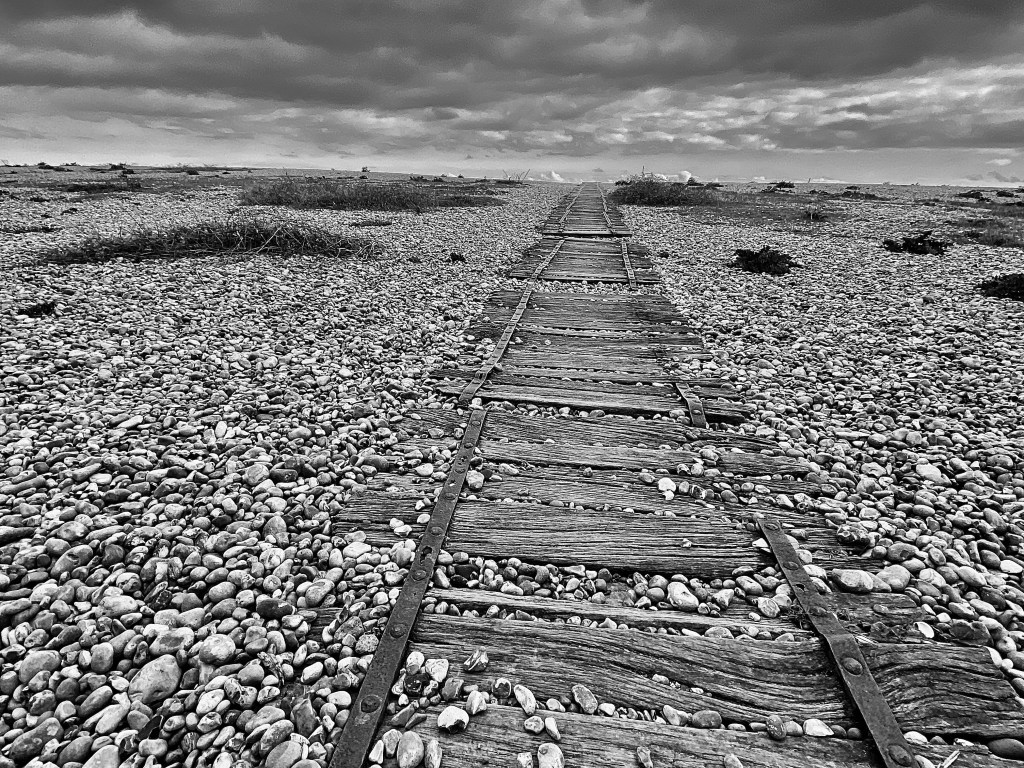
Advent Haiku No. 14

“A track of sorts,
Through a barren landscape, 
A reminder of a journey”

Advent Haiku No. 15

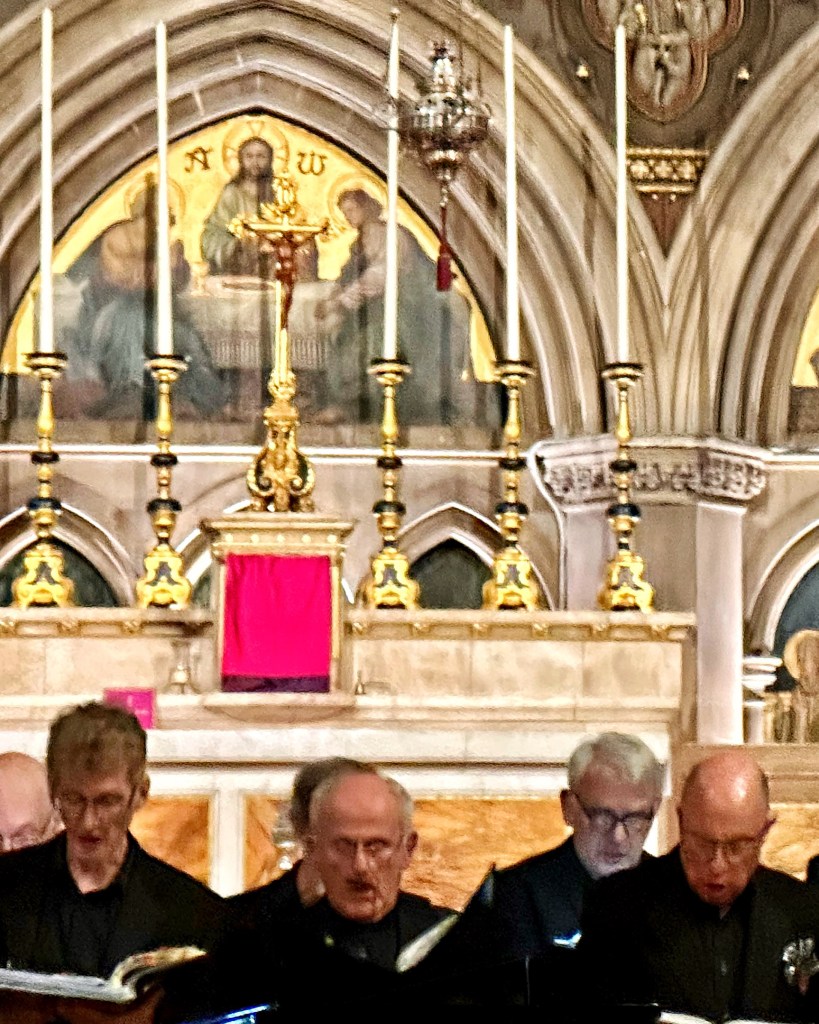
“The choir sings, 
‘The Bleak Midwinter’, my eyes stray
To the golden altar”

Advent Haiku No. 16

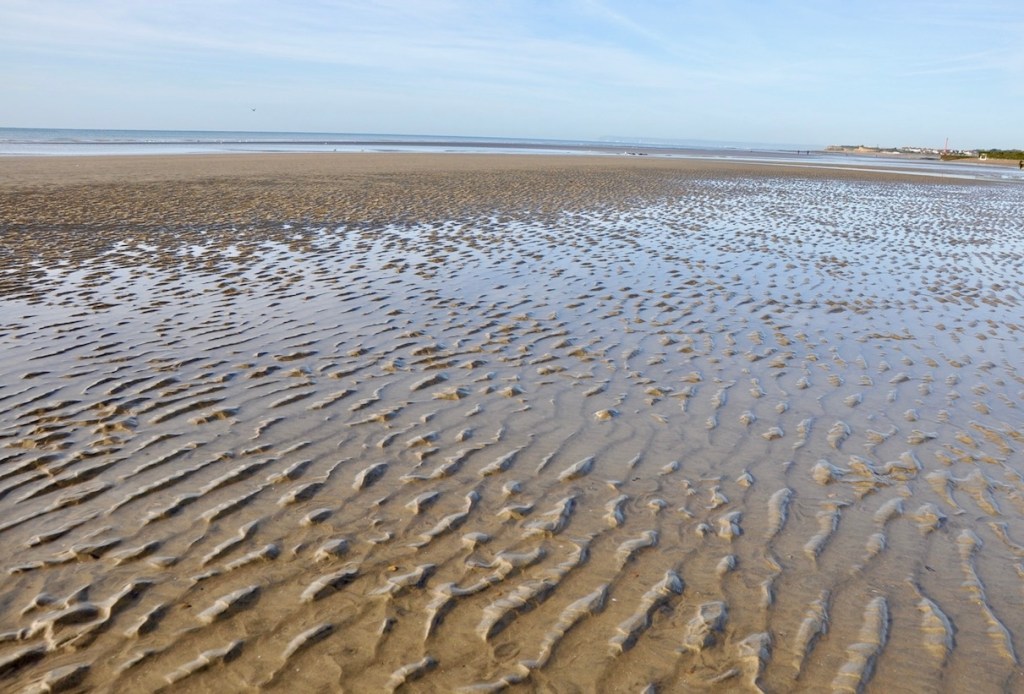
“Early morning,
Wind rippled sands,
The endless horizon”

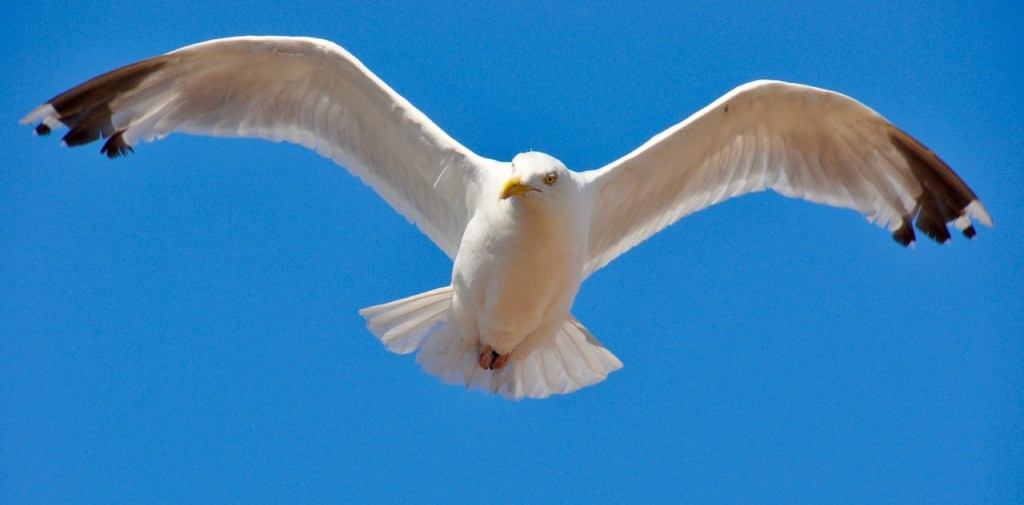
Advent Haiku No. 17

“In the slipstream,
An ancient survivor glides,
Frozen in time”

Advent Haiku No.18

“From Sheringham beach,
Gazing out over the North Sea,
Searching for Doggerland”

In recent years I’ve become obsessed with that vanished land in the North Sea, called Doggerland, that verdant landscape where hunter gatherers lived and who could walk unhindered between the British Isles and Northern Europe, before the rising waters finally submerged Doggerland 8,000 years ago, creating the islands that we live in today. A salutary lesson for us all in the age of man made global warming.

Advent Haiku No.19

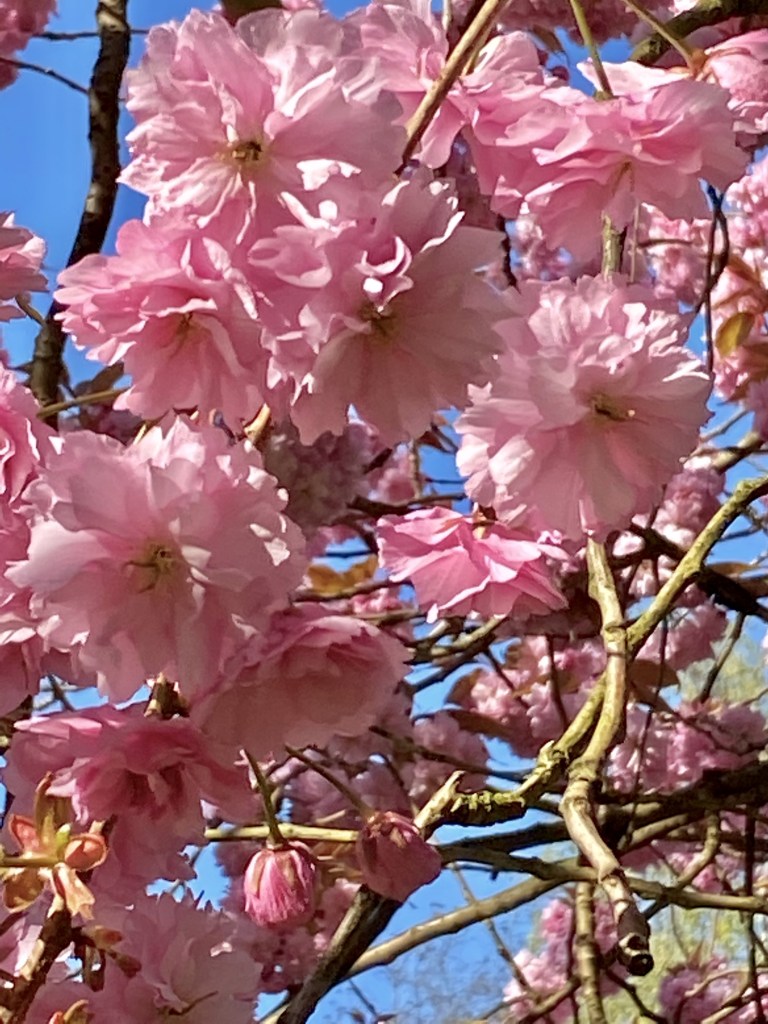
“Sakura, a fleeting moment, 
Thoughts turn to my father,
Long departed.“

Advent Haiku No. 20

“Gathering leaves, 
Autumn’s death, before
the Winter Solstice”

Advent Haiku No. 21

“Winter Solstice, first 
The dark night of the soul, then
Dawn and rebirth”

Advent Haiku No. 22

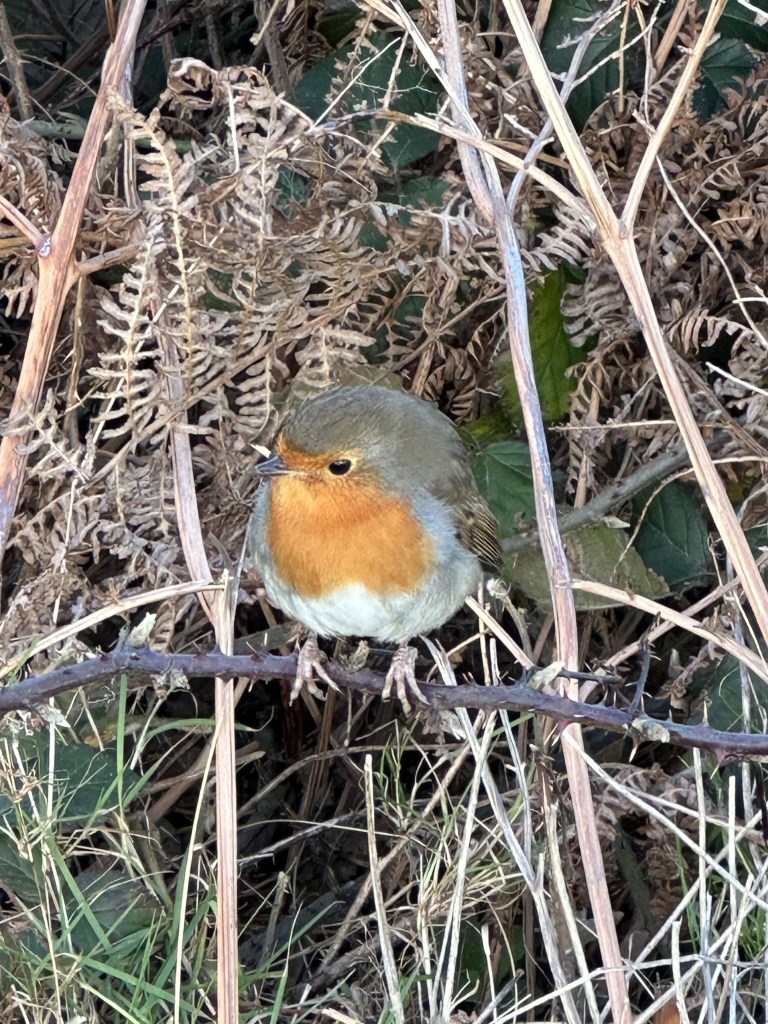
“Out of nowhere,
A Robin suddenly appears,
How auspicious! “

Advent Haiku No. 23

“The sun’s rays,
Through church flowers, 
Dancing on the stone”

Advent Haiku No. 24

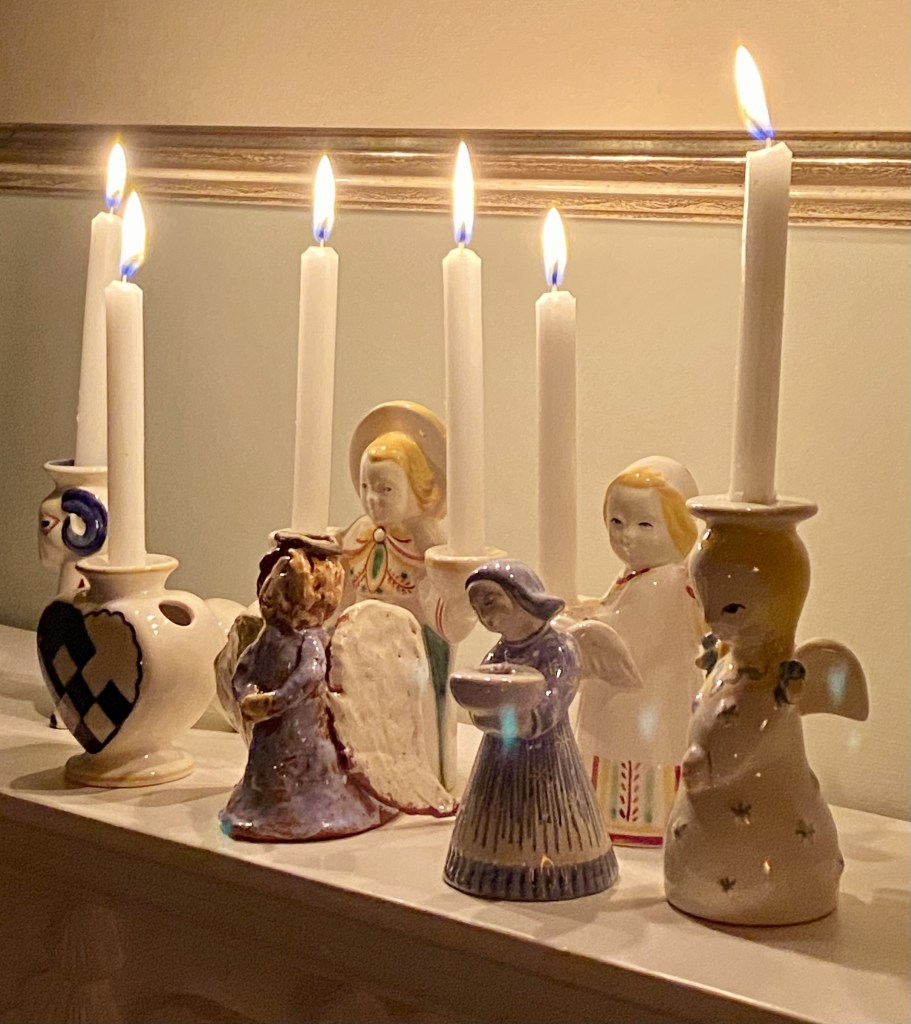
A Haiku for my wife Annette and our other Danish friends and relations.

“Engle og Lys, 
En bestemt stemning,
Hygge og Håb.

Angels and light,
A certain ambience,
‘Hygge’ and Hope.”

Notes

1 Cover picture – Portrait of Bashō by Hokusai, late 18th century

2 Photographs and Haikus are the ownership of John Bostock and may not be used without permission and attribution to the Author.

My Secret Garden

During the early days of Covid in the Spring of 2020, when paranoia and fear was the order of the day, and people crossed the road to avoid their neighbours, my wife and I found solace and peace, walking in some beautiful gardens close to our home in St. Leonards on Sea. At that bleak time, the gardens were practically deserted, but even today, in more normal times, the gardens are incredibly peaceful, only frequented by the occasional dog walker or a small family group.

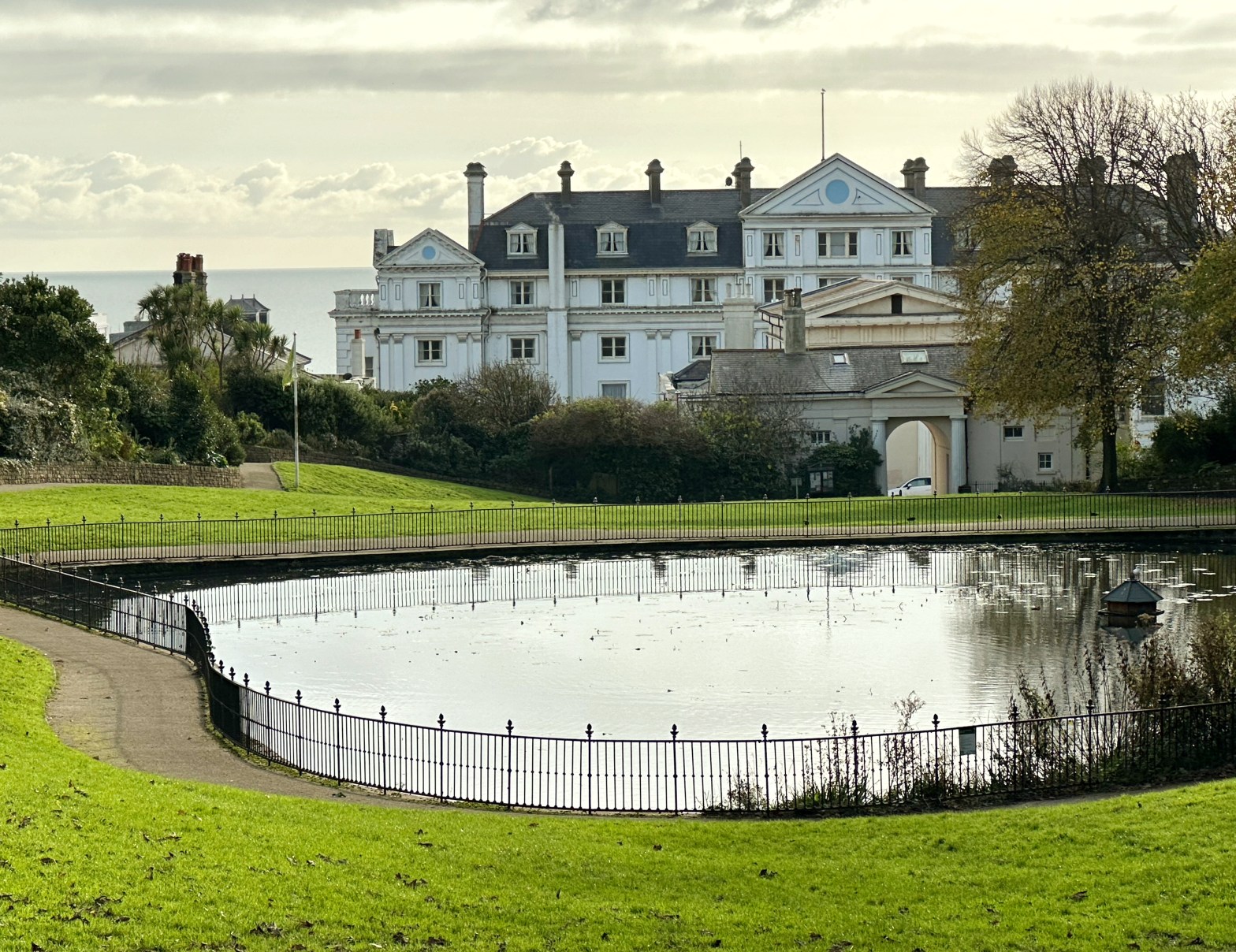
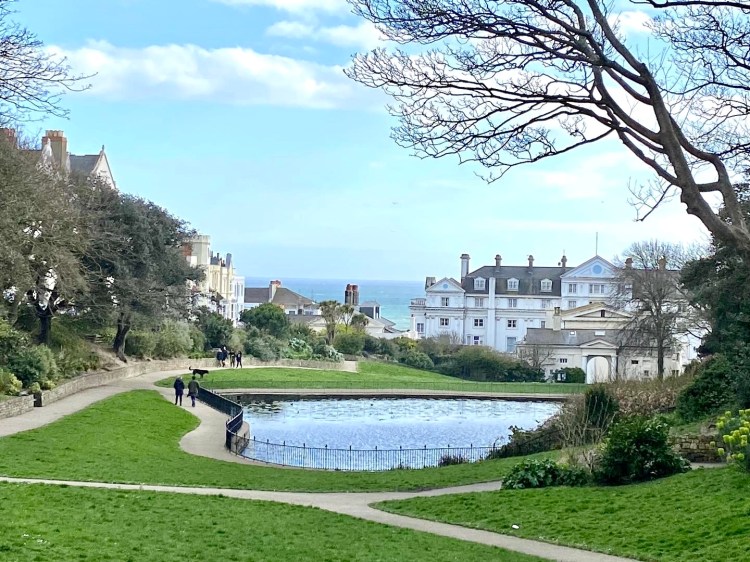
It is a place I go to, when craving solitude, or when I am feeling the deadening effect of the onset of winter. This 4.5 acre public park, St. Leonards Gardens, is one of the best kept secrets and the jewel in the crown, of our beautiful home town, with views and vistas that are practically unchanged from when it was first constructed nearly 200 years ago.

View from higher up the Gardens over the ornamental lake and South Lodge and out to sea

View looking North from the ornamental lake

St. Leonards Gardens form the heart of the original town of Burton St. Leonards, a new resort, the construction of which commenced in 1827 by the developer James Burton and which was later completed by his son Decimus Burton.

James Burton had already developed large parts Georgian London including Bloomsbury and Regents Park, but he had a vision of creating a new seaside resort for rich Londoners, who wished to spend the summer months near the water and he settled on St Leonards a small hamlet near Hastings. He purchased a large piece of land and set about creating his vision; his first task was to transform a wooded valley, reaching down towards the seashore, into formal gardens surrounded by prestigious villas and so St. Leonards Gardens were born.

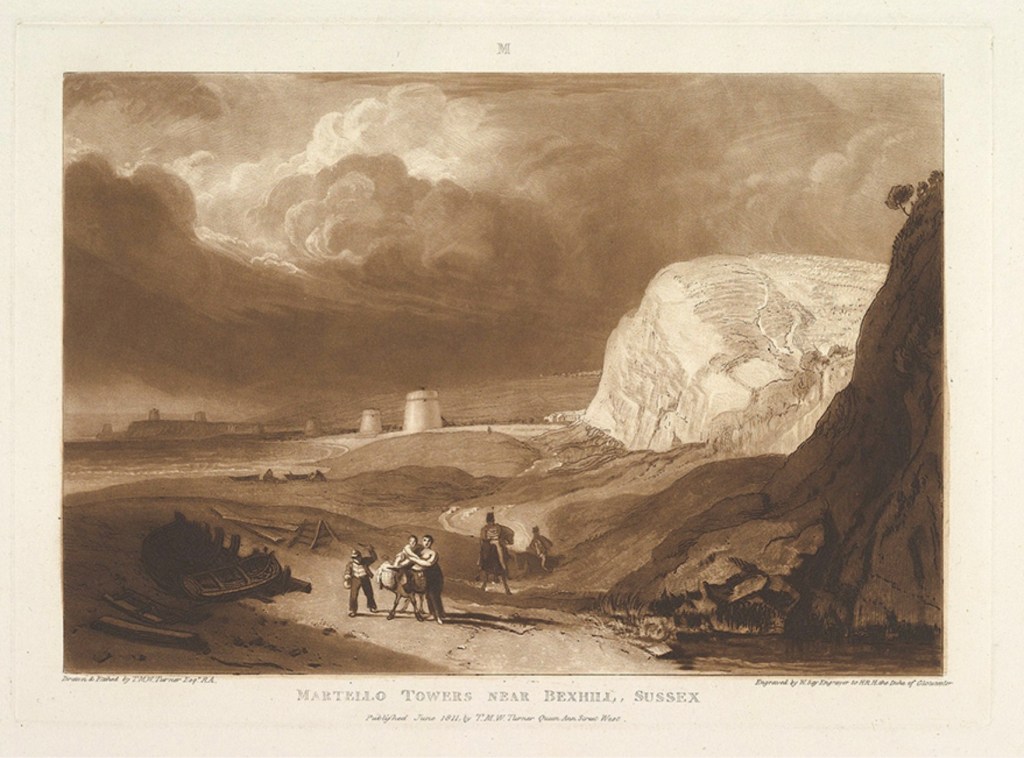
The following engraving by J.M.W. Turner entitled ‘Martello Towers near Bexhill, Sussex’ from 1808, gives some impression of what St. Leonards was like before Burton arrived, a blank canvas for him to work with.

‘Martello Towers near Bexhill, Sussex’ 1808 – Etching by J.M.W.Turner

The gardens were originally subscription only, but in 1880 were purchased by Hastings Corporation and have been open to the public from that time, and more recently, according to Hastings Borough Council:-

St Leonards Gardens was renovated with the aid of a Heritage Lottery Fund grant in 2007,  the Gardens today offer a tranquil oasis in the Maze Hill area of St Leonards, with views to the sea. The scheme has been designed to provide colour all year round with a mixture of herbaceous plants, shrubs, bulbs and trees clustered together. 

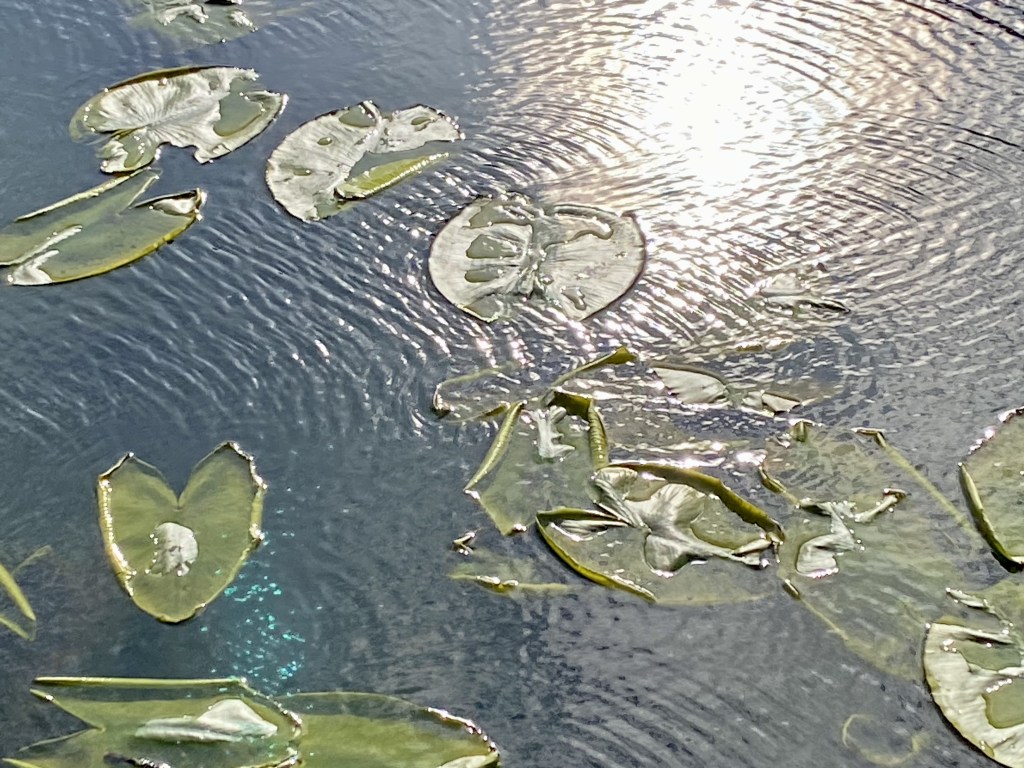
A central feature is the ornamental pond with water lilies. The park is also rich with wildlife.

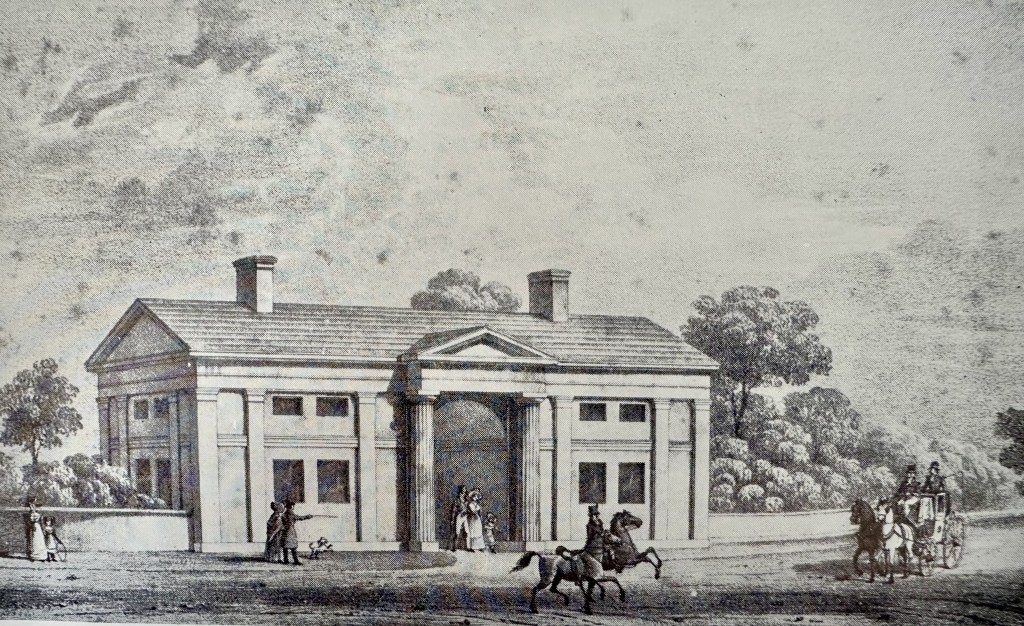
Today, access to the gardens are through the South lodge, a grand Palladian structure, which can been seen in a lithograph below, from 1829.

The South Lodge to The Gardens (From a lithograph after James Burton, 1829)

As you enter the South Gate, you are treated to a glorious view of the gardens as they slope upwards and you can just about glimpse the four turrets to the impressive gothic Clock House, one of the original Burton buildings from 1830.

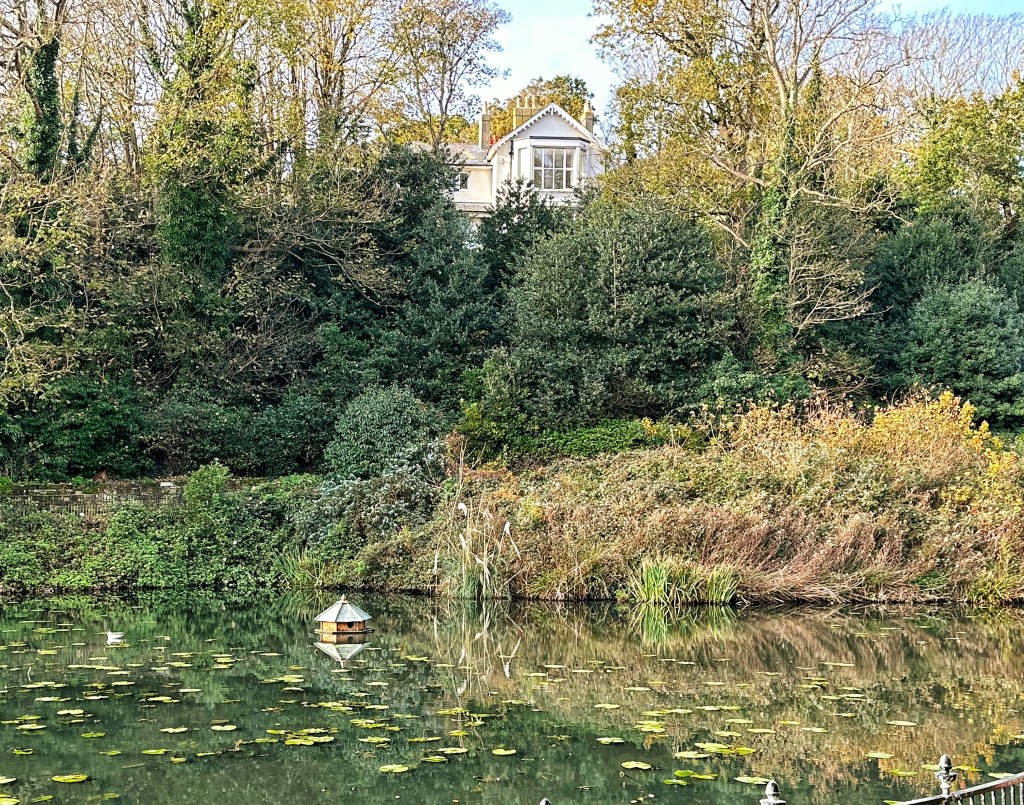
The ornamental pond is in the centre of the park and the water lilies are a glorious site during the summer months. The uniqueness of the park is that all the original Burton designed buildings surrounding the gardens are intact, the Clock House, Gloucester Lodge and Allegria Court, so that the the vista is almost unchanged since Burton’s time.

View over ornamental pond looking up towards Allegria House, which has now been converted into individual flats

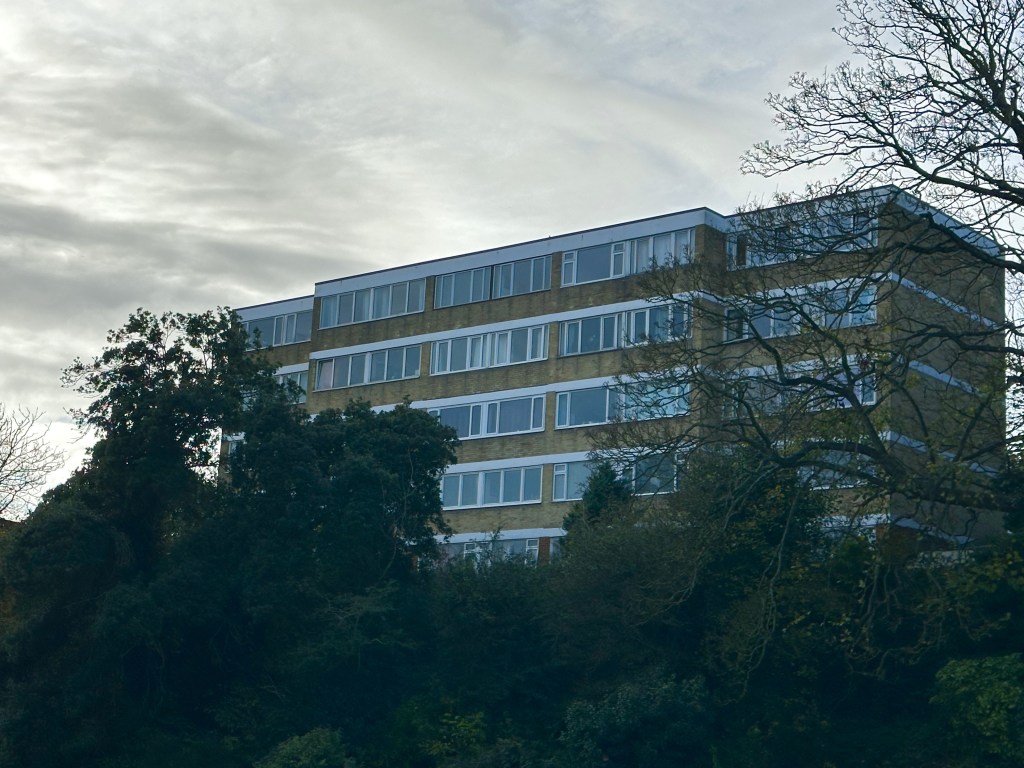
The only jarring feature is a large 1960’s block of flats overlooking the park, which is hard to avoid, when looking Westwards and totally out of keeping with the rest of the gardens.

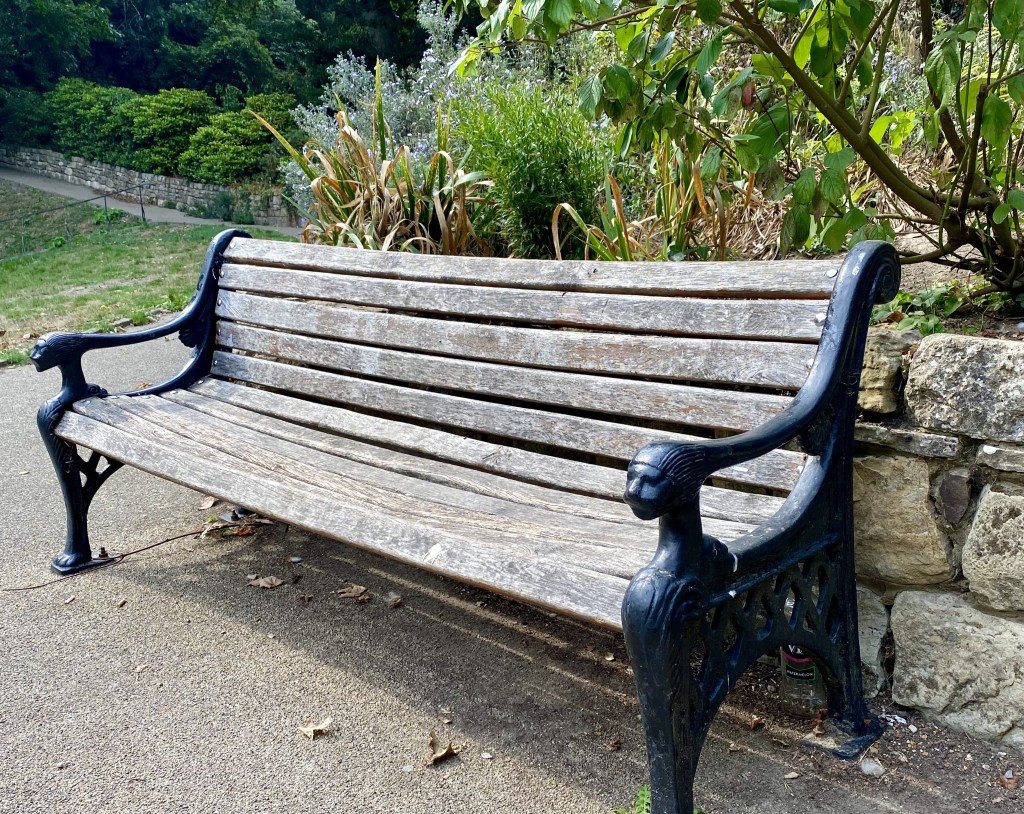
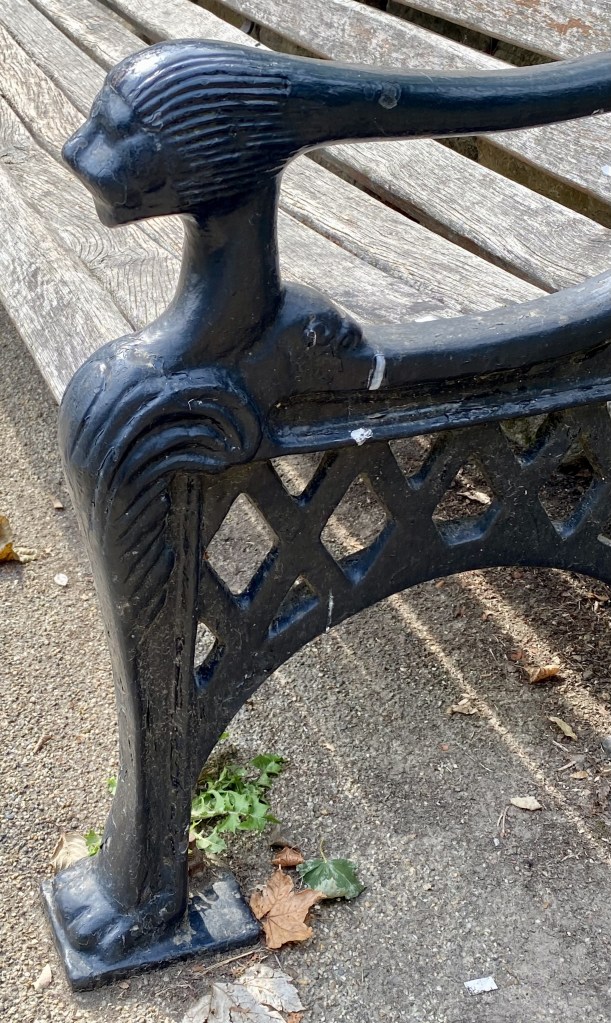
One of the striking features in the gardens are the park benches with their unique ‘Sphinx’ style Egyptian designs. I assume that these date from some time in the 19th century, but I have been unable to ascertain any further information about them. I have never come across any other garden benches with this type of feature.

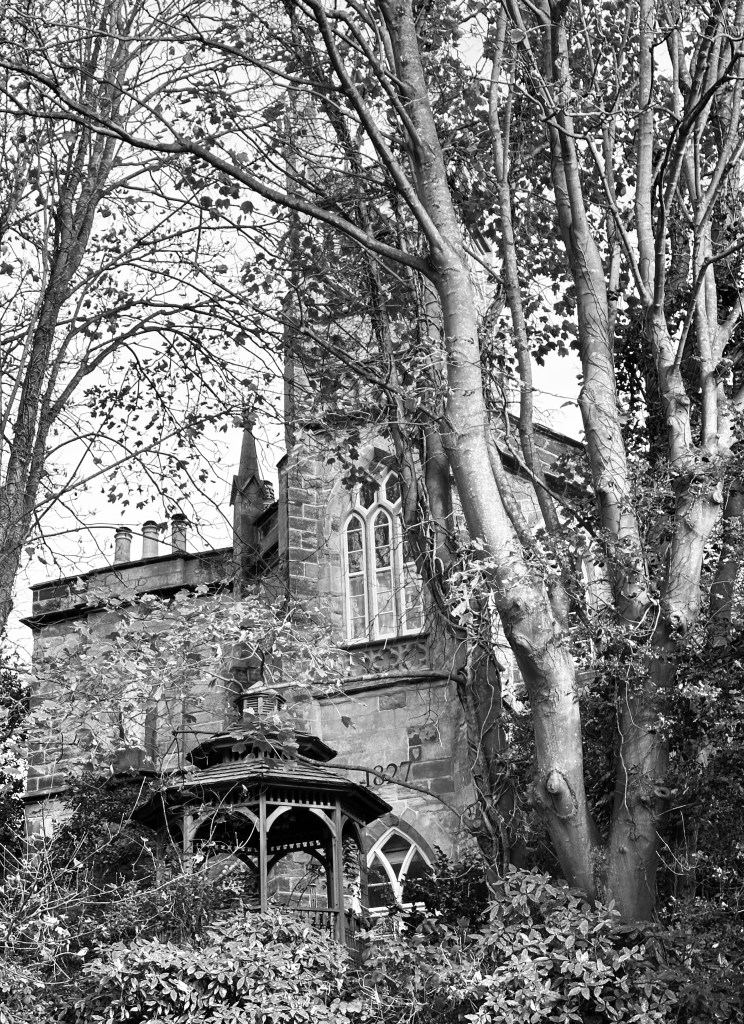
One of the very first buildings to be constructed in the gardens was The Clock Tower, which was later adapted into a 3 story villa, which looms menacingly over the garden. James Burton seemed to have worked in two distinct architectural styles, Gothic and Classical and this building definitely belongs in the Gothic genre.

Today, the building peers through the foliage, church-like, watching over the gardens, like the ghost of Burton himself, making sure that his legacy is safe.

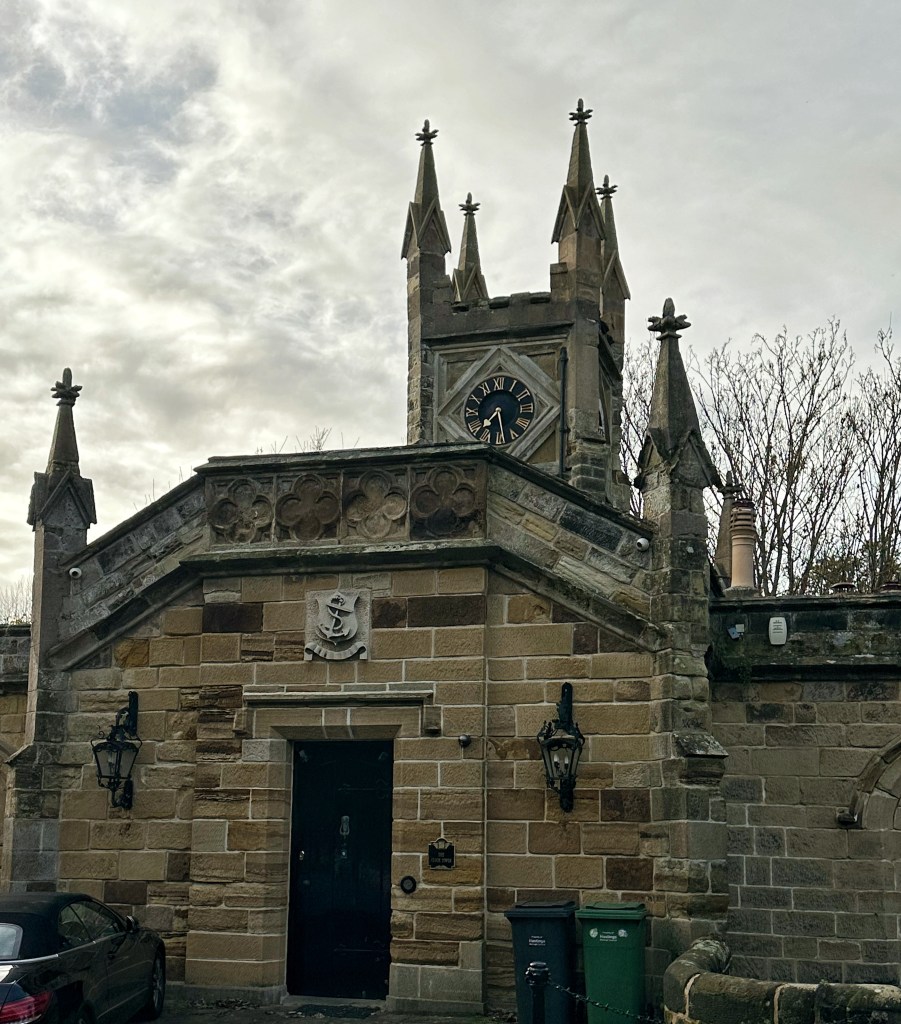
Seen from the road, the clock house appears less menacing, but is still a powerful and impressive building and has also been restored internally to reflect its Ecclesiastical and Gothic style by the present owners. The house was recently up for sale in 2022 and this article in the Standard Newspaper shows some photographs from the interior in all its glory. It is certainly not to everyone’s taste, but it is certainly unique.

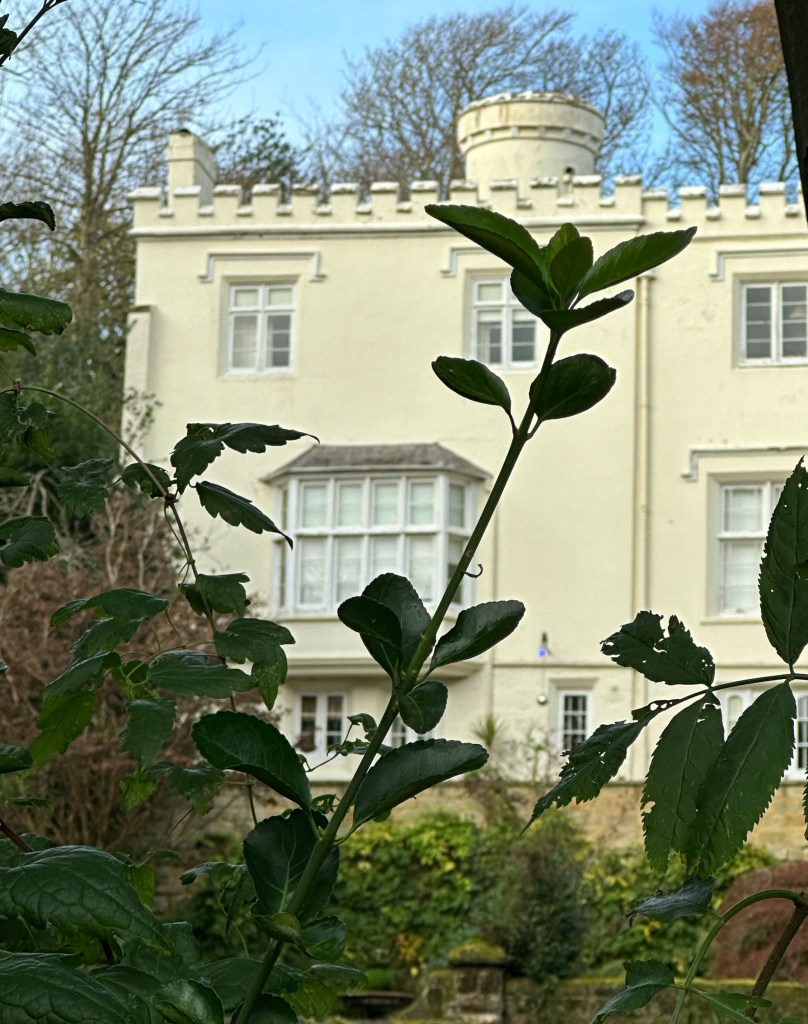
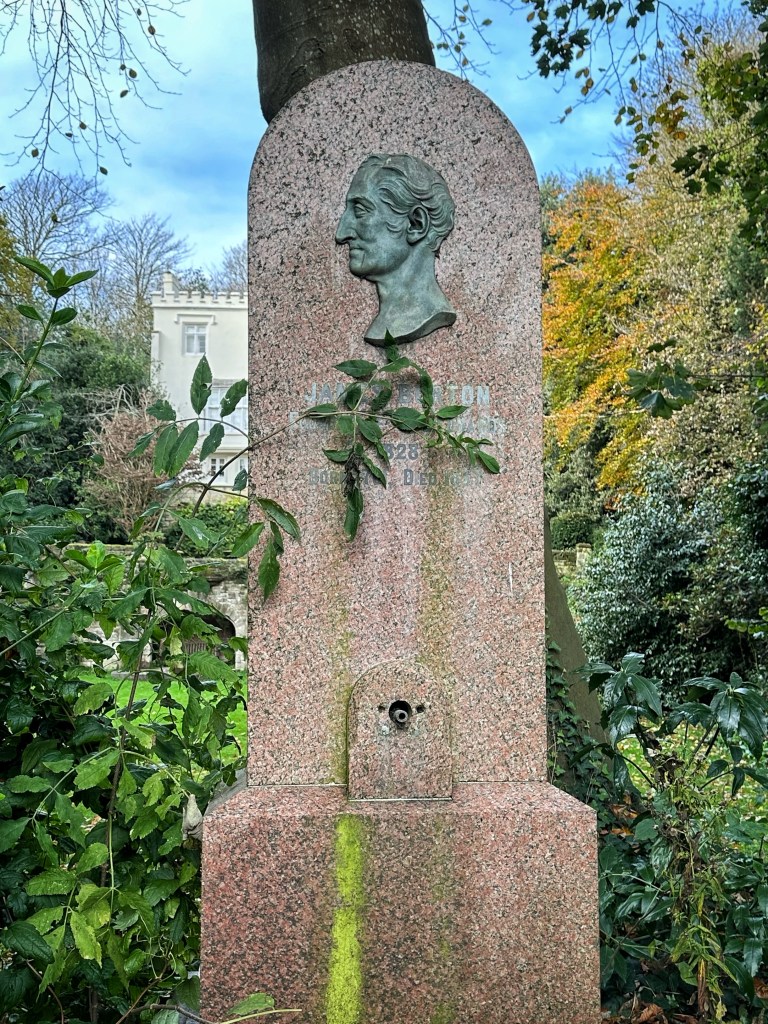
The other great building that dominates the the upper part of the gardens in Gloucester Lodge, originally titled the Castellated Villa, for obvious reasons, but was renamed Gloucester Lodge after its first occupant, Princess Sophia of Gloucester. It is still impressive to this day and also has some fine gardens, within its boundary. Hidden, amongst foliage, just inside the boundary fence of Gloucester Lodge, I discovered a granite water fountain (long since dried up) with the words “James Burton, Founder of St Leonards, 1828. Born 1761. Died 1837” and with bronze plaque of the great man, looking every bit the Roman Emperor.

This memorial to the founder of St. Leonards, can only be found by accident, or with some determined searching and I feel it would be more fitting if it was sited in a prominent position somewhere within the gardens for all to see and admire.

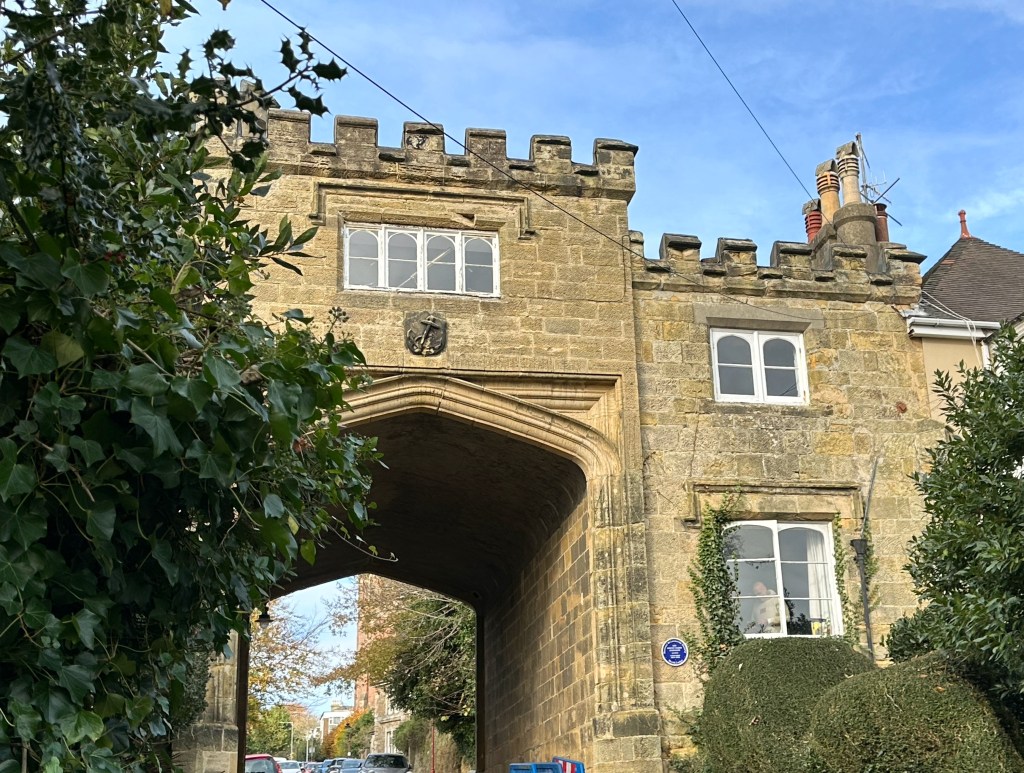
As you exit the gardens, through another building, the North lodge, which unlike the South Lodge, was built in the mock ‘highland castle’ style popular at that time and marks the original boundary of Burton’s new town. It was built to incorporate a family dwelling and, as can be seen on the plaque was lived in for 5 years by Rider Haggard, the celebrated Victorian author of melodramatic adventure tales such as ‘King Solomon’s Mines’ and ‘She’ amongst others.

Rider Haggard specialised in the fashionable ‘Lost World’ genre of the time, which was almost invented during this era by himself together with Arthur Conan Doyle and Jules Verne, where a group of intrepid explorers discover a long lost civilisation in the middle of a primitive area in some remote part of the world.

As was typical of the Victorian and Edwardian colonial period, these works were full of racist tropes, often depicting the inhabitants of Asia and Africa as primitive savages. Although the books have gone out of fashion, the films based on ‘She’ have been, for some strange reason, perennially popular and there have been eight films made in all, five during the silent era. This excerpt from Wikipedia gives you a taste of the story.

After receiving honourable discharges from the British Army in Palestine in 1918, Professor Holly, young Leo Vincey and their orderly Job embark on an expedition into a previously unexplored region of central-east Africa. They discover the lost city of Kuma after Leo receives a mysterious map revealing the city’s whereabouts.

This lost realm is ruled by Ayesha, who is also known as “She-Who-Waits” and “She-Who-Must-Be-Obeyed.” Ayesha is a beautiful, immortal queen, who believes Leo is the reincarnation of her former lover, the priest Kallikratees, whom she had killed two thousand years before when she found him in the intimate embrace of another woman.” 

You can get the gist of the plot, melodramatic tripe you may say, but for some reason the Hammer film’s slightly kitch 1965 version of ‘She’ had a big effect on a young adolescent boy. I now realise, that at such a tender age, my raging hormones could not resist the temptation of Ursula Andress luring me into the blue fire to share eternity with her. I am happy to say that, today, I can easily resist the charms of ‘She who must be obeyed’.

The original advertising poster for ‘She’ in 1966

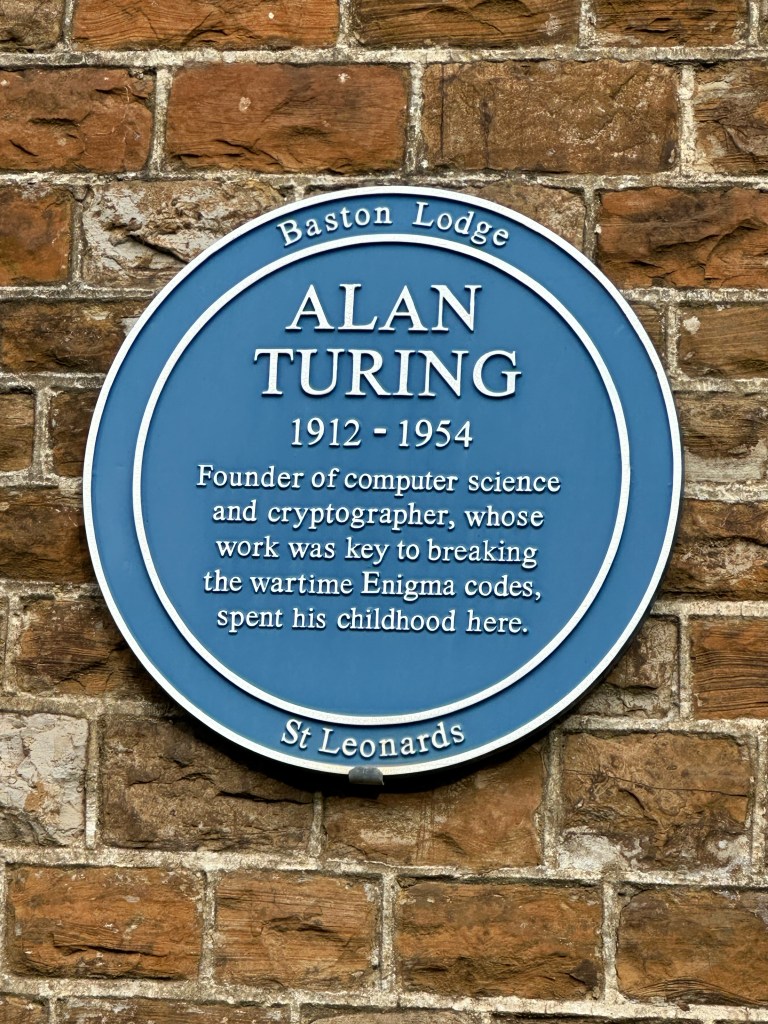
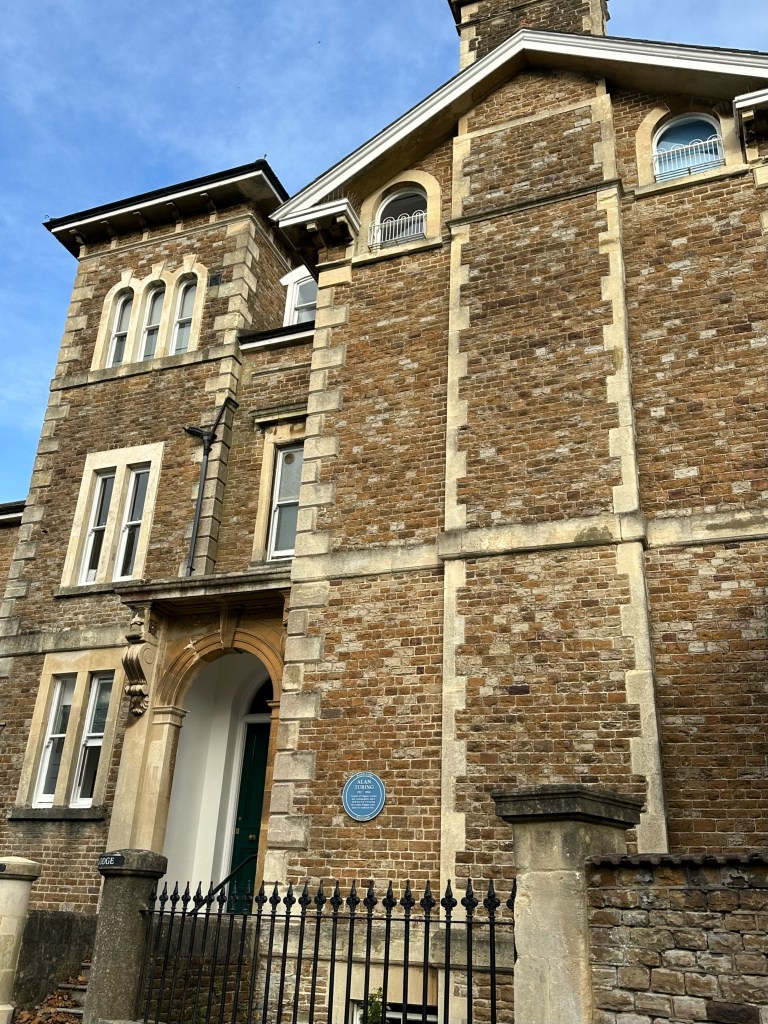
Finally just outside the North lodge is Baston lodge and I was delighted to discover, when I first moved to St Leonards, that a great hero of mine, Alan Turing, had spent his formative years in this house.

Most people know of how, during World War 2, Turing, together with a crack team of code breakers, solved the German enigma code and in doing so, probably shortened the war by a several years and saved countless lives.

However, this mathematical genius was also much, much more than that, he was a computer scientist, logician, cryptanalyst, philosopher and theoretical biologist. He was pioneer of early computer design and one of the driving forces behind the development of Artificial Intelligence.

And how did we honour this British genius? There was no happy ending for Alan Turing, as he was unlucky enough to be a gay man in an era of homosexual oppression. There is a strain of vicious hypocrisy in British society, of which Turing was a victim. In 1951 after reporting burglary at his house, instead of investigating the crime, Turing and another man were arrested and charged with having a homosexual relationship. His partner was given a suspended sentence, but Turing was given the choice of prison or to have chemical castration. He had no real choice, but to accept the latter.

From there on, everything went downhill, he was denied security clearance and also denied entry to the United States. All of these actions meant that effectively his stellar career was over and in 1954 he was found dead in his house, after consuming cyanide. It still makes my blood boil to this day, how society treated our best and brightest, in this wicked and shameful way.
After the above diversions, we might just turn around and go back down to the gardens, sit by the ornamental lake, and spend a few minutes in quiet contemplation, before we return to the hustle and bustle of modern life.

James Burton died in 1837, but his son Decimus Burton continued the vision of his father in building a seaside resort for the ages, which extended far beyond the confines of the gardens and its environs. He went on to become one of the most renowned Architects of the Victorian era, some of his famous buildings include the Palm house in Kew Gardens, the Wellington Arch outside Hyde Park and swathes of Tunbridge Wells, but that is a story for another time.

Our Melting Pot Island

In our fractured times, there is a false narrative going round, mainly promoted by populists throughout Europe and America that the people in their particular country are somehow unique, special and superior to other countries.

As mobs start roaming our streets, stirring up hatred against refugees and asylum seekers, it is becoming, increasingly, more urgent to set the record straight. In this narrative, I am attempting to give a longer term perspective on migration and to prove that people in these islands, and indeed throughout the world, have always been on the move and that’s the way it always was and always will be, until humans disappear from this earth of ours.

People have been travelling, since humans first emerged in Africa two million years ago. They’ve moved as a result of climate change, in search of food and later in our more recent history, as a result of invasion, famine, war or people just looking for a better life.

In the British Isles, one of the earliest human species, ‘Homo antecessor’, was walking along our beaches, nearly one million years ago. This astonishing discovery was made in 2013 on a beach in the hamlet of Happisburgh (pronounced Haze-bruh) in Norfolk, when a set of fossilised footprints were discovered that date to the end of the early Pleistocene around 950–850,000 years ago. They were photographed on 3D before being destroyed by the tide shortly afterwards. Research results on the footprints were announced on 7 February 2014, identifying them as the oldest known hominid footprints outside Africa.

Photographs of Area A at Happisburgh.a. View of footprint surface looking north. b. View of footprint surface looking south, also showing underlying horizontally bedded laminated silts. Photos: Simon Parfitt.

As well as the footprints, some amazing artefacts have been discovered on the beach in Happisburgh, including this stunning hand axe carved in black flint, the oldest hand axe ever discovered in North West Europe, that had lain there on the foreshore for 800,000 years and currently resides in Norwich Castle Museum. This beautiful object is exquisitely carved and is a work of art in its own right, comparable in its simplicity to the best modernist sculpture.

Happisburgh hand axe discovered on the foreshore in 2000
(Rights Holder: Norfolk County Council. Licensed under a Creative Commons Attribution 2.0 Generic License)

Half a million years ago, another human species, ‘Homo heidelbergensus’ arrived on the scene, just to disappear again 50,000 years later, when life became uninhabitable in Britain for millennia, as a result of the onset of another ice age.

Then about 400,000 years ago, our most recent close relatives, the Neanderthals ‘Homo neanderthalensis’, started visiting the islands on and off, through various changing climatic conditions until, eventually, our own species, ‘Homo sapiens’ eventually appeared on the scene about 40,000 years ago.

Happisburgh is the oldest known settlement in Northern Europe that has been discovered to date, and I think it deserves the status of UNESCO World Heritage Site, but they need to be quick, because, as a result of global warming and rising sea levels, Happisburgh is fast disappearing under the water. One day it will just be a memory, like many other coastal settlements.

A permanent presence in Britain only commenced 10,000 years ago, when the most recent ice age ended and the glaciers started melting. At that time, the British Isles was connected to Europe by a massive landmass, which has been named ‘Doggerland’, our very own Atlantis. It is almost impossible today , when looking out over the vast expanse of the North Sea towards Holland and Scandinavia, to imagine our predecessors hunting and fishing in a lush landscape of marshland and rivers.

Ever since I heard about ‘Doggerland’ it has captured my imagination, and no one has painted a more evocative picture of this land better than Julia Blackburn in her wonderful book ‘Time Song – Searching for Doggerland’ which is part history, part archeology and part autobiography. This is her description of Doggerland:-

“I’m writing about a country called Doggerland. It emerged after the last Ice Age and with the warming of the climate it became a wonderfully fertile place of rivers and lakes, gently rounded hills and sheltered valleys, reed beds and salt marshes in the lowlands , trees on higher ground and a profusion of life: fish, birds, animals and humans as well. These were people who left few traces of their passing. They hunted with weapons made from wood, bone or stone; they had canoes cut from the trunks of trees; they had dogs working with them and sometimes buried their dead alongside their dogs. But as the ice went on melting the sea levels rose dramatically – you can’t believe how fast , it could be more than two metres within a century – so the land was inundated or made inaccessible. Seven thousand years ago, Doggerbank was still there as an island and then it too was gone.”

Map showing Doggerland from 16,000 B.C. until the Present time

As Doggerland became submerged those thousands of years ago, the British Isles eventually emerged as a separate entity, cutting us off from Europe and Scandinavia and paving the way, for better or worse, for a new identity.

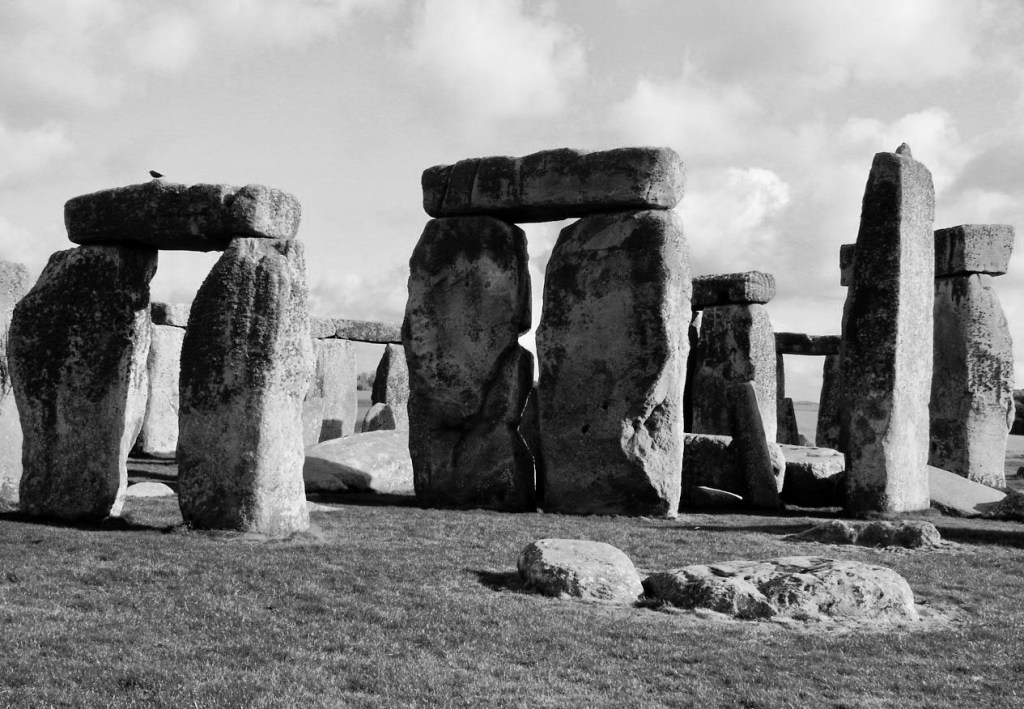
Finally, in the Neolithic Era (New Stone Age) about 4,000 years ago, Hunter Gatherers made way for the first Farmers, who arrived from the Middle East and elsewhere. These communities were possibly the people that built Stonehenge and the adjacent stone circle in nearby Avebury and other wonderful and mysterious stone circles, but these enigmatic people have left little DNA trace in today’s population of Europe.

The mysterious and enigmatic glory of Stonehenge

What happened to these people and how could they disappear without a trace? Tantalising clues can be found, when DNA testing became more sophisticated a few years ago. Scientists looked again at DNA of ancient skeletons from people in Europe from 4000-5000 years ago and identified traces of Yersinia pestis ‘The Black Death’. This discovery makes this the oldest evidence of plague bacteria ever found.

In his book ‘Pathogenesis- How Germs Made History’ Jonathan Kennedy postulates that:-

It is highly likely that the sharp fall in population that occurred in Britain and the rest of Western Europe about 5,000 years ago was caused by a ‘Neolithic Black Death’. But this devastating epidemic differed from the fourteenth-century Black Detain one crucial respect. Yersinia Pestis did not evolve into flea-borne bubonic plague until the beginning of the first millennium BCE. Prior to that it would have been transmitted by sneezing and coughing and infected the lungs. According to the World Health Organization (WHO), pneumonic plague kills almost all infected people if it is left untreated, compared to between 30 and 60 per cent for bubonic plague.”

This hypothesis of the cause of the ‘Neolithic Decline’ is also confirmed by further research carried out in a collaboration between the University of Copenhagen and University of Gothenburg, published in July 2024 – see article entitled ‘The plague may have caused the downfall of the Stone Age farmers – University of Copenhagen’

If this was indeed the case then the fact that there is very little DNA trace of these early farming communities in modern British people is unsurprising, as virtually whole communities would have been wiped out.

Following the Neolithic Decline, another group of migrant farmers, ‘The Steppe Herders’, appeared in the British Isles and elsewhere in Europe, and as their name implies they originated from the Steppes of Central Asia. By the end of the Neolithic period and the beginning of the Bronze Age, about 2,800 years ago, this new phenomenon, who later developed the unique ‘Bell Beaker Culture’ had totally replaced the previous Stone Age cultures.

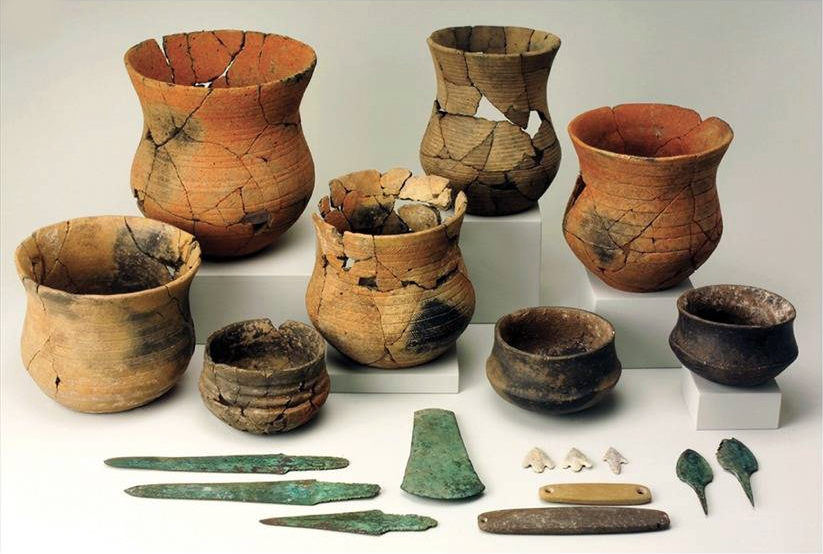
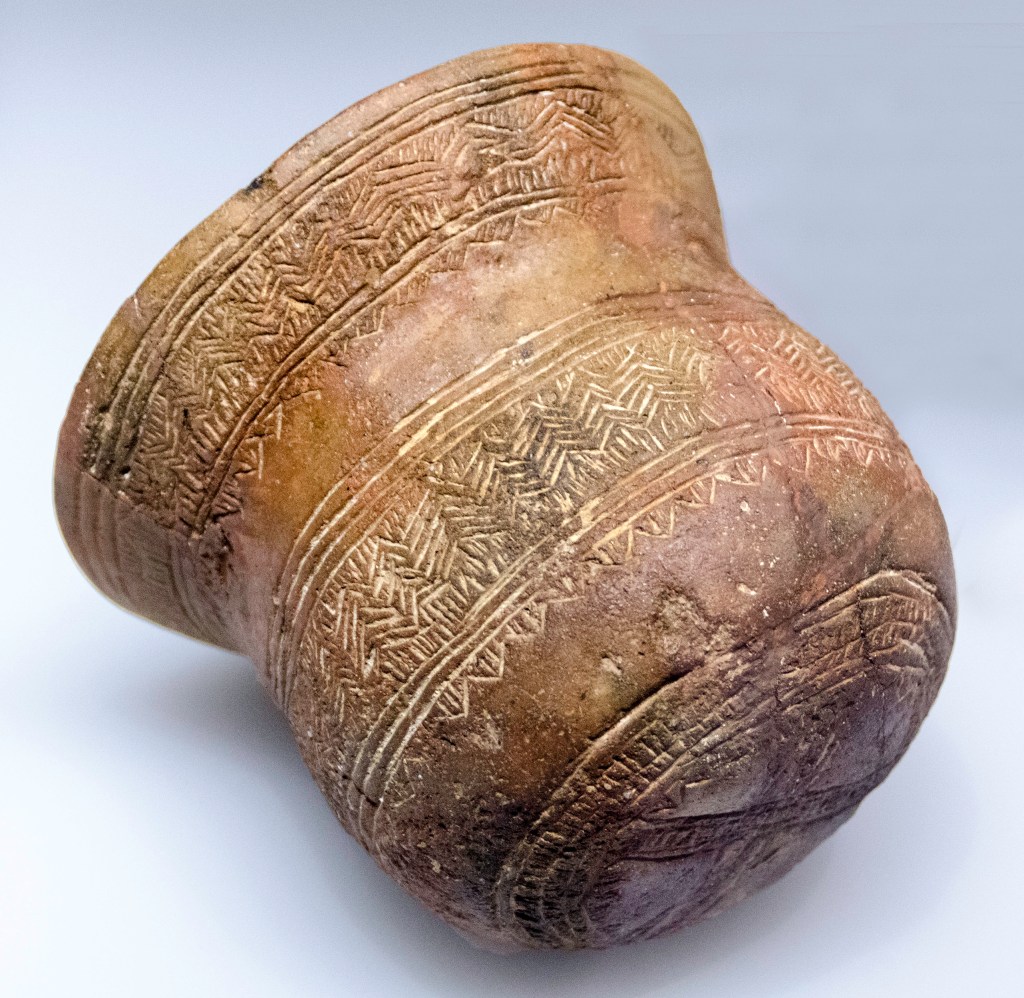
This was the last great mass migration in Europe, as it has recently been discovered that a large percentage of our gene pool, derives from these mysterious Bell Beaker people, who in turn originated from the Steppe Herders. The name ‘Bell Beaker Culture’ comes, not surprisingly, from the beautiful inverted bell shaped beaker pottery drinking vessels found in the burial sites of these people. As a ‘potaholic’, these vessels bring me so much joy, as I can see so much resonance in the work of modern Studio Pottery still being made nearly 5,000 years later.

Bell Beaker artefacts from Spain: ceramics, metal daggers, axe and javelin points, stone wristguards and arrowheads
Intricate Bell Beaker from Spain with the Sun Cross on the base, a Bronze Age religious symbol

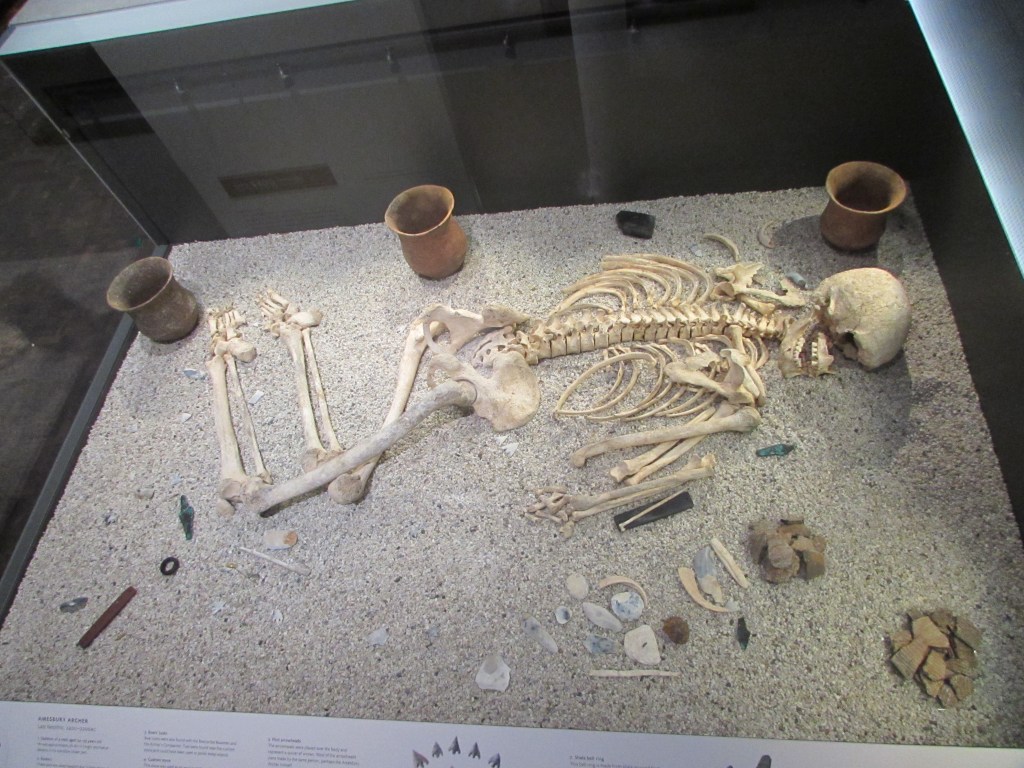
The most celebrated of the Bronze Age bell beaker burials, is that of the ‘Amesbury Archer’ whose grave was discovered near Stonehenge in 2022, from the Late Neolithic and early Bronze Age. This burial included five beaker pots, 18 arrowheads, two bracers (archer’s wristguards), four boars’ tusks, 122 flint tools, three copper knives, a pair of gold hair ornaments, and a cushion stone. The gold and copper metal objects are currently the oldest found in Britain.

The Amesbury Archer on show in Salisbury Museum

The DNA ancestry of all people of European Ancestry are a mixture of three distinct population groups, in various combinations, Western Hunter-gatherers (dark skin and hair, and light eyes), Neolithic European Farmers (olive skin and dark hair) and the Steppe Herders (tall, fair haired and light-skinned). Most North Europeans have a larger percentage of Steppe Herder DNA, as a result of the Neolithic plague.

From this time on, there were no further mass migrations of population on the scale of the Steppe Herders and all further migrations, of which there were many, from this period to the Norman conquest in 1066, were of people whose DNA was a combination of these three population groups.

As the Bronze Age gave way to the Iron Age, there was further migrations of Celtic speaking peoples from various parts of Europe and Anatolia, who forged an identity as Britons (In England and Wales), as Picts (in Scotland) and as Gaels (In Ireland and the Isle of Man). These people brought the language, which was once spoken by everyone on these islands and today survives in the cultures of Wales, Scotland and Ireland.

Then for the next thousand years, the whole landscape and make up of our island nation was changed beyond recognition, as waves of settlers, moved into the islands, sometimes peacefully and sometimes by force, bringing their own ideas and and enriching our culture and language to form the basis for the people that we are today.

First there was the Roman occupation which lasted from AD 43 to AD 410, followed by what is sometimes referred to as the ‘Dark Ages’ a serious misnomer as this was one of the most exciting and formative periods in our History, when the slow route towards our British identity was developed.

As the Roman Empire collapsed, groups of germanic settlers from the north west coasts of Europe moved to the British Isles, namely the Angles, the Saxons and the Jutes.

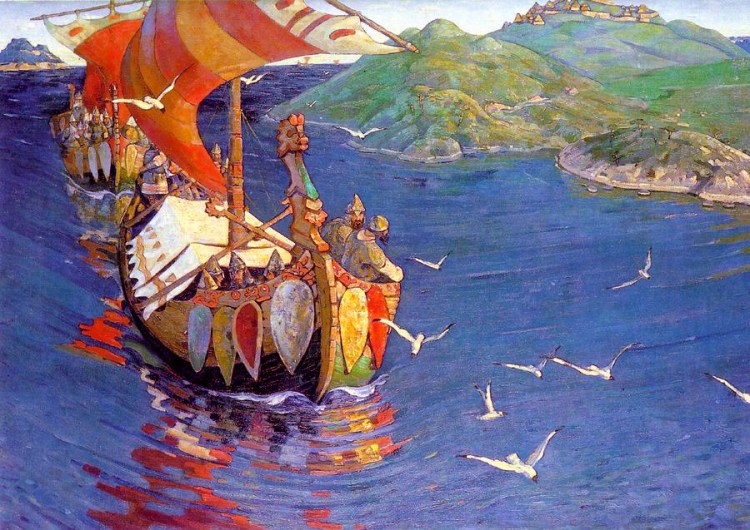
Then from the 8th to 11th centuries we were invaded and settled by waves of Vikings, who ruled the Eastern part of England under the Danelaw from AD 886 to AD1066. The Vikings had a fearsome reputation, which exists to this day, but I would argue that they have been much maligned and they brought a unique culture to the British Isles, that has impacted on our national psyche. This will be the subject of a separate article to follow.

Guests from Overseas (1901) – Nicholas Roerich (Tretyakov gallery, Moscow)

Then of course, there was 1066, an unprecedented event that changed the course of British history for ever, when the Normans invaded under William the Conqueror, imposing rule from above, by an aristocratic elite. Many people would argue that cataclysmic event continues to influence our society to this day, with its rigid class structure and lack of social mobility.

For those wishing to know more about the so-called Dark Ages and an overview of this fascinating period of our history, a good place to start would be Michael Wood’s very informative book ‘In Search of the Dark Ages’

It is time to lay to rest the Anglo-Saxon canard, where firstly in America it has been used over the last 200 years to denote the racial superiority of ‘white people’ over indigenous Americans and African Americans and more recently this lie has been taken up by the far right in the UK to denote some sort of superior racial purity. It turns out that the Anglo-Saxons were just another social grouping that settled in our islands, during the early centuries following the Roman Conquest, who derived their ancestry from the Middle East, Asia and beyond, bursting another racist fantasy bubble, once and for all.

As stated by Jonathan Kennedy in “Pathogenesis’ “contemporary Europeans are neither genetically ‘pure’ nor are they the region’s indigenous people. Even white Europeans are mongrel immigrants.”

I hope that this article has shown racial purity does not exist, nor has it ever done, since the first human species ‘Homo Sapiens’ started mating with our long extinct cousins, the Neanderthals.

From 1066 onwards there have been numerous migrations to the British Isles, the Flemings in the Middle Ages, Jewish migration from the 17th century onwards, a relatively large and unwilling migration of African slaves in the 16th and 17th centuries, Protestant Huguenots and other migrants from Eastern Europe.

More recently there have been Commonwealth immigrants from India, Pakistan and from the Caribbean i.e. the Windrush Generation. The list is endless and continues, but I would argue that they have all brought something positive to our society, be it cuisine, music, philosophy or just a general enrichment of our society by the influence of a different culture.

People are once again on the move across this planet, this time due to climate change, wars and famine. In our country, we have developed a siege mentality in respect of asylum seekers and, as a result, people are dying in their desperation to reach our shores, ruthlessly exploited by the greed and cruelty of criminal gangs. It’s time to stop and take the long view, that a humane and workable solution in the form of some sort of safe passage must be found to help these people.

We will never stop migration by sealing our borders. It has never worked in the past and won’t work now, as can be seen from the long history of how the British came into being, we are a hybrid people living on a hybrid island.

Notes

Cover picture We Live in Worrying Times, pen ink & watercolour on watercolour paper 2020 by Quentin Blake.

A Moment of Clarity

"I had a moment of clarity, saw the feeling in the heart of things, 
walked out to the garden crying."

Allan Ginsberg - From 'Transcription of Organ Music'

There comes a moment in all our lives, when there is a reckoning, a time of crisis and a need to confront our place in the world and how we move forward. We go through life blinkered, blindly groping our way forward in the darkness.

“For now we see through a glass darkly”2

Such a moment arrived in our lives recently, it involved an accident, a hospital, a chance trip to a magnificent ‘Neo-Gothic’ cathedral, and finally, a moment of clarity. This is how the story unfolded. It was a holiday long planned and eagerly awaited,

My sister-in-law, had travelled over from her home in Denmark, having long talked of a family holiday in Cornwall, together with us and our daughter, partner and grandson. The moment had finally come, and we arrived in our idyllic cottage in the beautiful Cornish hamlet of St Agnes. For the first few days, the holiday was everything we had hoped for, long walks, trips to the sea and pasties from the village bakery.

And then the bliss was shattered by what we -now call the’ bad thing’ or the ‘accident’. I will not dwell on this traumatic event, suffice to say that my wife had a bad fall outside the cottage and we knew immediately it was serious. The ambulance wait of 8 hours was a nightmare, the long delay exacerbated by the start of the holiday period, when everyone heads for the West Country. These first hours were among the worst of our lives and the trauma is seared in our minds forever.

The next few days rushed by in a blur, the x-rays, the diagnosis of a fractured femur, an operation for a brand new hip a couple of days after the fall and the gradual recovery, with a few setbacks, over the following days. The family was still in shock, wondering how the future would pan out, it was still early days and I admit, I was not thinking rationally.

A few of days after the operation, I decided to visit the capital city, Truro, only ten minutes from the hospital. It was not an auspicious start to my visit, it was market day in Truro, with hordes of people, and long queues for parking. I felt as though I was in an alien landscape.

I was at sea, unhappy and lost, a stranger in a strange land. I wandered round in a torpor, not taking anything in, a cup of coffee tasted poisonous and, in my fragile state, I decided that I would have to leave, as soon as I could, to maintain a hold on my sanity.

Then I came round a bend in one of the small, narrow streets and, there, unexpectedly was this marvellous building rising majestically in front of me. Of course, I knew Truro had a cathedral, but in my present state of stupor, I hadn’t even thought of it. It looked magnificent, but I was totally unprepared for the wonders inside.

Truro Cathedral towering above the town

View of Cathedral from across the river

Before, I continue, I should say something of the history of this cathedral. Unlike, the majority of great cathedral cities, such as Salisbury, Winchester and Canterbury, this church is not a medieval masterpiece ,which has stood for centuries, but a relatively modern building.

In the 1870s, a historic decision was made to build a cathedral in Cornwall, on the site of the old St. Mary’s church in Truro:-

“The leading architect John Loughborough Pearson, who had experience of cathedrals elsewhere, was commissioned to design the new Cathedral of the Blessed Virgin Mary. Work began in 1880.

The project was ambitious. Truro would be the first Anglican cathedral to be built on a new site since Salisbury Cathedral in 1220. For over 650 years no one had attempted to emulate the great cathedral builders of the medieval era. As well as this, it was initially uncertain if there would be enough money to complete such a project.

The construction of the cathedral actually took thirty years……….Today, Truro Cathedral is seen as a triumph of Gothic Revival Architecture and its magnificent spires can be seen soaring above the city’s skyline, and, are at their best when silhouetted by the bright blue Cornish sky.3

As I walked through the Cathedral doors, the sight that beheld me was not particularly promising, for this was a market day and, as a result, there was a craft fair with dozens of stalls filling up the centre of the church. I walked despondently around the stalls, looking at things which held no interest to me. I was on the verge of walking out, when something held me back, I should maybe stay awhile and see if there were any interesting internal features.

I then looked up at the ceiling and was spellbound, realising that this amazing vaulted ceiling was probably the first of its type to be built for hundreds of years, not since the glory days of the great medieval cathedral builders. And below the ceiling was a trio of magnificent stained glass windows.

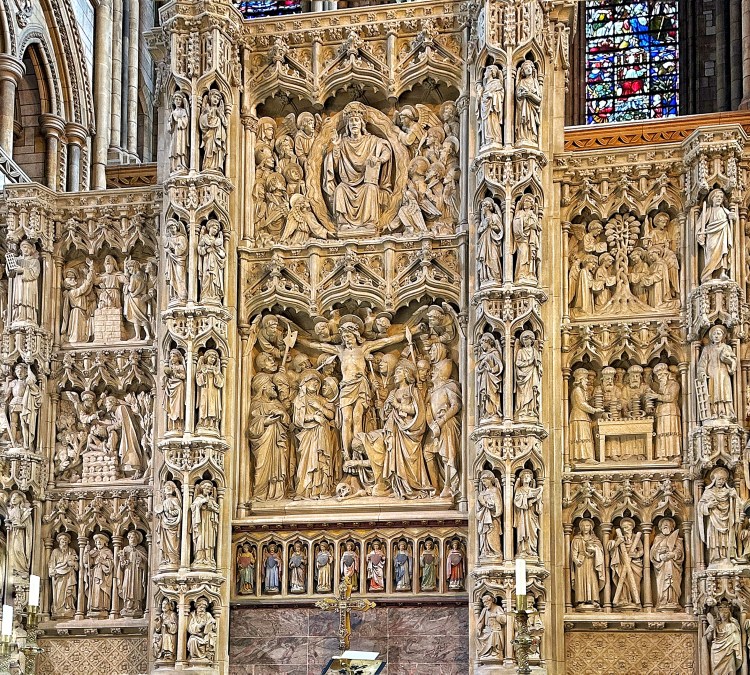
As my gaze moved downwards, my attention was caught by an enormous stone sculpture covering the back of the altar. This magnificent “Reredos”4, sculpted in bath stone, was covered in biblical characters worthy of any great Renaissance church and was made by the renowned Victorian sculptor Nathaniel Hitch, breathtaking in it’s complexity and beauty. However, there was more to come as I began to explore this fascinating cathedral.

Internal view of Cathedral showing vaulted ceiling and ‘Reredos”

Detail of ‘Reredos’ by Nathaniel Hitch carved in Bath Stone

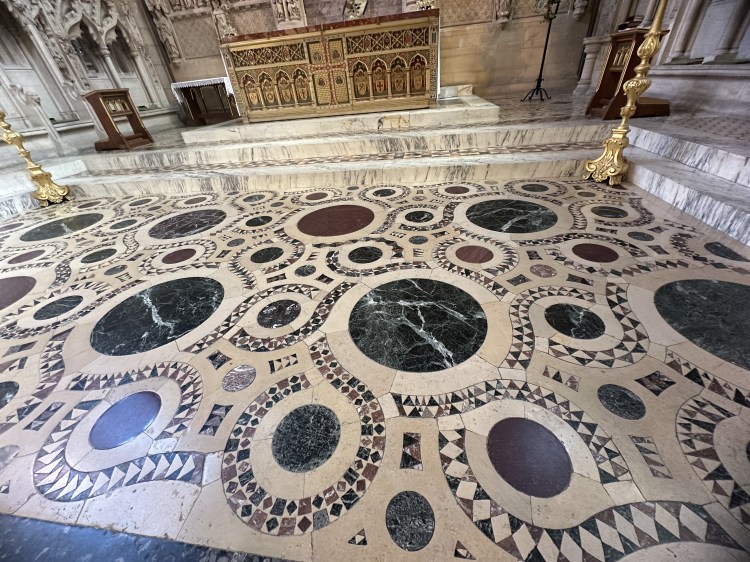
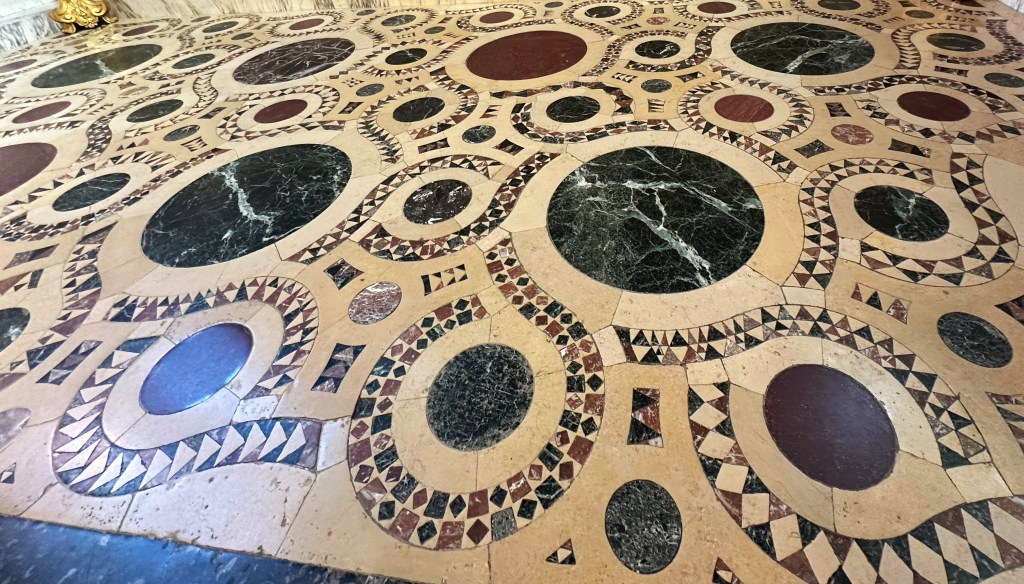
In front of the altar is a stunning marble floor in a wild curvy pattern, with different coloured mosaic inlays, and the overall impression I had was of a floor writhing in snakes. It would look more at home in a Moroccan mosque than a Victorian church in Cornwall, but no less beautiful for that

This beautiful Italian marble floor, was laid by an Italian craftsman, who was brought over especially by the church to lay the floor. During his stay in Truro, he met and married a Cornish lady, never to return home. There was probably not much work for a master marble craftsman in the area, so he changed career and ended up making ice cream, famous throughout the region for his traditional Italian ‘gelato’. A man of many talents.

But my journey of discovery was by no means over. Along a side wall was the most amazing Terra Cotta frieze entitled ‘The Way of the Cross’ and modelled in the most unbelievable detail. It was hand carved by George Tinworth, chief modeller of the Doulton Pottery factory in Lambeth and is a masterpiece of its kind. The detail shown in every figure is extraordinary and all range of expressions, from anger, compassion and sorrow can clearly be seen on the faces following Jesus holding the Cross on his way to Calvary. This can clearly be seen in the two images below:-

Finally, there are a number of 17th century monuments in the cathedral, moved from St. Mary’s church, which had been demolished to make way for the cathedral in 1880.

The one that drew me in, however, was the delightful Robartes monument, featuring John Robartes and his wife Phillipa Robartes. Mr. Robartes is lying on his side, looking very uncomfortable and holding his right side, with a pained look on his face. A fractured hip maybe?
She, on the other hand, is lying propped up by her elbow looking thoroughly fed up and bored, perhaps thinking, why am I lying here in such an uncomfortable position under this gloomy man for the rest of eternity.

Robartes Monument from the 17th Century

I had spent a fascinating hour, when I could forget the trauma of the past week and I came out of the cathedral feeling euphoric and strangely exalted. But then something else happened, for which I still have no explanation. I had a profound moment of total peace and acceptance, which descended on me.

Was I affected by the atmosphere of the cathedral? I’m not religious in the conventional sense, but I’ve often felt that places of worship hold a repository of memory and feeling, be they churches, mosques or ancient stone circles.

It was and still is a mystery. I know only that I had a moment of clarity or realisation, where I suddenly perceived, if only for a brief period, what was really important in life. Something had changed, the stress and anxiety were gone, if only for a short time.

A Moment of Clarity – Sun bursting through the clouds, East Hill, Hastings – January 2022

My wife is now home and recovering well, getting stronger every day, and looking forward again to the future. But this accident has been a wake up call for us, and we are reviewing our present lives, and discussing the path ahead.

Something has changed, but nothing has changed. Part of my Moment of Clarity, which I try to hang on to, is the knowledge that as we age, death is lurking and it will come for us all sooner or later. It may come tomorrow or in 20 years time, so we should seize each day anew and live our best lives, while we can. With that thought in mind, we aim to move forward with acceptance and hope.

“All shall be well, and all shall be well, and all manner of things shall be well5

Notes

1. Cover photo – St. Michael’s Mount of Marazion, Cornwall, an ancient place of great atmosphere and beauty.

2. To see “through a glass darkly” is to have an obscure or imperfect vision of reality. A Biblical phrase from 1 Corinthians 13:1.

3. Extract from the official Truro Cathedral website, see link ‘Truro Cathedral – History’

4. ‘Reredos’ – an ornamental screen covering the wall at the back of an altar in a church.

5. This is a quote from Julian (or Juliana) a 14th century mystic and anchoress, who had survived the Black Plague. She never discounted the terrible suffering that humanity goes through every day and that she also went through, but her vision of radical optimism rose above that and bears similarities to Buddhist thought and philosophy.

6. All photographs by John Bostock, with the exception of the view of the cathedral across the river, which is in the public domain.

Dedicated to my Soulmate of over 40 years

Seaside Melancholy

The last summer visitors have left, the children have returned to school and the tourist coaches have departed for another season. As the days shorten, the clocks go back and the dark nights close in, something else starts happening. A vague sadness begins to creep over the landscape; the streets seem empty and forlorn; the promenade is mainly empty except for the occasional couple huddled up together against the wind and rain; the waves crash relentlessly over the pebbles; the graffiti covered shelters along the sea front are empty, except for the occasional sleeping bag filled by a lonely figure. Seaside Melancholy has returned.

Hastings in winter at night can often be a lonely and desolate place

Where the sea meets the moon-blanched land,
Listen! you hear the grating roar
Of pebbles which the waves draw back, and fling,
At their return, up the high strand,
Begin, and cease, and then again begin,
With tremulous cadence slow, and bring
The eternal note of sadness in.

Extract from ‘Dover Beach’ by Matthew Arnold, 1867

When looking at the graffiti covered shelter, in my home town of St. Leonards on Sea, I am also reminded that T.S Eliot wrote his groundbreaking poem ‘The Waste Land’ in just such a shelter in Margate in 1921. This pessimistic poem of alienation was written while Eliot was recovering from a nervous breakdown and he chose Margate, of all places, to recuperate. :-

‘On Margate Sands.
I can connect
Nothing with nothing.
The broken fingernails of dirty hands.
My people humble people who expect
Nothing.’

Extract from ‘The Waste Land’ by T.S Eliot, 1921

Empty Shelters in St. Leonards on Sea on a cold winter’s day, with all the glass removed to prevent vandalism

This desolate vision is unsettling and I have to take stock and remind myself that it was it was only a short time ago, that this area was full of life and laughter, full of families enjoying the strand and sounds of happiness filling the air. I know in my heart that it will come back to life, but for now it seems forever locked in a permanent darkness.

It is late November, coming on December, almost the darkest time of the year. Winter storms have already started and this year seems especially bad, no doubt due to global warming and climate change. The world is out of kilter, and things appear to be unravelling, out of control, with horrific wars in Gaza and Ukraine. Our very future appears under threat.

“Things fall apart, the centre cannot hold;
Mere anarchy is loosed upon the world.”

Extract from ‘The second coming’ by W.B .Yeats 1919

This extract from W. B. Yeats poem ‘The Second Coming’ written in 1919, just a year after the end of the First World War gives voice to the general feeling of hopelessness that I feel at the present time.

Many people in Northern climes, at this time of year, feel the life draining out of them, as the sun weakens and loses its strength. It even has a clinical name Seasonable Affective Disorder (SAD). I would not say that I am particularly prone to depression, but I do have a streak of melancholy running through me, which surfaces at times, especially at this time of the year. It gives me a little bit of insight and empathy for those people, who suffer from terrible life crippling depression.

How do people define Melancholy and how is that different from Depression? In modern medicine, Melancholia is now regarded as a separate condition to Depression, but with a distinct set of symptoms.

However, I wish to investigate further Melancholy as it is generally understood historically. The dictionary definition of Melancholy is ‘a feeling of pensive sadness, typically with no obvious cause.’

The word Melancholy has its roots in Ancient Greek, where it is translates directly as ‘black bile’, and the condition was first described by Hippocrates, the father of modern medicine.

Throughout the centuries, this feeling of sadness and despair has been discussed and dissected by philosophers, medics and creative people in order to try and make sense of the human condition. However, from the Renaissance onwards, the condition of Melancholy further developed into a cultural and social phenomenon, almost a cult, embraced by artists, musicians and poets alike.

The great 16th century artist Albrecht Durer produced a famous etching in 1516 entitled ‘Melencolia’ showing a gloomy angel, one of the first artistic expressions of sadness. There are so many things going on in this picture, which is full of symbolism, that it has been argued about for centuries. Today we are none the wiser and are still discussing the inner meaning of this enigmatic etching.

In 1621, Robert Burton wrote a vast philosophical and psychological treatise ‘Anatomy of Melancholy’ in which he attempted to get to grips with the idea of melancholy and sadness. This monumental work of 1500 pages has had an enormous influence on the way melancholy was treated in subsequent centuries.

And in Elizabethan times there was a strong vein of melancholy running through the arts, particularly in music, the most famous practitioner being the composer, lutenist and singer, John Dowland. He was the rock star of his day, often singing of his unrequited love. Here is Andreas Scholl singing ‘In Darkness Let me Dwell’, probably one of the gloomiest songs ever written, but also one of the most heartbreakingly beautiful as well.

The cult of melancholy climaxed in the 18th Century, at the height of the Romantic movement in poetry, when John Keats wrote ‘Ode on Melancholy’ and Goethe ‘The Sorrows of Young Werther’. This was the height of centuries of artistic obsession with melancholy and its relationship with creativity.

Melancholy has a colour and that colour is blue. It is no surprise to me that my first musical love, which still inspires me, was the Blues and, to this day, blue is still my favourite colour. Picasso had a blue period, when melancholy got the better of him and produced some of the greatest paintings of the early 20th century.

‘La Vie’ by Pablo Picasso dated 1903

In the modern world, melancholy has continued to be embraced and used by various artists as a means of expressing their deepest hopes and fears. Probably the greatest and bravest of all modern artists to confront head on his own sadness and depression, was that wonderful artist, Norwegian Edvard Munch, whose many paintings chart his own fragile mental health. The cover picture is of Munch’s painting entitled ‘Melancholy’ from 1891, the ultimate expression of Seaside Melancholy and below his painting ‘Despair’, which is equally heartrending, a window into Munch’s suffering.

‘Despair’ by Edvard Munch from 1891

But we must not forget the American artist Edward Hopper, whose iconic paintings, often looking like a Hollywood movie still, captured the loneliness of life in urban America. His most famous painting has to be ‘Nighthawks’ one of the most melancholy depictions of urban alienation ever created.

Nighthawks by Edward Hopper (1942) – Art Institute of Chicago ©

In my youth, there was a strain of melancholy running through popular music, with the likes of Leonard Cohen and Nick Drake and, surprisingly, even in mainstream groups like the Carpenters, where Karen Carpenter’s pure and bell-like voice filled the air with echoes of sadness.

However, melancholy is viewed in a totally different light in our 21st century digital age. In the brave new world of social media, we are constantly encouraged to be positive, optimistic, and deliriously happy, even when the circumstances don’t merit this. In this artificial world there appears to be little or no room allowed for thoughtfulness, reflection or sadness.

There is a term called ‘Toxic Positivity’ which has been defined by Wikipedia as a “pressure to stay upbeat no matter how dire one’s circumstance is, which may prevent emotional coping by feeling otherwise natural emotions. Toxic positivity happens when people believe that negative thoughts about anything should be avoided. Even in response to events which normally would evoke sadness, such as loss or hardships, positivity is encouraged as a means to cope, but tends to overlook and dismiss true expression.”

Dorthe Nors, the Danish writer has written movingly on what she calls the tyranny of ‘Hygge’, which is the Nordic equivalent of Toxic Positivity.

“Hygge is a very big export business. The side we are exporting is the superficial side — of knitted socks, the nice cups of cocoa by the fire and cuddling up in the winter. It’s a combination of Denmark being a farm country and living in a cold climate. In reality, hygge is a social control system. Farm cultures are always nervous of intruders and people who are disturbing the balance of things — we don’t want any conflicts. To talk about emotional problems and conflicts is considered ‘spoiling the hygge.’ That sometimes means you can’t talk about problems. And of course, as a writer, I want to wreck the hygge.” From Hans Christian Andersen to hygge — Dorthe Nors on the Danish psyche

In this article, I have tried to make the case for melancholy and how it informs us on what it means to be human. All life consists of shades of colour, and we need to have a balance in our lives, from the blackness of winter despair to the bright sunny uplands of a summer’s day.

It is inevitable, in our lives, that we will experience pain and sadness, but conversely we will all experience happiness and joy, however fleeting, and unless one experiences the darkness, it is impossible to appreciate the light. The darkest hour is just before the dawn and that is where hope arises; the sun will shine again.

There is a crack, a crack in everything
That’s how the light gets in

Extract from ‘Anthem’ by leonard Cohen ©

A Trip to Sainsbury’s

For those who might be thinking that the subject of this article concerns the joys of Supermarket shopping, I should perhaps issue a health warning, no supermarket has been visited in this connection.

The Sainsbury’s that I allude to is the Sainsbury Centre, the famous Art Museum, hidden away on the University of East Anglia, on the outskirts of Norwich. It also happens to be one of my all time favourite places, which I have visited many times over the years, when I am visiting this part of the world. My most recent trip was on the 8th June 2023, while visiting my mother in Norfolk and Norwich Hospital, which is located only two miles from the Sainsbury Centre. As I had a couple of hours to spare, I could not miss this opportunity to revisit some of my old friends and became aquainted with one or two new pieces of art.

When you eventually arrive at the Sainsbury Building, after negotiating the maze of small roads on the University Campus, you are greeted by a sparse minimalist rectangular building, clad in gleaming aluminium, looking more like a modernist aircraft hanger than an art gallery, but looking just as fresh as the day it opened 45 years ago. The style seems to be somewhat familiar and it is no surprise this iconic building was designed by none other than that Architect superstar Norman Foster. Robert Sainsbury, together with his wife Lisa, commissioned Foster, a relatively unknown architect at the time, and gave him a relatively free hand in fulfilling their brief, resulting in a structure that has stood the test of time.

The beauty of this building is in its wonderful use of space and light, it’s all about the interior; the building has been designed with purely this in mind, giving the art and the artefacts room to breathe, these are, after all, the stars of the show.

The beauty of this building is in its wonderful use of space and light, it’s all about the interior
The view from the cafe out to the garden

The Sainsbury Centre is unlike any art museum that I have ever visited, firstly there is no distinction between what is considered ‘Fine Art’ by, so called, purveyors of taste and the numerous artefacts and objects made over thousands of years by cultures from all over the world, often looked down upon by the snobs of the art world. Here there is no hierarchy; a 4,000 year old Hippopotamus from Egypt sits alongside a Francis Bacon portrait and an intricately carved Mayan Flint close is neighbour to a modern installation by Ceramic artist Edmund De Waal. Where else could you find a surrealist painting by Leonora Carrington in the vicinity of a Silver Llama cast by an Inca craftsman hundreds of years ago.

Below, from left to Right:- Francis Bacon – Portrait of Lisa (1957) (©️Estate of Francis Bacon. All rights Reserved),

Faience Hippopotamus – Egypt (c1880 BC),

Edmund de Waal – From the Collection of a Private Man (2011) (©️Courtesy of the Artist),

Eccentric flint- Guatemala (600-900 AD),

Llama Effigy – Peru (1400 – 1532 AD),

Leonora Carrington – Old Maids (1947) (©️Estate of Leonora Carrington. All rights Reserved)

But there are also the pots. My friends will confirm that I am a helpless ‘Potaholic’ and that I like nothing better than seeing pots by some of the ceramic world’s greats and at the Sainsbury Centre they display some marvellous works by Hans Coper, Magdalene Odundo and Lucie Rie, as shown below. They actually have a vast collection of works by Rie and Coper, which are not generally on show, except in special exhibitions. (All works below are Copyright, Estate of the Artists)

But who were the Sainsburys’, who were able to amass this treasure trove from every corner of the globe? Robert Sainsbury was the grandson of the founder of Sainsbury food retailing empire and was himself destined to be part of the family firm, when, as a young man, he discovered a love of modern art, all at the same time as a passion for ancient artefacts. These two obsessions would stay with him for the rest of his life.

Luckily his new wife, Lisa, who had been mainly raised in Paris, was also passionate about art, so this was a match made in heaven. Although they were, of course, rich by anybody’s standards, they did not buy for investment, as most of their peers would have done. They bought what they loved and what inspired them, often sponsoring the up and coming artists that they met. One such person was Francis Bacon, who was befriended by the Sainsburys’, long before he became a household name. There are 13 Bacon paintings in the collection, purchased for a meagre £8,000 but now worth hundred of millions.

They were also some of the earliest collectors to invest seriously in modern Studio Ceramics, when it was totally unfashionable in the art world, for which all lovers of ‘Pots’ should be eternally grateful.

On the day of my visit, I was in a somewhat fragile state, with worry about my mother in hospital and thinking about a dear friend, who had died almost a year ago to this day. As I walked up to the painting ‘Two figures in a room‘ by Francis Bacon, I became transfixed. I felt for the first time in my life that I understood Bacon. It is difficult to explain, but the combination of the colour palette with the man crouching down, seemingly in agony, isolation and despair, produced a visceral emotional response in me and seemed to sum up all the feelings that were inside me at that particular moment.

I must have been staring at the picture for some time, but I jumped out of my reverie, when a man approached me and said he hoped that I didn’t mind, but he had taken a photo of me looking at the picture. Apparently, in my total concentration, I could have been mistaken for one of the exhibits. His intervention quickly pulled me back into the reality of my surroundings.

Two Figures in a Room – Francis Bacon (©️Estate of Francis Bacon. All rights Reserved)

I had heard that there was also something special at the centre, in addition to the collection, which I knew and loved. I had read about an extraordinary exhibition by the Ceramic Artist Julian Stair, which I did not want to miss. Little did I know what a profound impact this exhibition would have on me and how I would be able to experience at first hand the transformative and healing power of art.

Julian Stair’s exhibition is called ‘Art, Death and the Afterlife’ and the original inspiration was the death of Julian’s son in 1990, where he wanted to investigate how art can help with grief and loss in a society, where the influence of religion is on the wane. Following the Covid pandemic, and the mass trauma this has caused, he wanted to explore this relationship further, culminating in this groundbreaking exhibition at the Sainsbury Centre.

In recent years Julian Stair has taken to making very large pots, and I really do mean enormous. These vessels are thrown on the wheel, an incredible feat of strength and endurance and fired in large industrial kilns. The majority of the vessels are made in raw unglazed clays of different colours and shapes, resembling the human form.

Julian Stair Cinerary Jars (©️Courtesy of the Artist)

In the words of the Curators of the exhibition:-

“Around thirty new artworks by the artist, including monumental figural forms, will invite the viewer to meditate on the relationship between the clay vessel and the human body. They will be presented alongside objects from the Sainsbury Centre Collection, selected by the artist to communicate the universality of death as aesthetic inspiration and philosophical inquiry. By drawing together ancient Cycladic marble figures, anthropomorphic vessels from Ecuador, Nigeria and Japan, and twentieth-century drawings by Alberto Giacometti, Stair creates a poetic and moving meditation on the human condition. Positive and uplifting, Art, Death and the Afterlife explores humanity’s reliance on art as a means of traversing the unknown and overcoming the finality of death.

The enormous vessels, seeming to resemble rows of souls queuing up for an unknown destination, are strangely affecting and immediately create a melancholic atmosphere. Other than a lone exhibition invigilator, I was the only visitor to the exhibition that morning, which felt like a gift. I was alone with these giant effigies, without any outside distractions.

But this was so much more than a tribute to the people that died during those terrible years. Julian Stair has gone one step further and incorporated the ashes of a number of the victims of the pandemic into the clay, creating a permanent memorial to their loved ones. At the end of the exhibition, these memorials, seven in total, will be given to their families to love and cherish. It is difficult to convey how intensely moving this row of cinerary jars was, creating not only a feeling of terrible loss, but also, thankfully, of solace and even hope.

There is a beautiful article written by Rachel Cooke in the Guardian, which conveys, perhaps more eloquently than I can, the importance of this exhibition.

Guardian article of 19th March 2023

However, there was one more surprise in store, in a small room at the back of the main gallery, there are wonderful personal tributes, from loved ones, to some of the people who had died, and whose ashes now resided in the pots of Julian Stair. Below is one of the heartfelt eulogies in that room, from a daughter to a father.

Then I noticed a table with buttons and it was, at this table, that I could contain my grief no longer. As I picked up a button, I sobbed like a child, for my friend Julia who had been taken from us barely a year ago and for all of those nameless people who had been devastated during those strange years. Then my thoughts turned to my Dad who had suddenly and unexpectedly died, 54 years earlier, when I was only 19 and also of my Mum, still alive, but in the twilight period of her life.

This unexpected outburst felt incredibly cathartic and liberating and, after a minute or so, I was able to return to myself and think with fondness of how Julia had brought such joy to the people around her and that it was a life well lived. Such is the power of art, giving hope in the midst of grief.

I started out writing an account of a visit to a Museum and it ended up as eulogy to the passing of a friend, this is how these things happen sometimes. But to finish on a hopeful note, I want to return to the gallery collection. To conclude, I have chosen two pieces with real resonance for me and an emotional connection to each other. One is an anonymous carved wooden head by a member of the Fang tribe in Gabon in the late 19th century and the other a carved stone bust by the early Twentieth Century artist, Amedeo Modigliani, made around 1910. One was made as a tribal artefact to guard ancestral bones and the other as a piece of fine art, both are beautiful objects in their own right.

There is no question, in my mind, that there is a direct connection between the two pieces. Modigliani would have known this particular Fang head, as it was in the possession of his good friend, the art dealer, Paul Guillaume.

Both heads are intensely beautiful and serene, and in some mysterious way, they seem to convey what it means to be human. It feels like a fitting tribute to Julia and a celebration of her life.

Note: All images in this article are reproduced with the kind permission of the Sainsbury Centre

In Loving Memory of Julia Whittaker 10 June 1955 -14 June 2022

Adventures of a Hasting’s Flâneur

The title of this article is ‘Adventures of a Hasting’s Flâneur‘, but what do I mean by a Flâneur?

Luckily, there are as many definitions as there are dictionaries, some state that it is ‘a man who saunters around observing society.’ another states that ‘A flâneur is, quite simply, a leisurely wanderer, a worldly explorer, a connoisseur of life. The word, hailing from 19th-century France, captures the idea that the mind functions best at a slow pace, and that curiosity can uncover a life of significance.’

The word is, of course, French and in its literal use means an ‘idler’ ‘saunterer’ or ‘loafer’. I’ve no doubt that I have been guilty of all of these at times and so I don’t feel embarrassed using the term.

My personal preference is for the second definition above and so I will try and define my understanding of what it means to be a Flâneur in 21st century Hastings and St Leonards:-

“A person who wanders around their home town in a leisurely way, looking for things that pique their interest, which are perhaps unusual or strange, and may then lead them on a journey of discovery of people, places and anything else that might fire their imagination”

These then are some of the stories that I have discovered, as a Flâneur in Hastings and St Leonards, in the course of my leisurely wanderings, together with my trusty camera.

One day my wandering took me to Silchester Road, in the backstreets of St Leonards, and, in a row of small terraced houses, I spied a blue plaque. These have always interested me and can often be the start of a new journey. We know that many plaques honour the great and the good, but often you see a plaque for someone relatively unknown to the public at large. This was the case here, as I had never come across Elsie Bowerman before.

Just from the few words written on the plaque, I knew there was a story here, but once I started my research, I realised that this remarkable women had led an extraordinary life which included a high profile role in the Woman’s Suffrage movement, a survivor of the most famous shipwreck disaster of the 20th century, an active participant in the First World War, a witness to the Russian Revolution, becoming one of the earliest female barristers in the UK and, last but not least, having an important role in the formation of the United Nations.

I have found very few photographs of Elsie, but this one below seems to capture her personality, and which shows her at the age of about 20, staring straight into the camera with a look of resolve and strength; a person determined to make their mark on the world.

To find out more about Elsie Bowerman, there is an excellent article by local author, Helena Wojtczak in her book ‘Notable Women of Victorian Hastings’

Just a few steps down and there is yet another enigmatic plaque for one George Bristow, a taxidermist and a central figure in the Hastings Rarities affair. This was definitely a mystery that needed further investigation by the Hastings Flâneur.

When in doubt, consult Wikipedia and, as always, it did not disappoint. It states that “The Hastings Rarities affair is a case of statistically demonstrated ornithological fraud that misled the bird world for decades in the 20th century. The discovery of the long-running hoax shocked ornithologists.”

I have this unsettling vision of traumatised ornithologists walking around in dazed shock following this revelation.

It emerged in 1962, after statistical analysis, and many years after his death, that George Bristow, a taxidermist and gunsmith, was the perpetrator of a series of frauds, carried out from the 1890s to at least 1930, by importing bird specimens from outside the British Isles, but claiming them to have been found and shot in the Hastings area. He then went on to sell these specimens to wealthy ornithologists.

As a result of the scandal, 29 bird species or subspecies were dropped from the British List of birds in Britain, although some of the species dropped have now been readmitted to the list on the basis of reliable subsequent records. The white winged snow finch below was not one of them and has never been seen in the British Isles.

The moral of the story seems to be never trust a taxidermist with a gun. A great exception should, of course, be made for Hasting’s own wonderful Ethical Taxidermist, Jasmine Miles-Long who turns her creations into beautiful works of art, all made using animals that have died from natural causes.

Plaques seem to congregate into groups and just a few streets away in North Street was the last resting place of a much more recent, well loved figure and cultural icon called Marianne Joan Elliott-Said. If that doesn’t mean much to most people, perhaps her stage name of ‘Poly Styrene’ is more familiar. In 1977, Poly Styrene was at the forefront of the punk movement in UK with her band ‘X-Ray Spex’ singing such punk anthems such as ‘Oh Bondage, Up yours’, a cry of rage and defiance against male domination.

Some people think little girls should be seen and not heard
But I think “oh bondage, up yours!”

Poly Styrene in her glory days with X-Ray Spec circa 1977

When Poly Styrene left her punk days behind her, she settled in St. Leonards and was about to relaunch her career, with the release of a solo album, when she was diagnosed with breast cancer which had metastasised to her spine. She died on the 25 April 2011, at the tragically young age of 53, at St. Michael’s Hospice in St. Leonards. She was, by all accounts, a gentle soul who left this earth far too young.

A source of great pleasure and interest for the leisurely wanderer like myself are churches and churchyards. Many people who have read some of my previous posts will be aware of this, as I have written extensively about two well known Hasting’s churches, The Church in the Wood and Old St. Helen’s Church

Ancient Graves in Old St. Helen’s Church covered in beautiful lichen
The beautiful churchyard of Church in the Wood

It’s difficult to pinpoint why I love churches and churchyards so much, especially as I am not a particularly religious person. I have difficulty explaining it, but without wishing to sound pretentious, it seems to me that these places are imbued with the spirit of the people that have worshipped and died there, leaving a collective atmosphere that can somehow be picked up on.

Whatever the reason, there is always a new treasure and discovery to be made every time I visit my favourite churchyards. In my previous post about Church in the Wood, I told the story of Rear Admiral Marcus Lowther who sailed to the Far East and the Pacific Islands in the mid 19th century, and all the while was sketching and painting the landscapes, houses and the indigenous people, recording a world that has now totally vanished. His sketchbooks eventually surfaced in 2020 and were a sensation.

Chincha islands loading Guano
H.M. Dart, Marcus Lowther’s ship

When I revisited the grave recently, there were 4 beautifully painted stones laid on his gravestone, a poignant and beautiful homage to Admiral Lowther. But who made them and placed them there? Was it some local schoolchildren or maybe a distant relative or just an admirer? Whoever it was must have been familiar with his travels and the sketches. When I finished photographing them, I placed them back on the grave for the enjoyment of others.

Painted Pebbles on Marcus Lowther’s grave – Unknown artist

Ancient monuments and ruins are another obsession for this Flâneur and there are quite a few in Hastings. Old St Helen’s church is one such, tucked away behind a new development, glorious in its lonely isolation, only visited by the determined visitor and ‘ruin’ obsessive like me.

Romantic ruins of Old St. Helen’s Church

Also, if you travel a bit further afield, westwards, out of St. Leonards on the way towards Bexhill, there is an area called Bulverhythe. But where is it? There is a Bulverhythe beach, which is fascinating in its own right, but no sign of a hamlet or village that would denote a separate community. It turns out that Bulverhythe is one of thousands of medieval villages lost to history, as a result of changing circumstances. Many were lost to the bubonic plague and other disasters, but in the case of Bulverhythe it was the sea that caused its ultimate demise.

The village of Bulverhythe was a thriving port in the Middle Ages serving the people of Hastings and was once part of the Cinque Ports confederation, but by the 17th Century the village had been all but destroyed by constant storms and coastal erosion. The people, unable to survive without a seaport, upped sticks and left.

Today, there remain only two survivors of the old Bulverhythe, one being The Bull Inn, a friendly local pub, situated on the Bexhill Road. The other is the ruins of St Mary’s Chapel, dating back nearly 1,000 years and which was one of the first Norman churches built in England. This small and unique chapel is hidden away, incongruously, in a 1930s housing estate behind the main road, another gem that many people are not aware of, except, of course, the residents of the estate.

Of course, the most famous ruins in Hastings can be found in the town itself. The remains of Hastings Castle have stood alone and proud on the West Hill, overlooking the town for centuries, a romantic reminder of an earlier age and also a reminder, if one is needed, of 1066 and the Battle of Hastings.

Postcard of Hastings Castle from the early 20th century

However, this is not the oldest monument in Hastings, this honour goes to a feature that thousands of people might have walked across, on their way to visit the castle, without realising its significance. This unprepossessing area is called the “Ladies Parlour” and consists of a semi grass-banked enclosure to the north-east of Hastings Castle. This area was once a Stone Age hill fort and settlement.
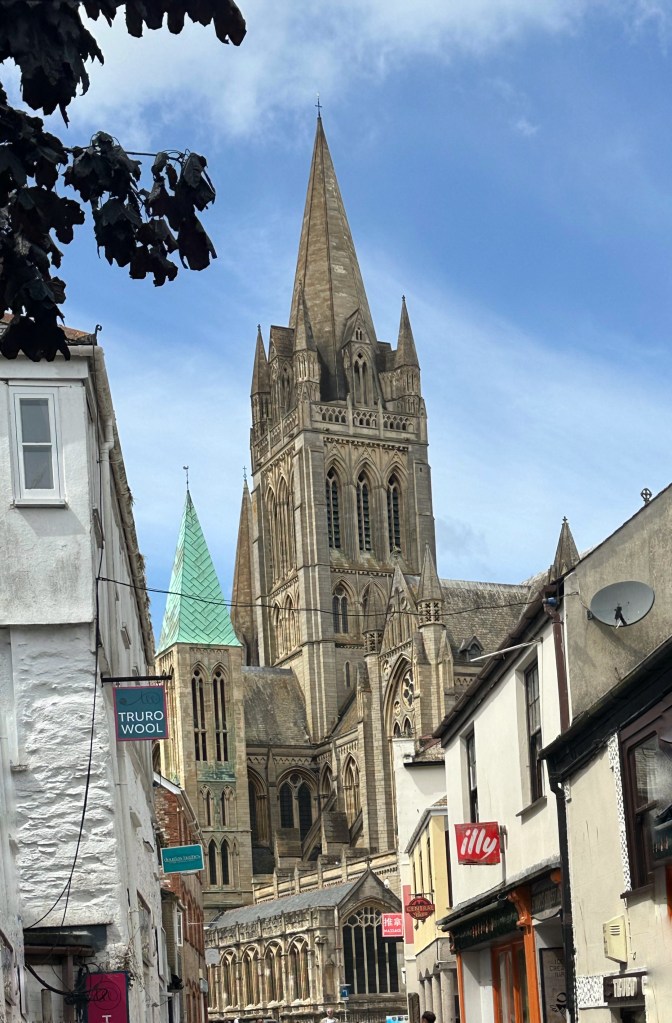
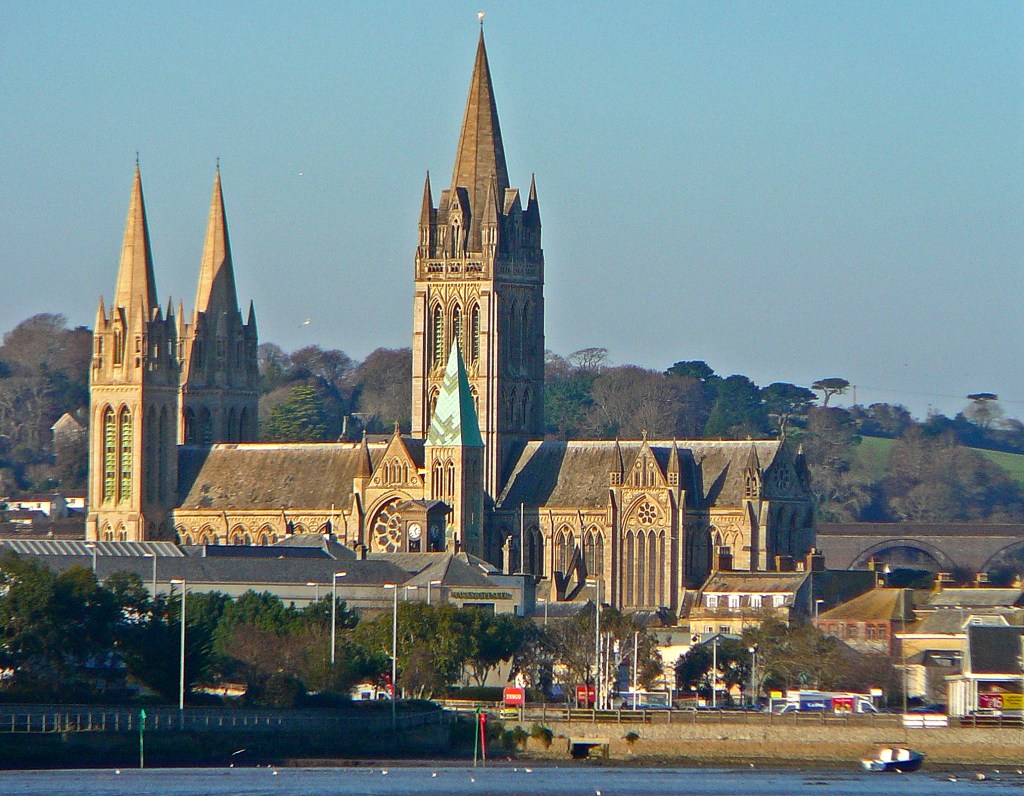
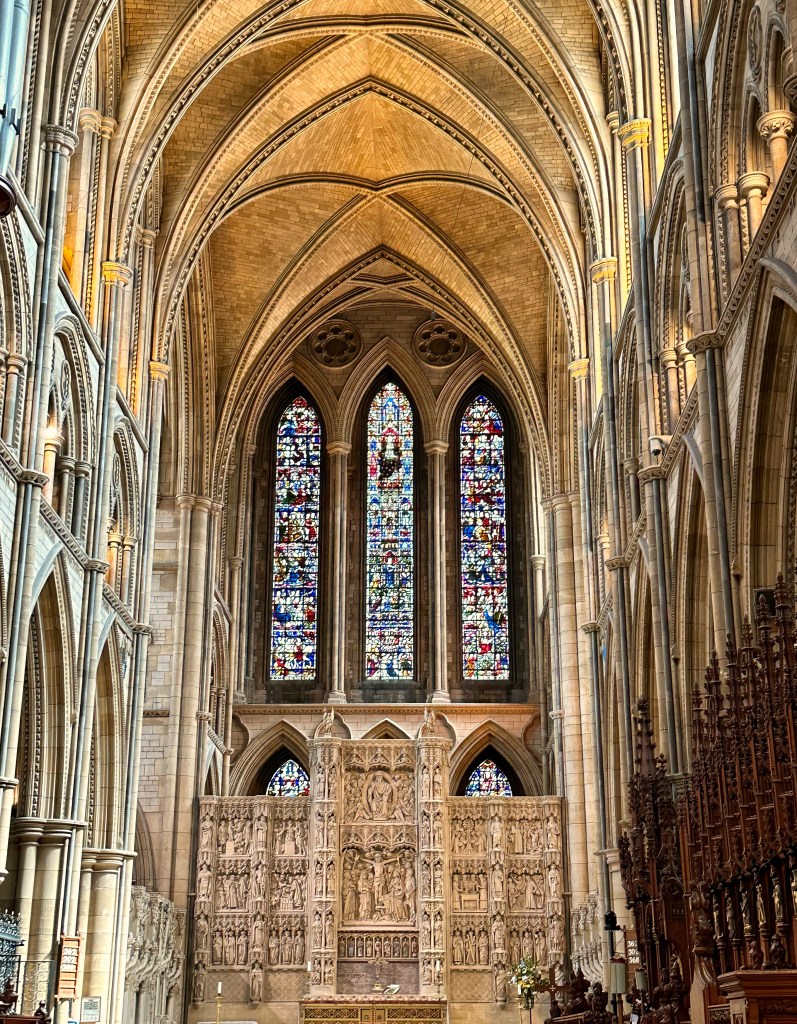
On the web site ‘Ancient Monuments’ it states that:-

Hastings Castle, the Collegiate Church of St Mary and the Ladies’ Parlour includes the castle of Norman origin together with its rock-cut ditch, the remains of a Collegiate church and the earthworks and interior area of an enclosure known as the Ladies’ Parlour which has been identified as an Iron Age promontory fort.

The Ladies’ Parlour is part of a defensive enclosure which occupied the whole promontory although one half of its original area was subsequently taken over by the Norman castle. The crescent-shaped earthwork bank stands as high as 4m in places, but diminishes in height to both south and west. The ditch runs NW-SE between Castle Hill Road and the cliff edge above Burdett Place increasing in size to the south-east to a maximum of 2.4m deep and 20m wide.”

The name Ladies’ Parlour is thought to have derived from the story that the area had been a tilt yard, in the Middle Ages, where jousting tournaments were held, watched by ladies in their finery, but I have not come across any contemporary evidence of this, so it may well be yet another urban myth.

There is however material evidence that, in fact, this area had been settled for far longer than the Iron Age; an archaeological excavation from the site in the 1930s discovered an array of arrows, javelins and spear tips, typical of the Mesolithic Period (Middle Stone Age), possibly over 10,000 years old. Perhaps this ancient area was the birthplace of Hastings, a tantalising thought.

These are some of my adventures as a Flâneur in Hastings and St Leonards, I could tell you many other stories from my wanderings, but that will have to wait for another day.

The Flâneur surveys his domain – Old Town Hastings

One thing I’ve slowly come to discover in my wanderings, is the ‘Art of Looking‘. Before my knees began to fail me, I used to run around the town barely having time to notice anything, other than my laboured breathing, but since I hung up my running shoes, I have more time to take in my surroundings and absorb everything around me.

I began to notice the cloud formations, the roofs of houses, the patterns in nature and of course the endless variety of the ocean and the waves. I can spend hours staring at the sea and, at these times, the only thing to do is put the camera away and live in the moment. In these troubled times, where we feel everything is outside our control, these moments offer a certain solace and give us some reason for hope .

What is this life if, full of care,
We have no time to stand and stare?-

No time to stand beneath the boughs
And stare as long as sheep or cows:

No time to see, when woods we pass,
Where squirrels hide their nuts in grass:

No time to see, in broad daylight,
Streams full of stars, like skies at night:

No time to turn at Beauty’s glance,
And watch her feet, how they can dance:

No time to wait till her mouth can
Enrich that smile her eyes began?

A poor life this if, full of care,
We have no time to stand and stare.

W.H. Davies – Leisure 1911