In our fractured times, there is a false narrative going round, mainly promoted by populists throughout Europe and America that the people in their particular country are somehow unique, special and superior to other countries.
As mobs start roaming our streets, stirring up hatred against refugees and asylum seekers, it is becoming, increasingly, more urgent to set the record straight. In this narrative, I am attempting to give a longer term perspective on migration and to prove that people in these islands, and indeed throughout the world, have always been on the move and that’s the way it always was and always will be, until humans disappear from this earth of ours.
People have been travelling, since humans first emerged in Africa two million years ago. They’ve moved as a result of climate change, in search of food and later in our more recent history, as a result of invasion, famine, war or people just looking for a better life.
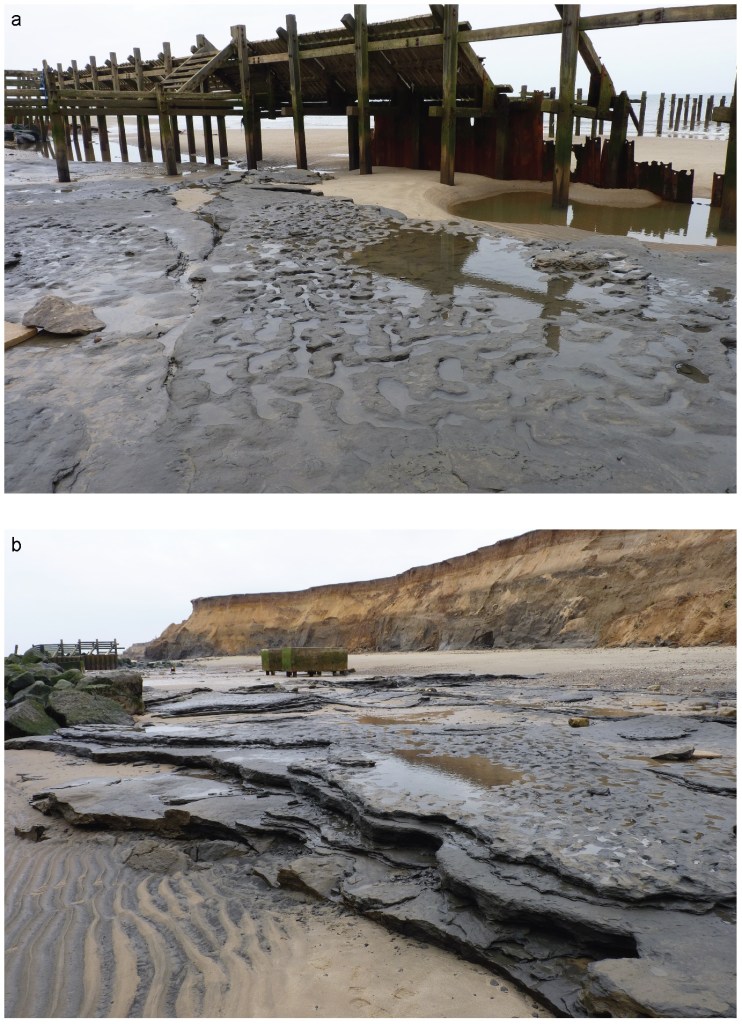
In the British Isles, one of the earliest human species, ‘Homo antecessor’, was walking along our beaches, nearly one million years ago. This astonishing discovery was made in 2013 on a beach in the hamlet of Happisburgh (pronounced Haze-bruh) in Norfolk, when a set of fossilised footprints were discovered that date to the end of the early Pleistocene around 950–850,000 years ago. They were photographed on 3D before being destroyed by the tide shortly afterwards. Research results on the footprints were announced on 7 February 2014, identifying them as the oldest known hominid footprints outside Africa.
As well as the footprints, some amazing artefacts have been discovered on the beach in Happisburgh, including this stunning hand axe carved in black flint, the oldest hand axe ever discovered in North West Europe, that had lain there on the foreshore for 800,000 years and currently resides in Norwich Castle Museum. This beautiful object is exquisitely carved and is a work of art in its own right, comparable in its simplicity to the best modernist sculpture.
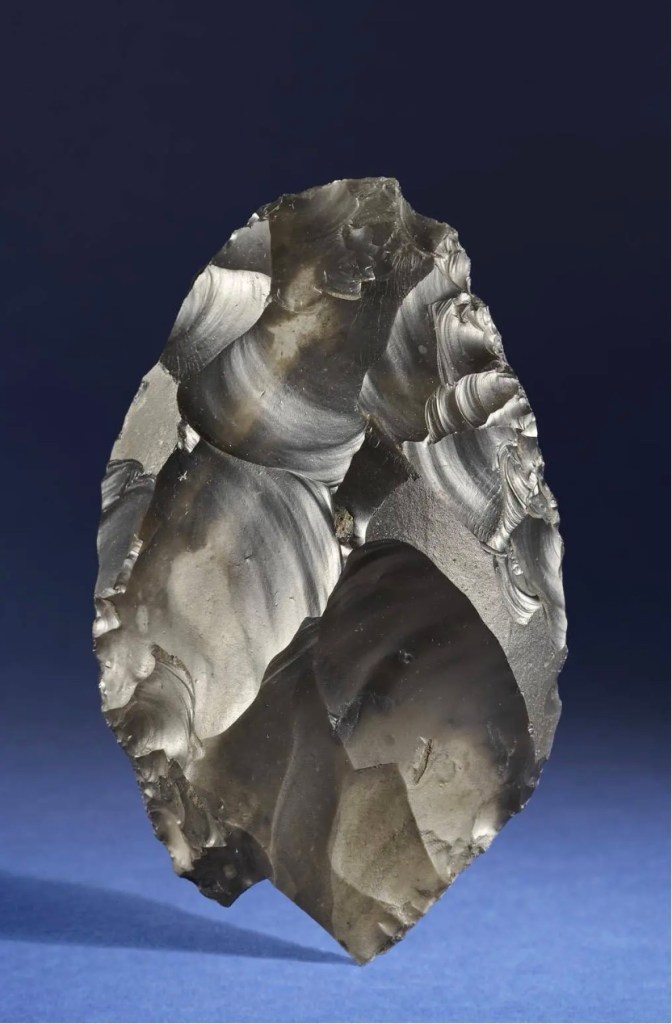
(Rights Holder: Norfolk County Council. Licensed under a Creative Commons Attribution 2.0 Generic License)
Half a million years ago, another human species, ‘Homo heidelbergensus’ arrived on the scene, just to disappear again 50,000 years later, when life became uninhabitable in Britain for millennia, as a result of the onset of another ice age.
Then about 400,000 years ago, our most recent close relatives, the Neanderthals ‘Homo neanderthalensis’, started visiting the islands on and off, through various changing climatic conditions until, eventually, our own species, ‘Homo sapiens’ eventually appeared on the scene about 40,000 years ago.
Happisburgh is the oldest known settlement in Northern Europe that has been discovered to date, and I think it deserves the status of UNESCO World Heritage Site, but they need to be quick, because, as a result of global warming and rising sea levels, Happisburgh is fast disappearing under the water. One day it will just be a memory, like many other coastal settlements.
A permanent presence in Britain only commenced 10,000 years ago, when the most recent ice age ended and the glaciers started melting. At that time, the British Isles was connected to Europe by a massive landmass, which has been named ‘Doggerland’, our very own Atlantis. It is almost impossible today , when looking out over the vast expanse of the North Sea towards Holland and Scandinavia, to imagine our predecessors hunting and fishing in a lush landscape of marshland and rivers.
Ever since I heard about ‘Doggerland’ it has captured my imagination, and no one has painted a more evocative picture of this land better than Julia Blackburn in her wonderful book ‘Time Song – Searching for Doggerland’ which is part history, part archeology and part autobiography. This is her description of Doggerland:-
“I’m writing about a country called Doggerland. It emerged after the last Ice Age and with the warming of the climate it became a wonderfully fertile place of rivers and lakes, gently rounded hills and sheltered valleys, reed beds and salt marshes in the lowlands , trees on higher ground and a profusion of life: fish, birds, animals and humans as well. These were people who left few traces of their passing. They hunted with weapons made from wood, bone or stone; they had canoes cut from the trunks of trees; they had dogs working with them and sometimes buried their dead alongside their dogs. But as the ice went on melting the sea levels rose dramatically – you can’t believe how fast , it could be more than two metres within a century – so the land was inundated or made inaccessible. Seven thousand years ago, Doggerbank was still there as an island and then it too was gone.”
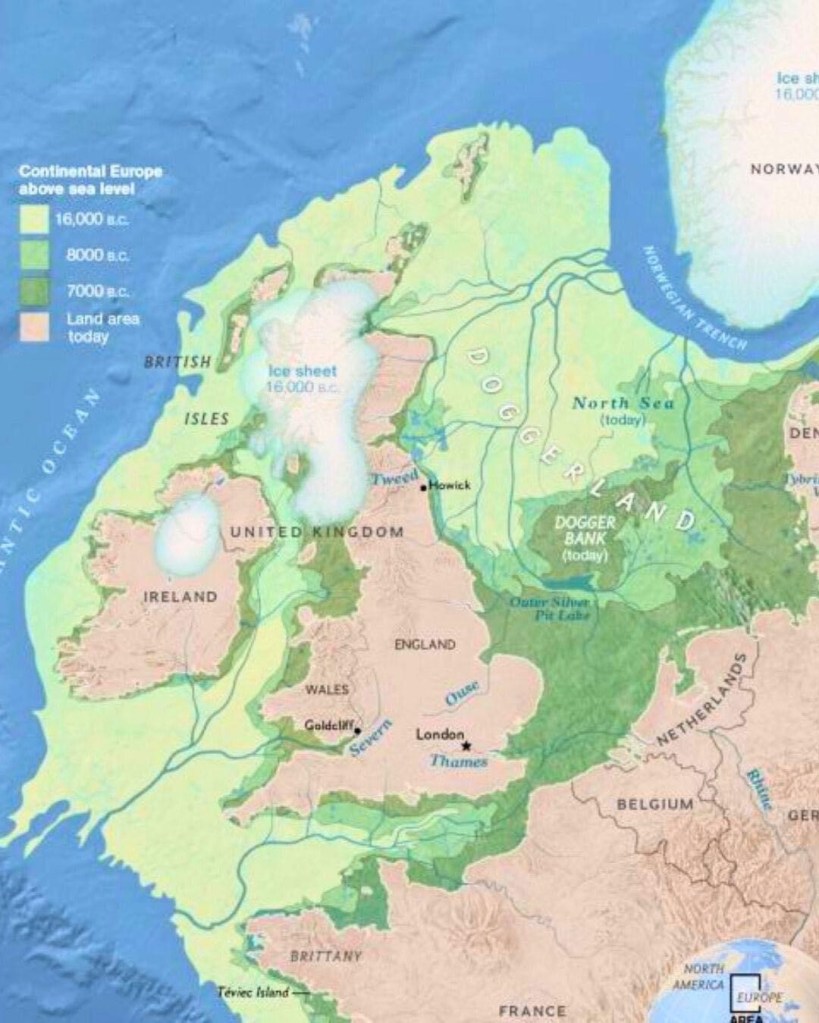
As Doggerland became submerged those thousands of years ago, the British Isles eventually emerged as a separate entity, cutting us off from Europe and Scandinavia and paving the way, for better or worse, for a new identity.
Finally, in the Neolithic Era (New Stone Age) about 4,000 years ago, Hunter Gatherers made way for the first Farmers, who arrived from the Middle East and elsewhere. These communities were possibly the people that built Stonehenge and the adjacent stone circle in nearby Avebury and other wonderful and mysterious stone circles, but these enigmatic people have left little DNA trace in today’s population of Europe.
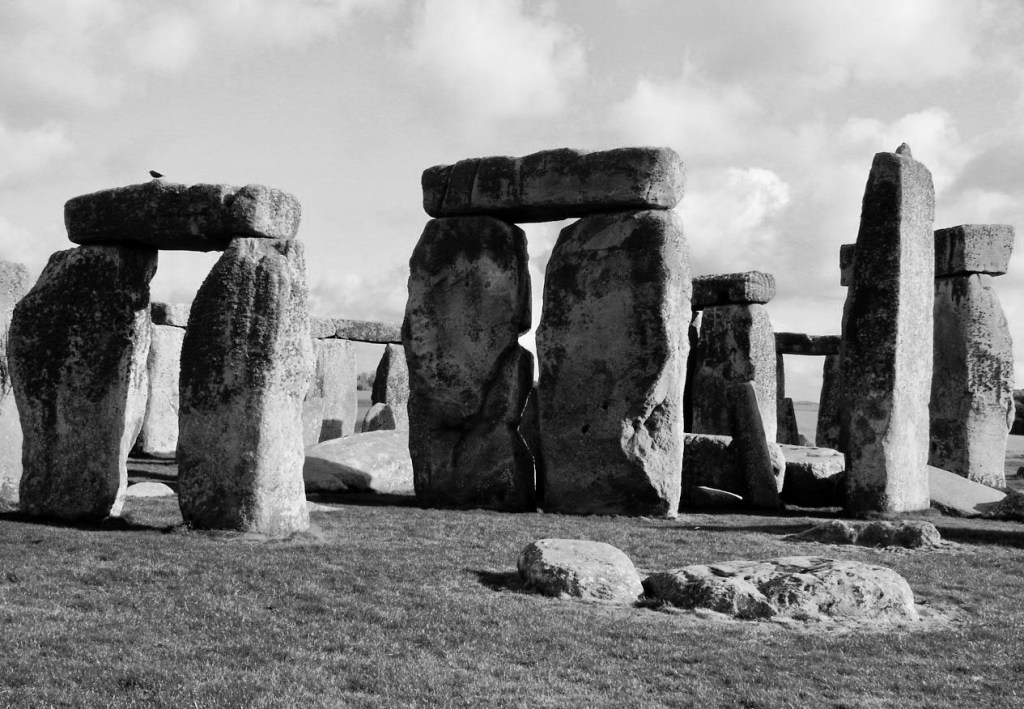
What happened to these people and how could they disappear without a trace? Tantalising clues can be found, when DNA testing became more sophisticated a few years ago. Scientists looked again at DNA of ancient skeletons from people in Europe from 4000-5000 years ago and identified traces of Yersinia pestis ‘The Black Death’. This discovery makes this the oldest evidence of plague bacteria ever found.
In his book ‘Pathogenesis- How Germs Made History’ Jonathan Kennedy postulates that:-
“It is highly likely that the sharp fall in population that occurred in Britain and the rest of Western Europe about 5,000 years ago was caused by a ‘Neolithic Black Death’. But this devastating epidemic differed from the fourteenth-century Black Detain one crucial respect. Yersinia Pestis did not evolve into flea-borne bubonic plague until the beginning of the first millennium BCE. Prior to that it would have been transmitted by sneezing and coughing and infected the lungs. According to the World Health Organization (WHO), pneumonic plague kills almost all infected people if it is left untreated, compared to between 30 and 60 per cent for bubonic plague.”
This hypothesis of the cause of the ‘Neolithic Decline’ is also confirmed by further research carried out in a collaboration between the University of Copenhagen and University of Gothenburg, published in July 2024 – see article entitled ‘The plague may have caused the downfall of the Stone Age farmers – University of Copenhagen’
If this was indeed the case then the fact that there is very little DNA trace of these early farming communities in modern British people is unsurprising, as virtually whole communities would have been wiped out.
Following the Neolithic Decline, another group of migrant farmers, ‘The Steppe Herders’, appeared in the British Isles and elsewhere in Europe, and as their name implies they originated from the Steppes of Central Asia. By the end of the Neolithic period and the beginning of the Bronze Age, about 2,800 years ago, this new phenomenon, who later developed the unique ‘Bell Beaker Culture’ had totally replaced the previous Stone Age cultures.
This was the last great mass migration in Europe, as it has recently been discovered that a large percentage of our gene pool, derives from these mysterious Bell Beaker people, who in turn originated from the Steppe Herders. The name ‘Bell Beaker Culture’ comes, not surprisingly, from the beautiful inverted bell shaped beaker pottery drinking vessels found in the burial sites of these people. As a ‘potaholic’, these vessels bring me so much joy, as I can see so much resonance in the work of modern Studio Pottery still being made nearly 5,000 years later.
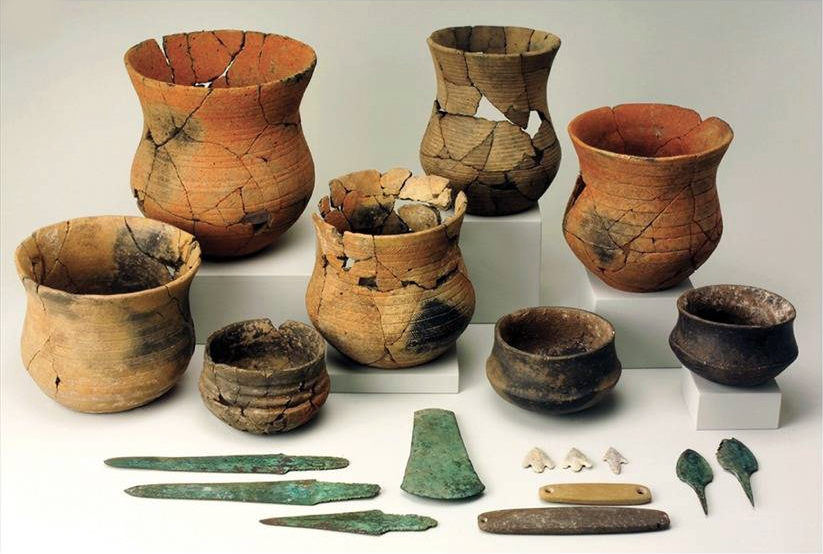
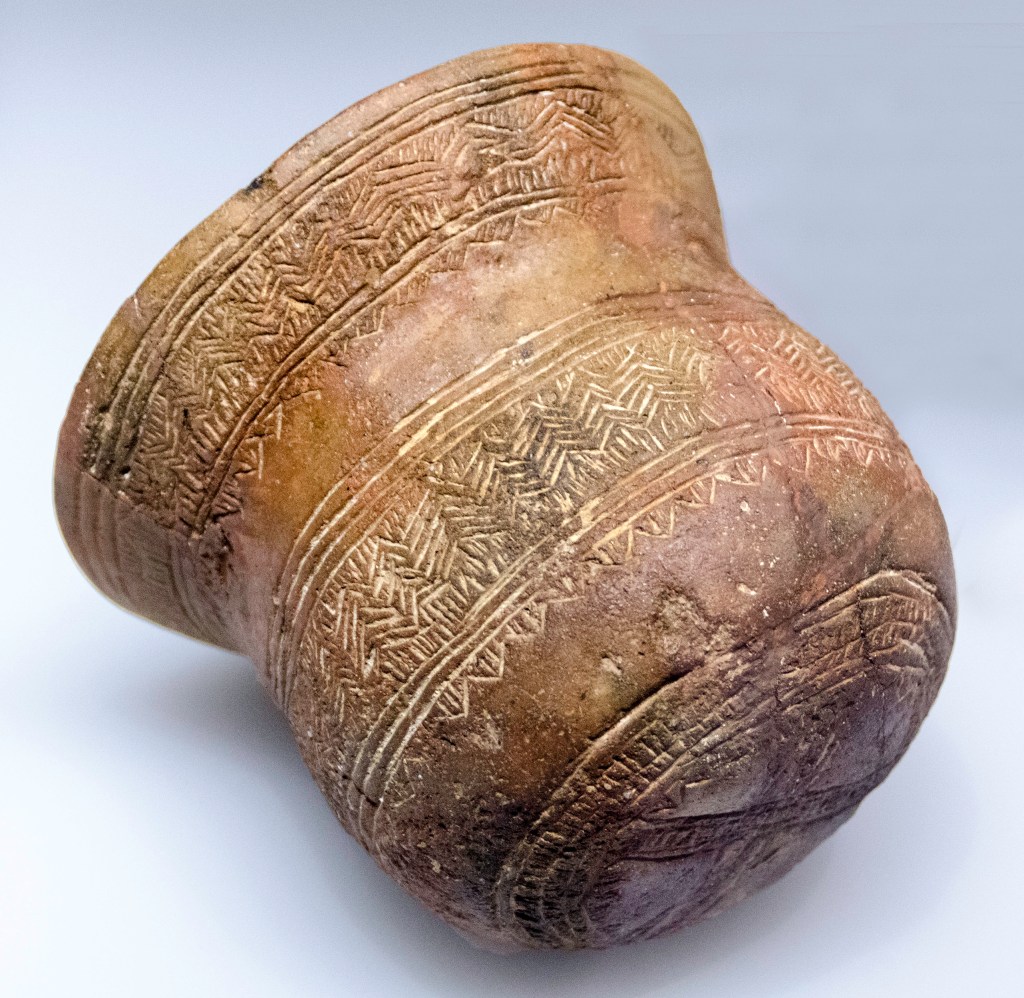
The most celebrated of the Bronze Age bell beaker burials, is that of the ‘Amesbury Archer’ whose grave was discovered near Stonehenge in 2022, from the Late Neolithic and early Bronze Age. This burial included five beaker pots, 18 arrowheads, two bracers (archer’s wristguards), four boars’ tusks, 122 flint tools, three copper knives, a pair of gold hair ornaments, and a cushion stone. The gold and copper metal objects are currently the oldest found in Britain.
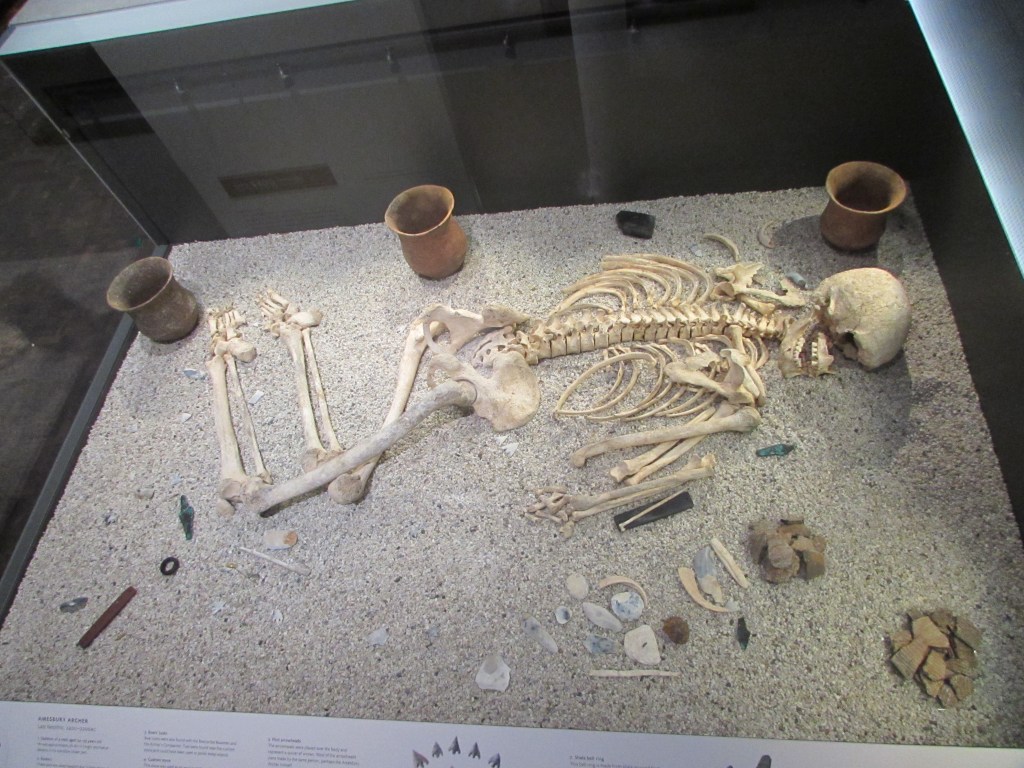
The DNA ancestry of all people of European Ancestry are a mixture of three distinct population groups, in various combinations, Western Hunter-gatherers (dark skin and hair, and light eyes), Neolithic European Farmers (olive skin and dark hair) and the Steppe Herders (tall, fair haired and light-skinned). Most North Europeans have a larger percentage of Steppe Herder DNA, as a result of the Neolithic plague.
From this time on, there were no further mass migrations of population on the scale of the Steppe Herders and all further migrations, of which there were many, from this period to the Norman conquest in 1066, were of people whose DNA was a combination of these three population groups.
As the Bronze Age gave way to the Iron Age, there was further migrations of Celtic speaking peoples from various parts of Europe and Anatolia, who forged an identity as Britons (In England and Wales), as Picts (in Scotland) and as Gaels (In Ireland and the Isle of Man). These people brought the language, which was once spoken by everyone on these islands and today survives in the cultures of Wales, Scotland and Ireland.
Then for the next thousand years, the whole landscape and make up of our island nation was changed beyond recognition, as waves of settlers, moved into the islands, sometimes peacefully and sometimes by force, bringing their own ideas and and enriching our culture and language to form the basis for the people that we are today.
First there was the Roman occupation which lasted from AD 43 to AD 410, followed by what is sometimes referred to as the ‘Dark Ages’ a serious misnomer as this was one of the most exciting and formative periods in our History, when the slow route towards our British identity was developed.
As the Roman Empire collapsed, groups of germanic settlers from the north west coasts of Europe moved to the British Isles, namely the Angles, the Saxons and the Jutes.
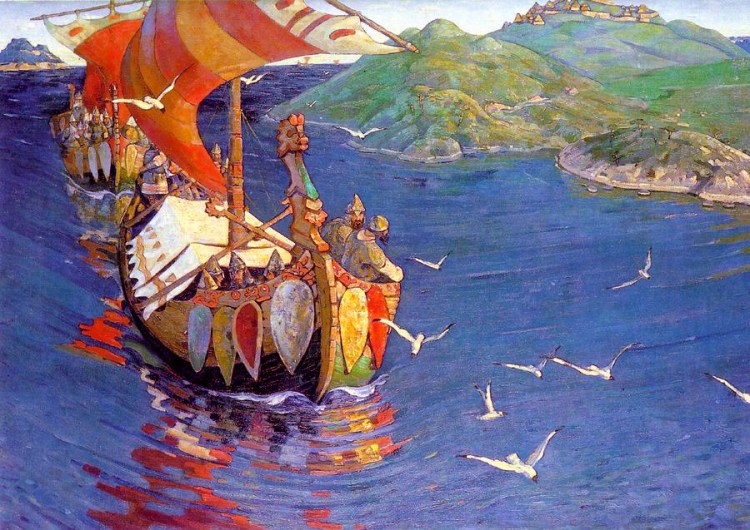
Then from the 8th to 11th centuries we were invaded and settled by waves of Vikings, who ruled the Eastern part of England under the Danelaw from AD 886 to AD1066. The Vikings had a fearsome reputation, which exists to this day, but I would argue that they have been much maligned and they brought a unique culture to the British Isles, that has impacted on our national psyche. This will be the subject of a separate article to follow.
Then of course, there was 1066, an unprecedented event that changed the course of British history for ever, when the Normans invaded under William the Conqueror, imposing rule from above, by an aristocratic elite. Many people would argue that cataclysmic event continues to influence our society to this day, with its rigid class structure and lack of social mobility.
For those wishing to know more about the so-called Dark Ages and an overview of this fascinating period of our history, a good place to start would be Michael Wood’s very informative book ‘In Search of the Dark Ages’
It is time to lay to rest the Anglo-Saxon canard, where firstly in America it has been used over the last 200 years to denote the racial superiority of ‘white people’ over indigenous Americans and African Americans and more recently this lie has been taken up by the far right in the UK to denote some sort of superior racial purity. It turns out that the Anglo-Saxons were just another social grouping that settled in our islands, during the early centuries following the Roman Conquest, who derived their ancestry from the Middle East, Asia and beyond, bursting another racist fantasy bubble, once and for all.
As stated by Jonathan Kennedy in “Pathogenesis’ “contemporary Europeans are neither genetically ‘pure’ nor are they the region’s indigenous people. Even white Europeans are mongrel immigrants.”
I hope that this article has shown racial purity does not exist, nor has it ever done, since the first human species ‘Homo Sapiens’ started mating with our long extinct cousins, the Neanderthals.
From 1066 onwards there have been numerous migrations to the British Isles, the Flemings in the Middle Ages, Jewish migration from the 17th century onwards, a relatively large and unwilling migration of African slaves in the 16th and 17th centuries, Protestant Huguenots and other migrants from Eastern Europe.
More recently there have been Commonwealth immigrants from India, Pakistan and from the Caribbean i.e. the Windrush Generation. The list is endless and continues, but I would argue that they have all brought something positive to our society, be it cuisine, music, philosophy or just a general enrichment of our society by the influence of a different culture.
People are once again on the move across this planet, this time due to climate change, wars and famine. In our country, we have developed a siege mentality in respect of asylum seekers and, as a result, people are dying in their desperation to reach our shores, ruthlessly exploited by the greed and cruelty of criminal gangs. It’s time to stop and take the long view, that a humane and workable solution in the form of some sort of safe passage must be found to help these people.
We will never stop migration by sealing our borders. It has never worked in the past and won’t work now, as can be seen from the long history of how the British came into being, we are a hybrid people living on a hybrid island.
Notes
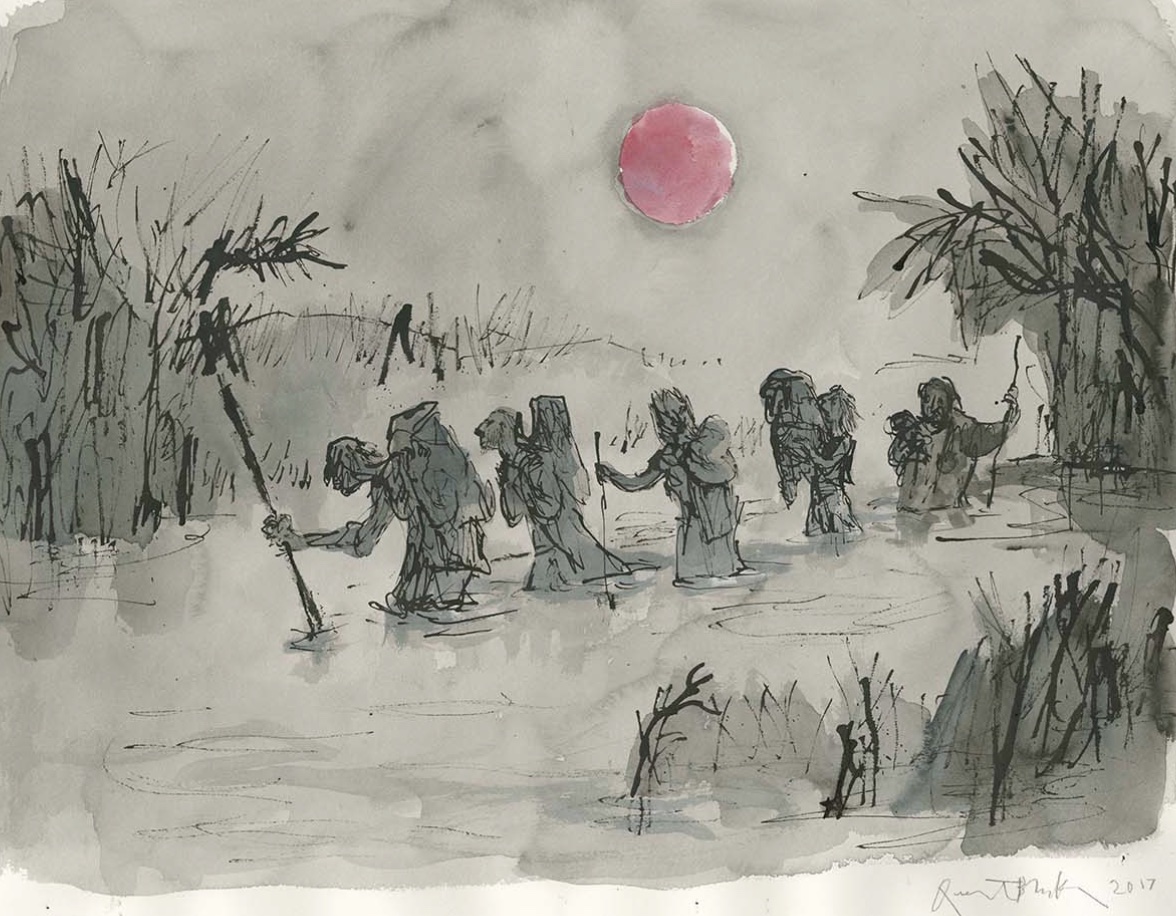
Cover picture We Live in Worrying Times, pen ink & watercolour on watercolour paper 2020 by Quentin Blake.
 Life on the Edge
As ever, such an enjoyable read John. And we don’t half need to remember where we came from, in these toxic times. We are all ‘boat people’. Hastings should know this; we hosted a hell of a lot of boat people in 1066, as you pointed out..
LikeLiked by 1 person
marvellous article John, many thanks
LikeLiked by 1 person