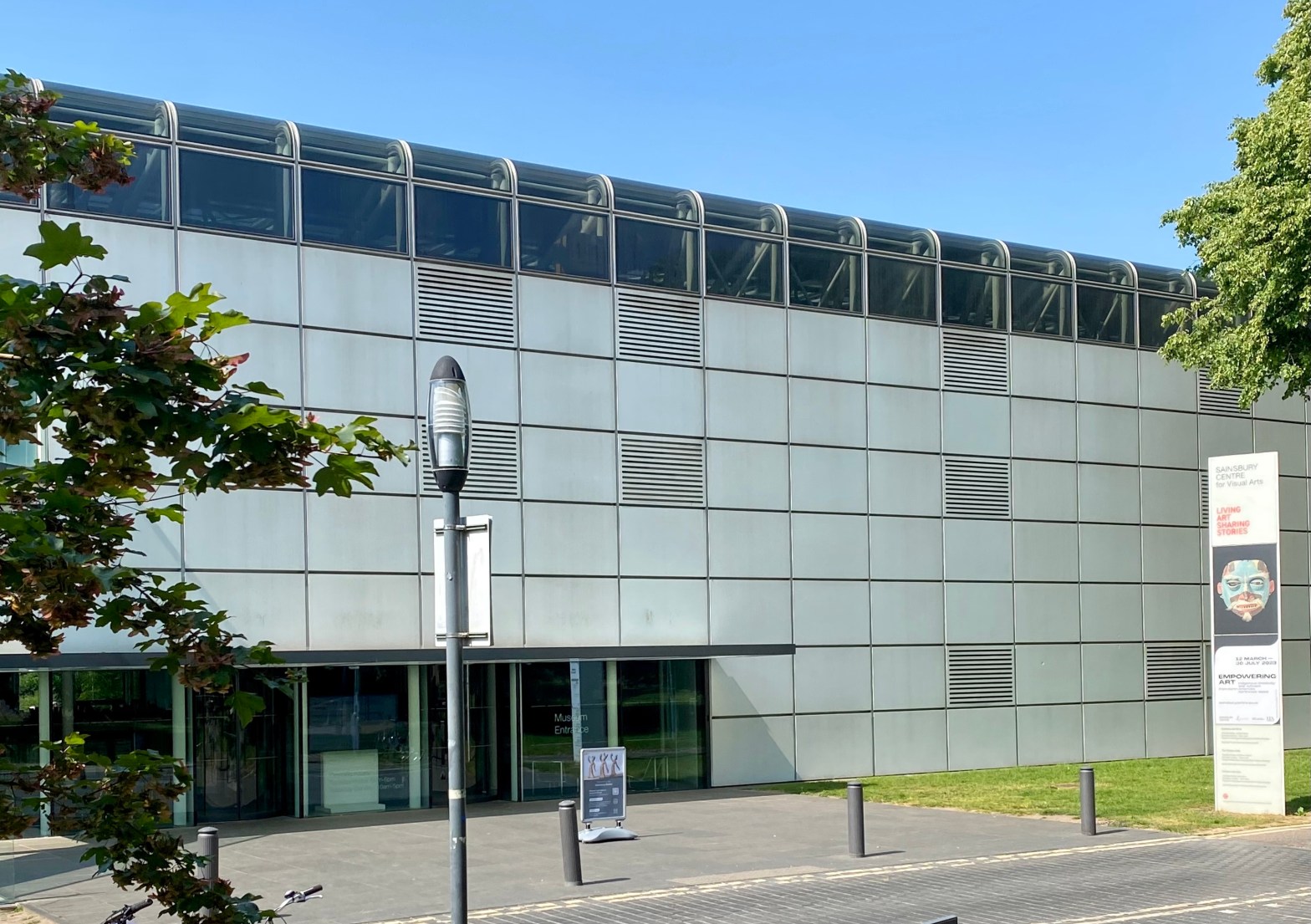
For those who might be thinking that the subject of this article concerns the joys of Supermarket shopping, I should perhaps issue a health warning, no supermarket has been visited in this connection.
The Sainsbury’s that I allude to is the Sainsbury Centre, the famous Art Museum, hidden away on the University of East Anglia, on the outskirts of Norwich. It also happens to be one of my all time favourite places, which I have visited many times over the years, when I am visiting this part of the world. My most recent trip was on the 8th June 2023, while visiting my mother in Norfolk and Norwich Hospital, which is located only two miles from the Sainsbury Centre. As I had a couple of hours to spare, I could not miss this opportunity to revisit some of my old friends and became aquainted with one or two new pieces of art.
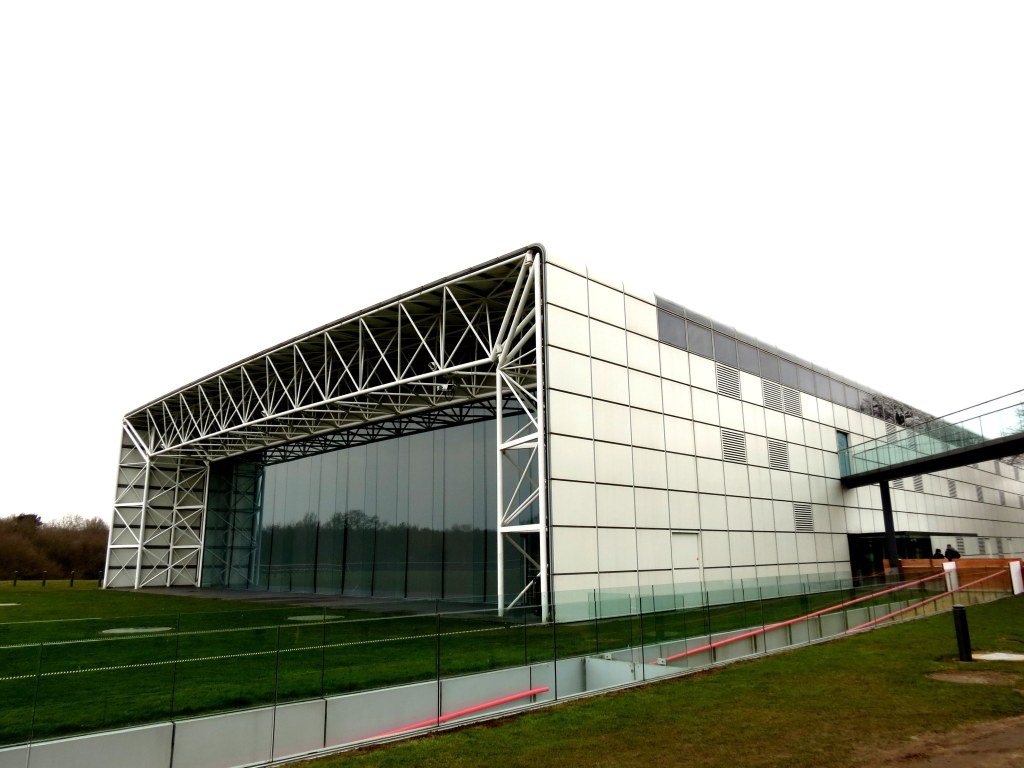
When you eventually arrive at the Sainsbury Building, after negotiating the maze of small roads on the University Campus, you are greeted by a sparse minimalist rectangular building, clad in gleaming aluminium, looking more like a modernist aircraft hanger than an art gallery, but looking just as fresh as the day it opened 45 years ago. The style seems to be somewhat familiar and it is no surprise this iconic building was designed by none other than that Architect superstar Norman Foster. Robert Sainsbury, together with his wife Lisa, commissioned Foster, a relatively unknown architect at the time, and gave him a relatively free hand in fulfilling their brief, resulting in a structure that has stood the test of time.
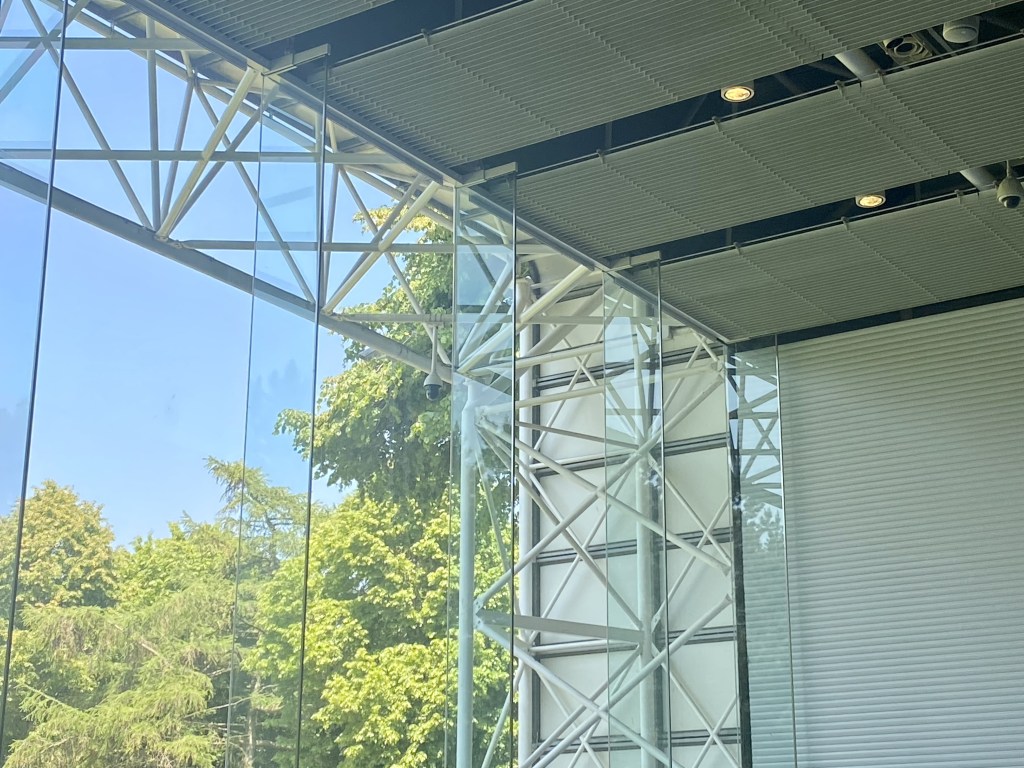
The beauty of this building is in its wonderful use of space and light, it’s all about the interior; the building has been designed with purely this in mind, giving the art and the artefacts room to breathe, these are, after all, the stars of the show.
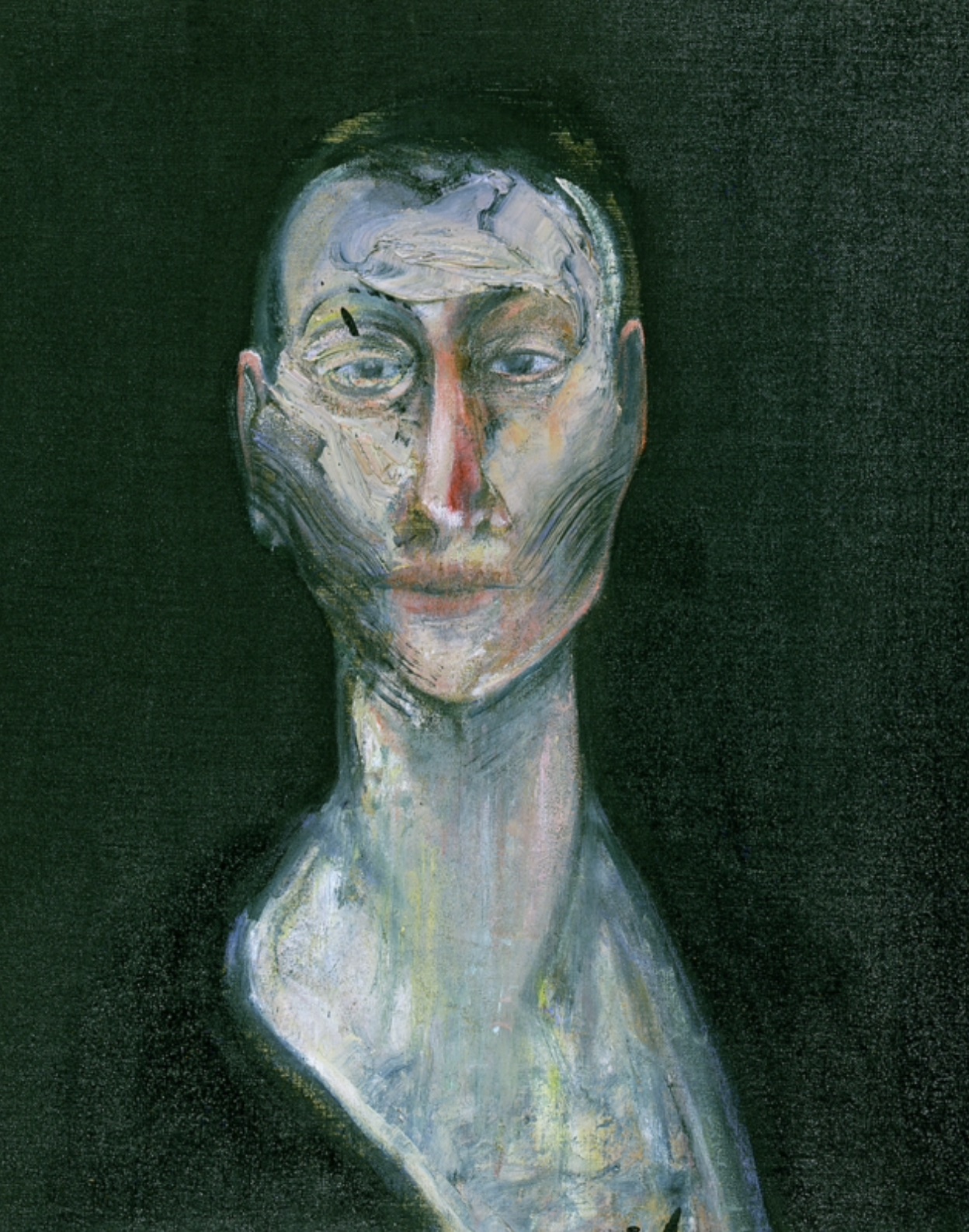
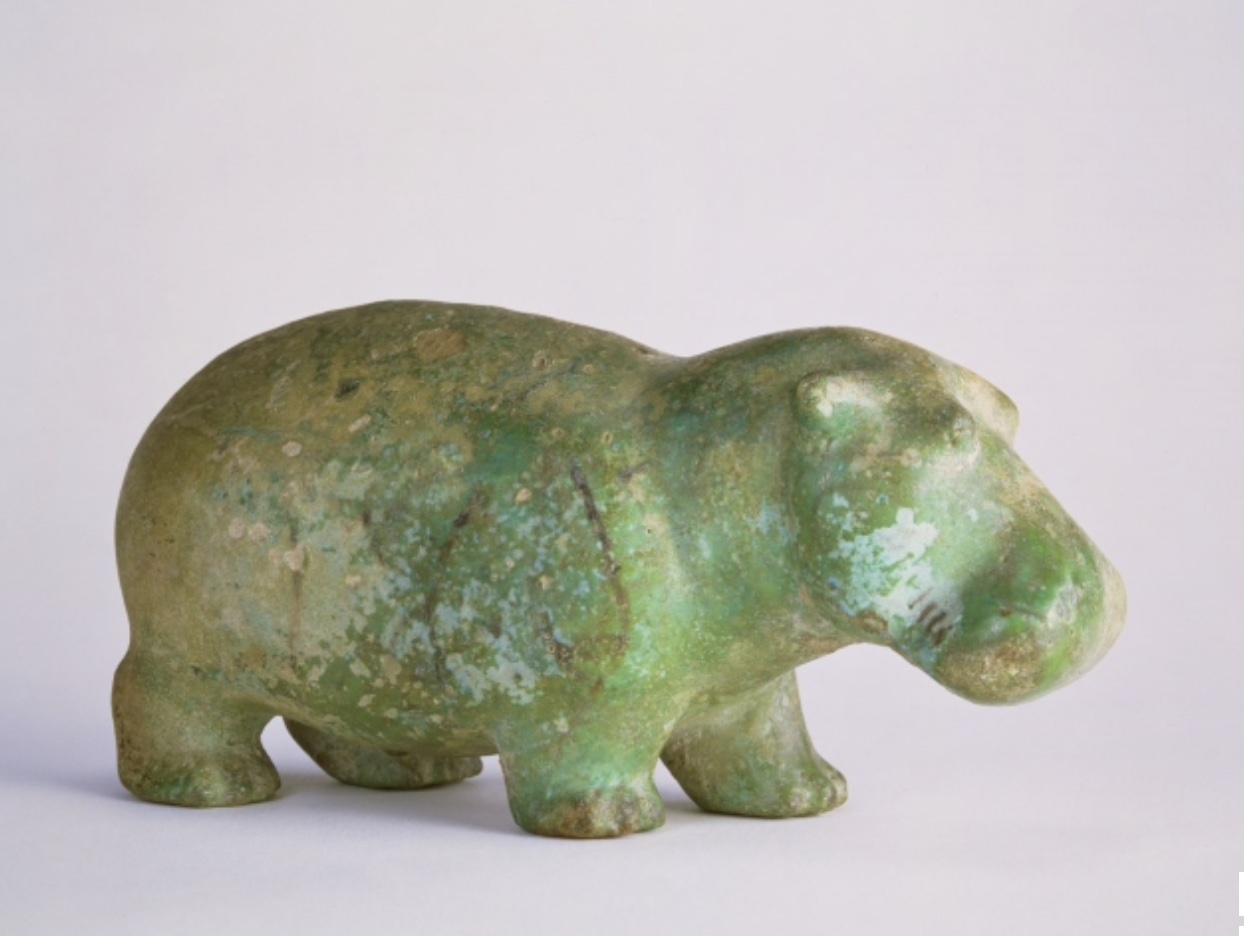
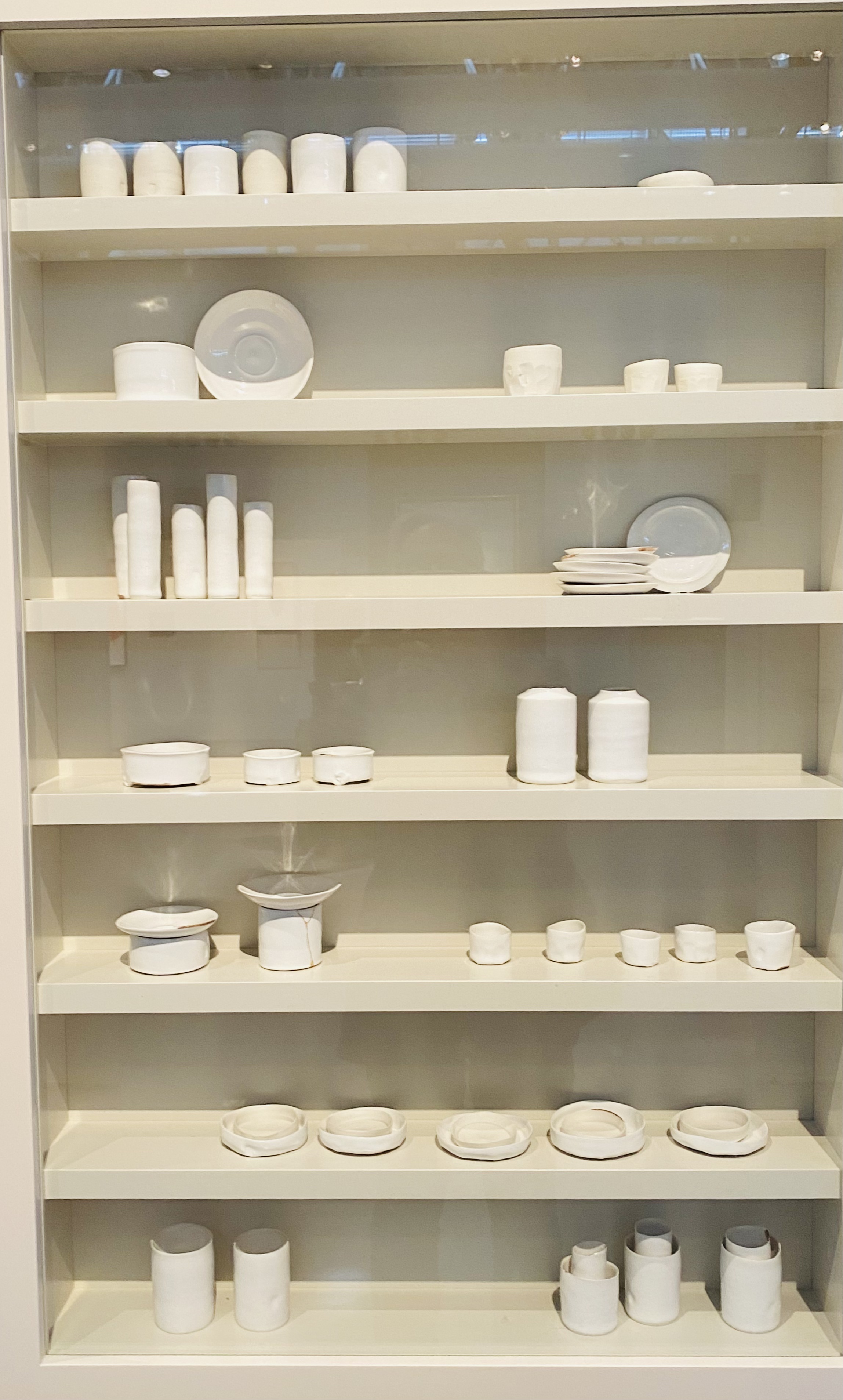
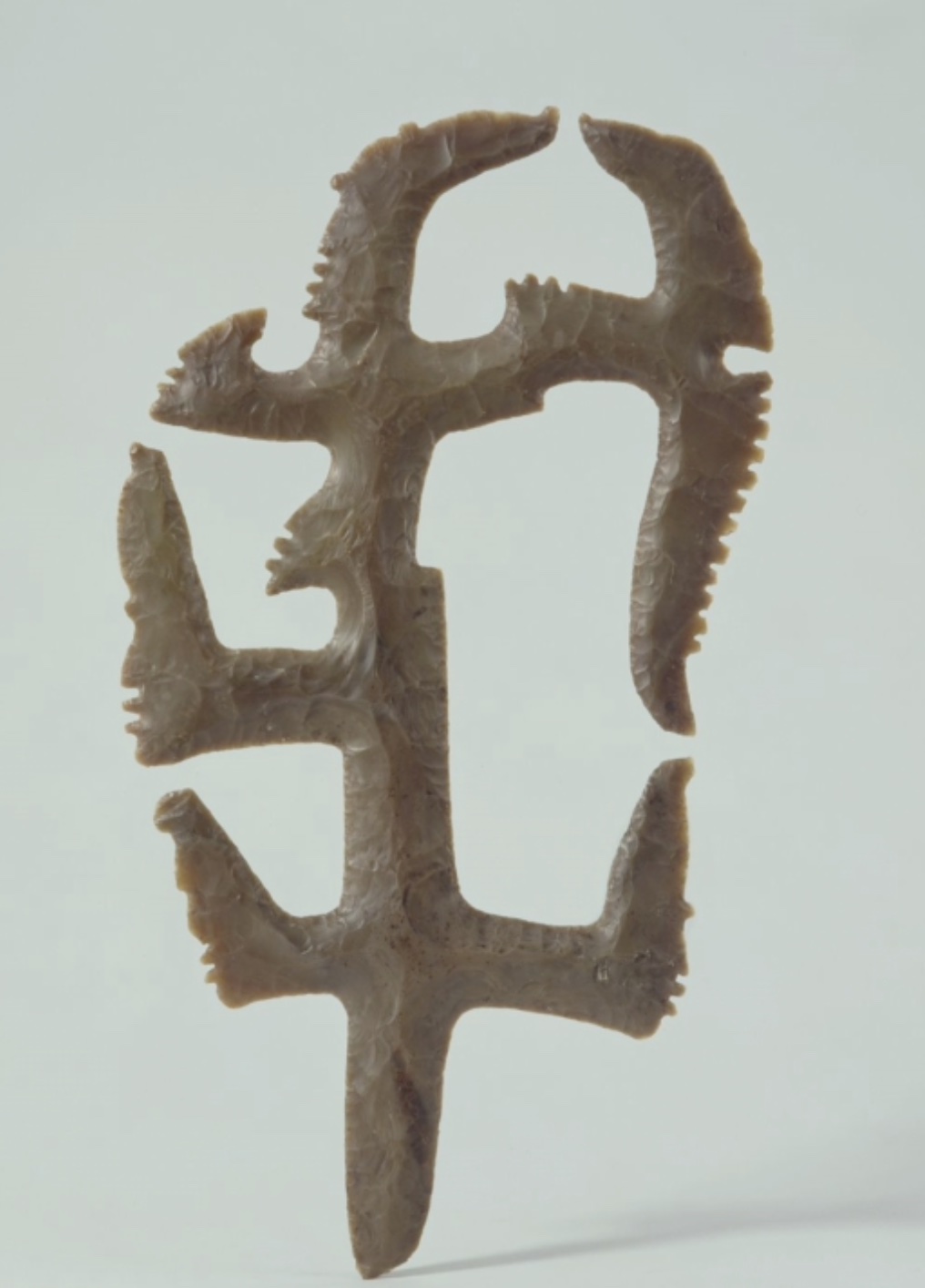
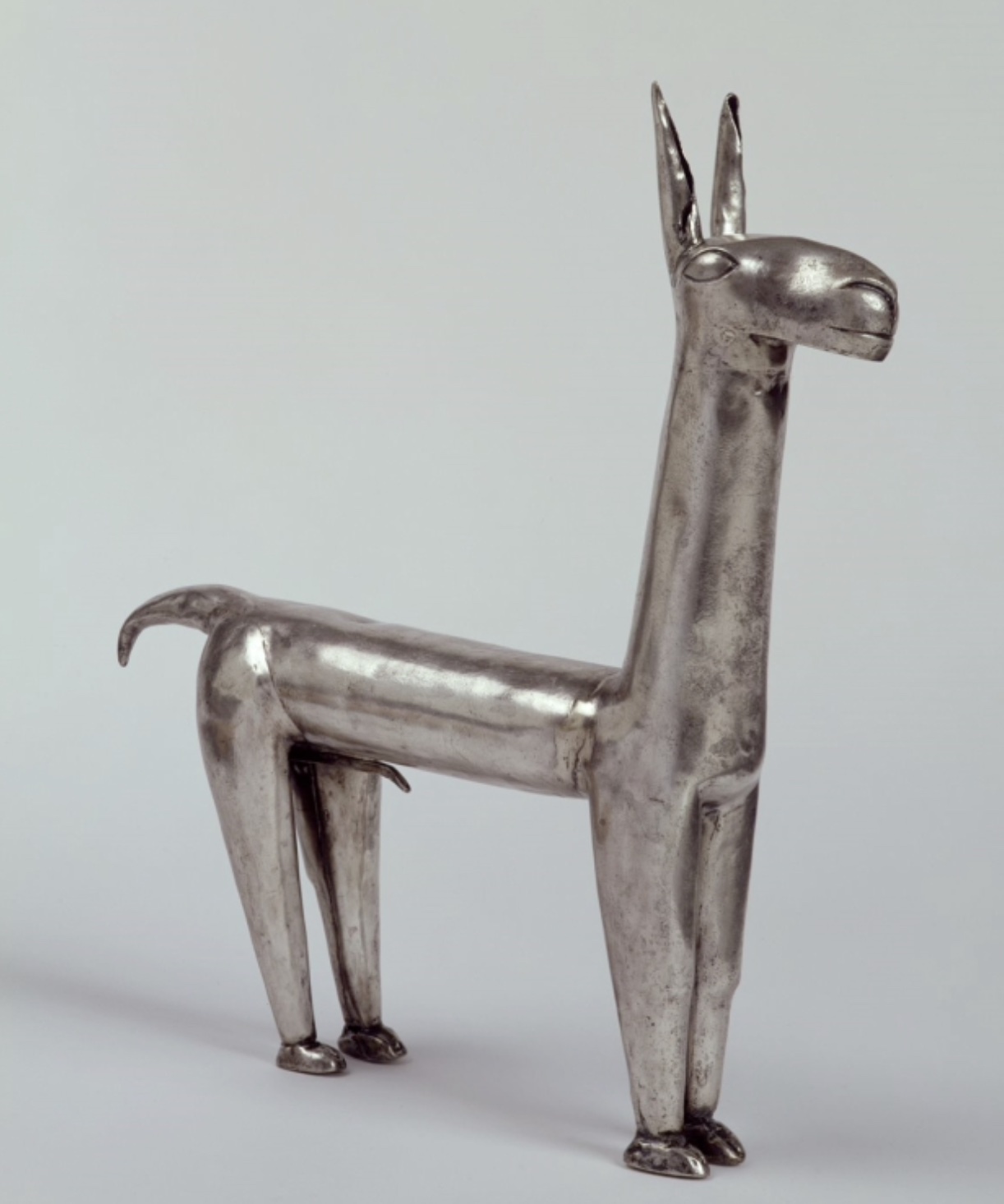
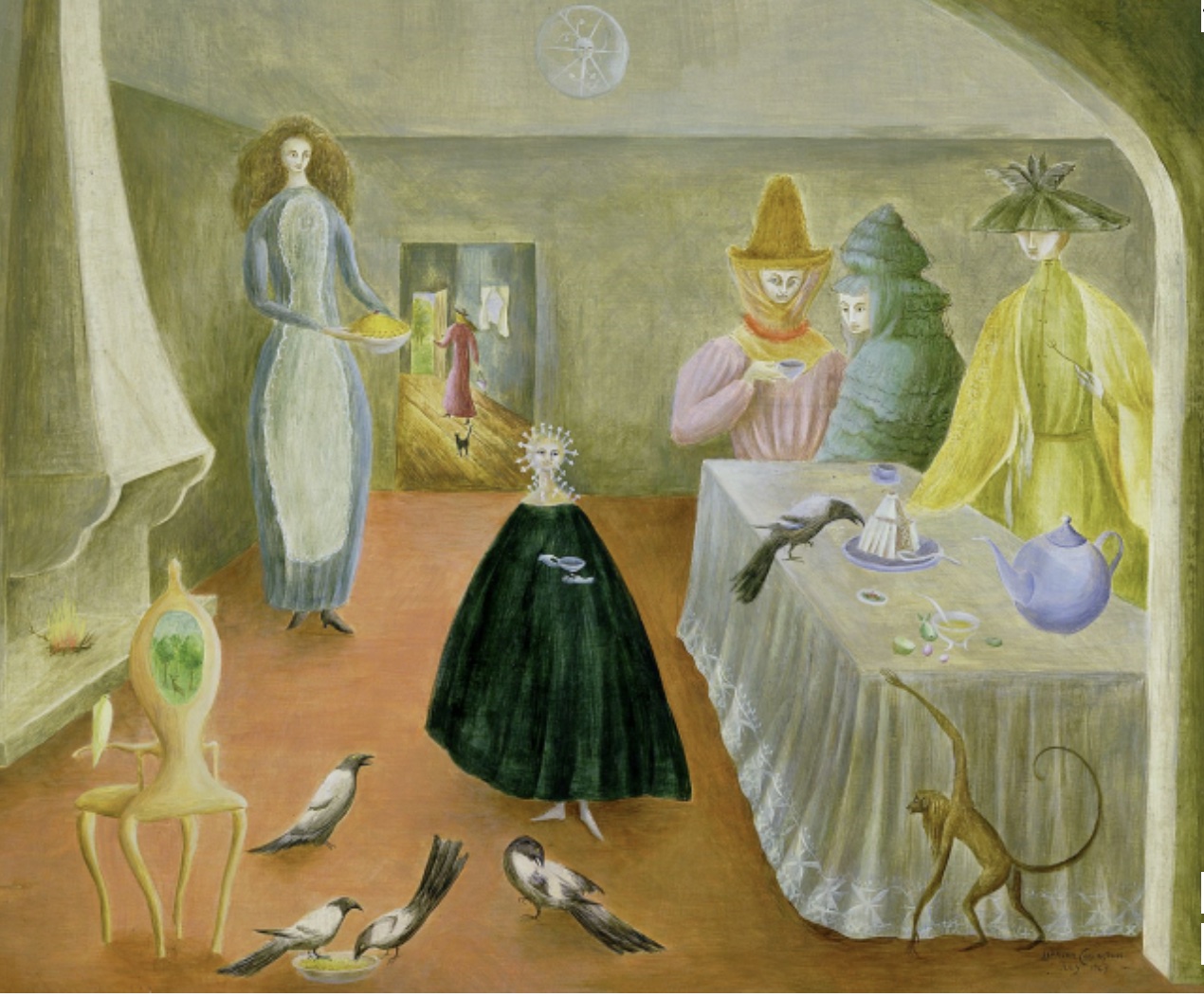
The Sainsbury Centre is unlike any art museum that I have ever visited, firstly there is no distinction between what is considered ‘Fine Art’ by, so called, purveyors of taste and the numerous artefacts and objects made over thousands of years by cultures from all over the world, often looked down upon by the snobs of the art world. Here there is no hierarchy; a 4,000 year old Hippopotamus from Egypt sits alongside a Francis Bacon portrait and an intricately carved Mayan Flint close is neighbour to a modern installation by Ceramic artist Edmund De Waal. Where else could you find a surrealist painting by Leonora Carrington in the vicinity of a Silver Llama cast by an Inca craftsman hundreds of years ago.
Below, from left to Right:- Francis Bacon – Portrait of Lisa (1957) (©️Estate of Francis Bacon. All rights Reserved),
Faience Hippopotamus – Egypt (c1880 BC),
Edmund de Waal – From the Collection of a Private Man (2011) (©️Courtesy of the Artist),
Eccentric flint- Guatemala (600-900 AD),
Llama Effigy – Peru (1400 – 1532 AD),
Leonora Carrington – Old Maids (1947) (©️Estate of Leonora Carrington. All rights Reserved)
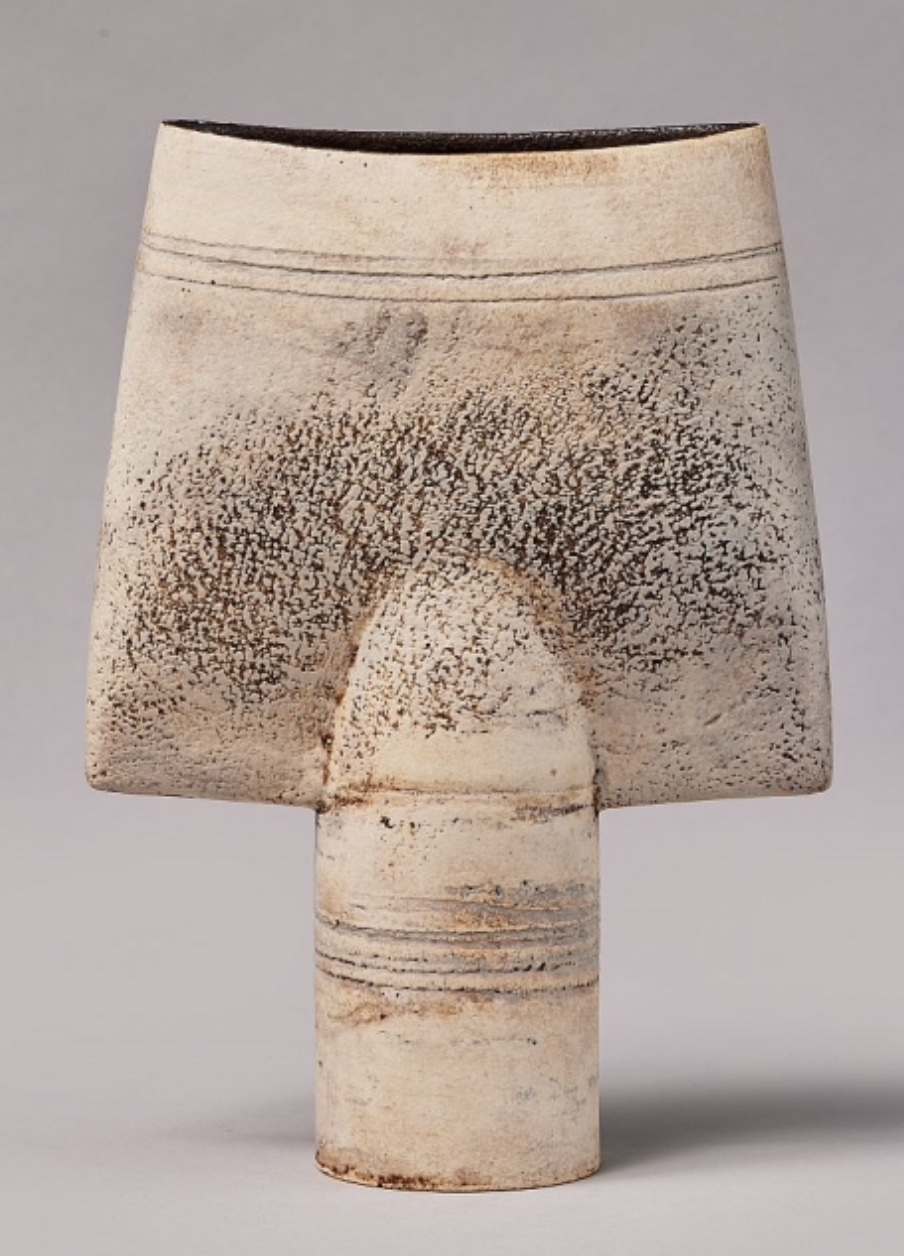
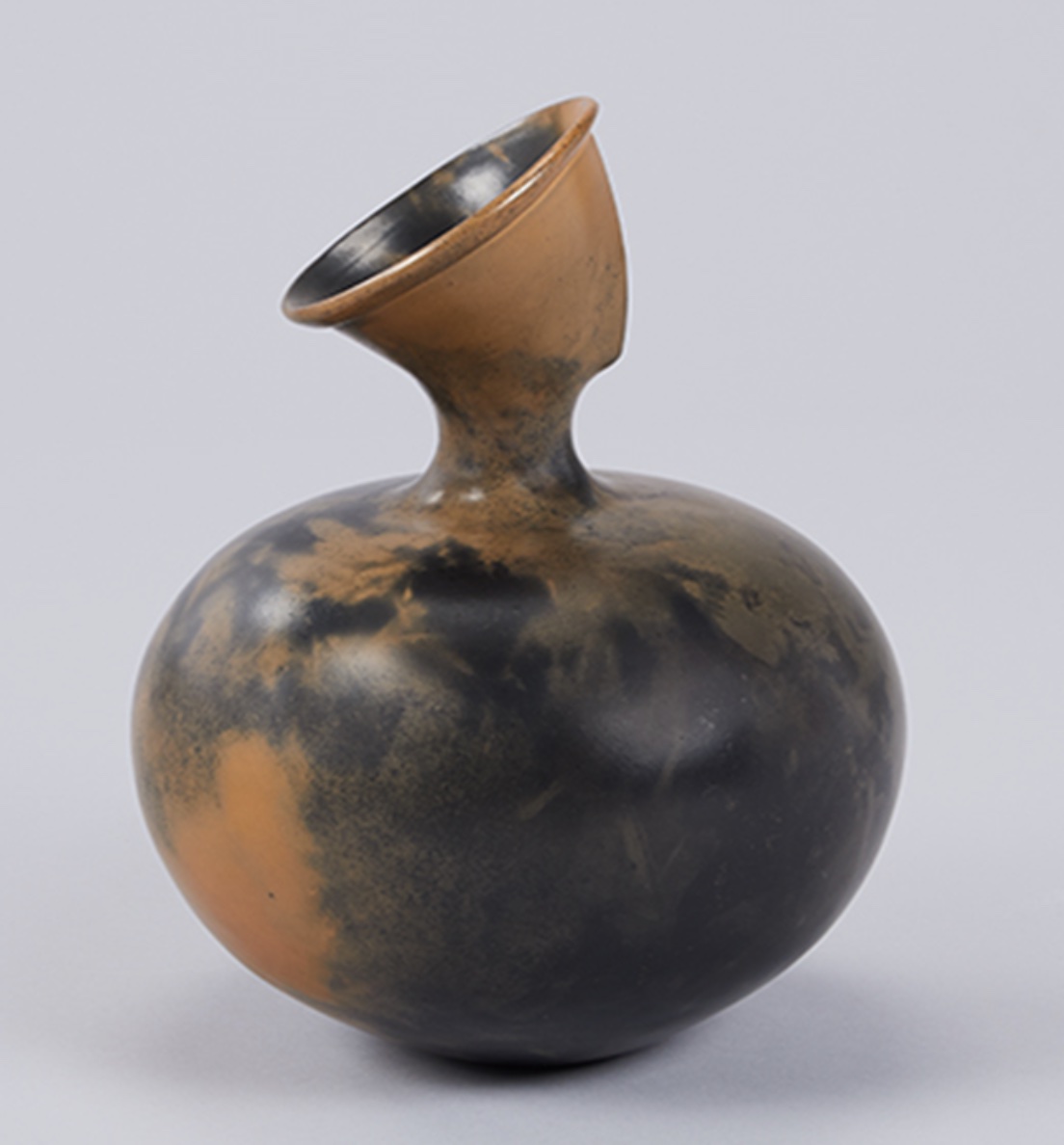
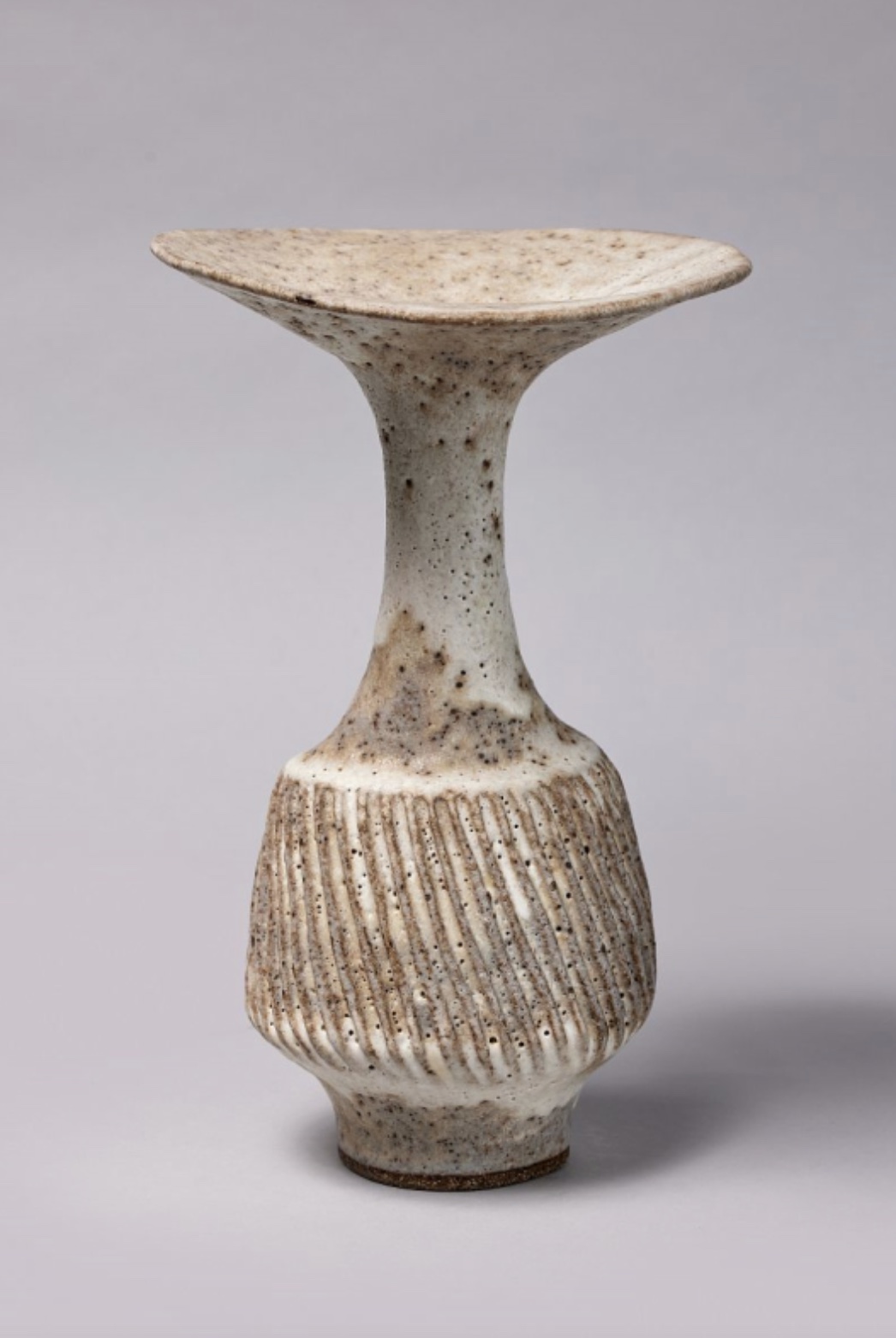
But there are also the pots. My friends will confirm that I am a helpless ‘Potaholic’ and that I like nothing better than seeing pots by some of the ceramic world’s greats and at the Sainsbury Centre they display some marvellous works by Hans Coper, Magdalene Odundo and Lucie Rie, as shown below. They actually have a vast collection of works by Rie and Coper, which are not generally on show, except in special exhibitions. (All works below are Copyright, Estate of the Artists)
But who were the Sainsburys’, who were able to amass this treasure trove from every corner of the globe? Robert Sainsbury was the grandson of the founder of Sainsbury food retailing empire and was himself destined to be part of the family firm, when, as a young man, he discovered a love of modern art, all at the same time as a passion for ancient artefacts. These two obsessions would stay with him for the rest of his life.
Luckily his new wife, Lisa, who had been mainly raised in Paris, was also passionate about art, so this was a match made in heaven. Although they were, of course, rich by anybody’s standards, they did not buy for investment, as most of their peers would have done. They bought what they loved and what inspired them, often sponsoring the up and coming artists that they met. One such person was Francis Bacon, who was befriended by the Sainsburys’, long before he became a household name. There are 13 Bacon paintings in the collection, purchased for a meagre £8,000 but now worth hundred of millions.
They were also some of the earliest collectors to invest seriously in modern Studio Ceramics, when it was totally unfashionable in the art world, for which all lovers of ‘Pots’ should be eternally grateful.
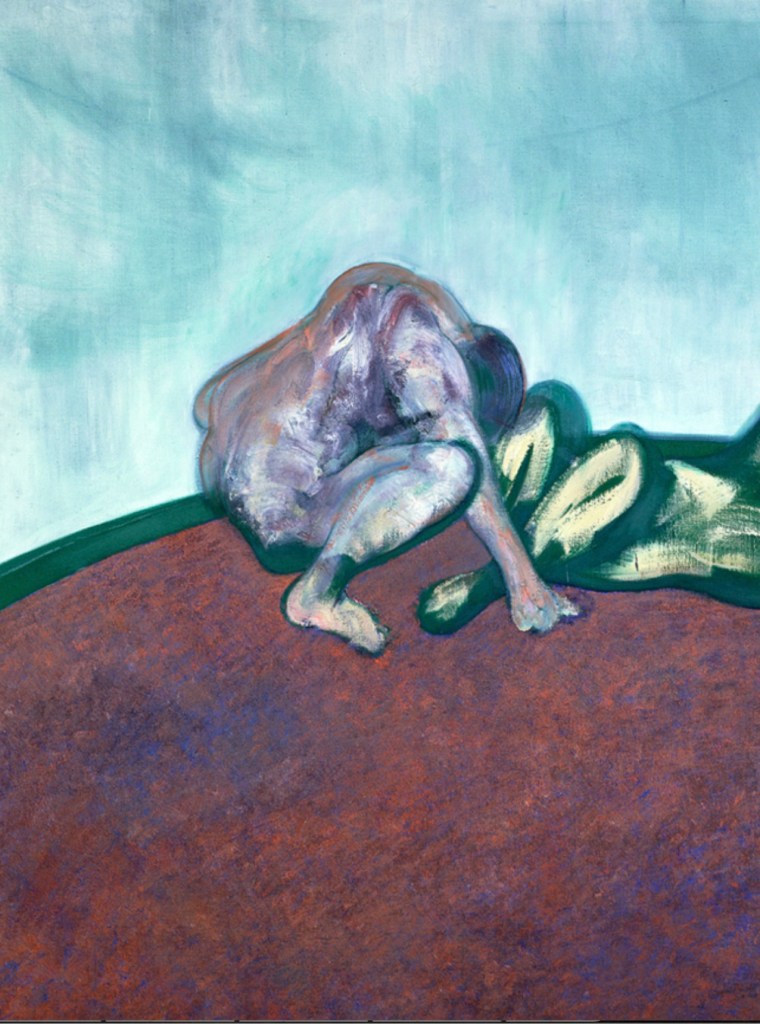
On the day of my visit, I was in a somewhat fragile state, with worry about my mother in hospital and thinking about a dear friend, who had died almost a year ago to this day. As I walked up to the painting ‘Two figures in a room‘ by Francis Bacon, I became transfixed. I felt for the first time in my life that I understood Bacon. It is difficult to explain, but the combination of the colour palette with the man crouching down, seemingly in agony, isolation and despair, produced a visceral emotional response in me and seemed to sum up all the feelings that were inside me at that particular moment.
I must have been staring at the picture for some time, but I jumped out of my reverie, when a man approached me and said he hoped that I didn’t mind, but he had taken a photo of me looking at the picture. Apparently, in my total concentration, I could have been mistaken for one of the exhibits. His intervention quickly pulled me back into the reality of my surroundings.
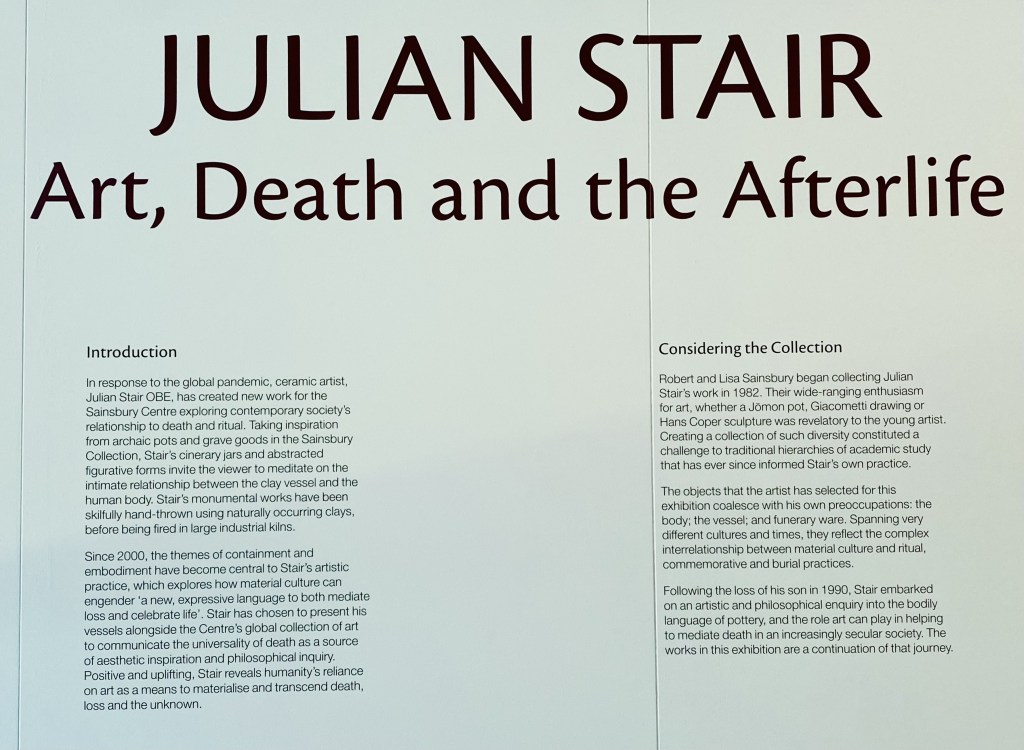
I had heard that there was also something special at the centre, in addition to the collection, which I knew and loved. I had read about an extraordinary exhibition by the Ceramic Artist Julian Stair, which I did not want to miss. Little did I know what a profound impact this exhibition would have on me and how I would be able to experience at first hand the transformative and healing power of art.
Julian Stair’s exhibition is called ‘Art, Death and the Afterlife’ and the original inspiration was the death of Julian’s son in 1990, where he wanted to investigate how art can help with grief and loss in a society, where the influence of religion is on the wane. Following the Covid pandemic, and the mass trauma this has caused, he wanted to explore this relationship further, culminating in this groundbreaking exhibition at the Sainsbury Centre.
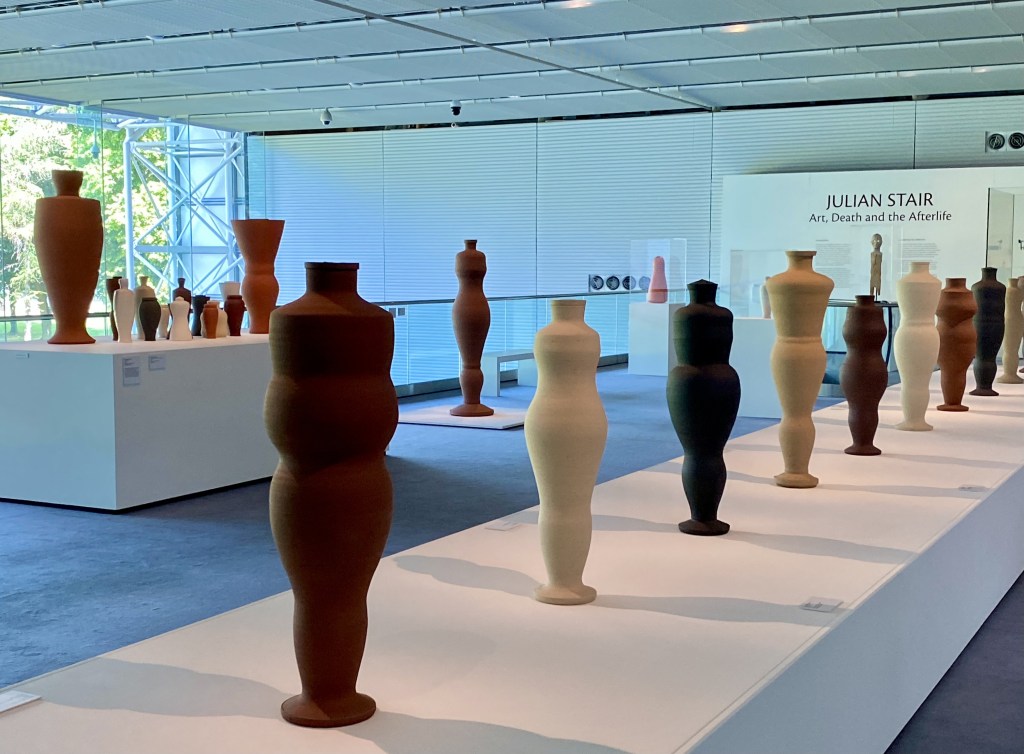
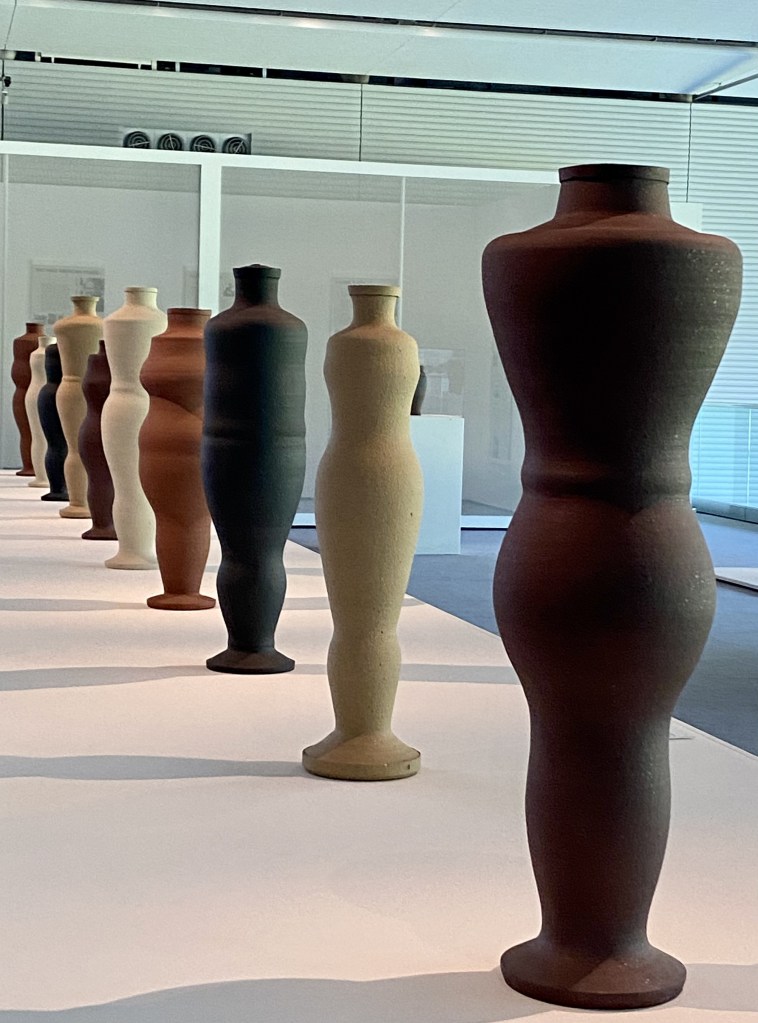
In recent years Julian Stair has taken to making very large pots, and I really do mean enormous. These vessels are thrown on the wheel, an incredible feat of strength and endurance and fired in large industrial kilns. The majority of the vessels are made in raw unglazed clays of different colours and shapes, resembling the human form.
In the words of the Curators of the exhibition:-
“Around thirty new artworks by the artist, including monumental figural forms, will invite the viewer to meditate on the relationship between the clay vessel and the human body. They will be presented alongside objects from the Sainsbury Centre Collection, selected by the artist to communicate the universality of death as aesthetic inspiration and philosophical inquiry. By drawing together ancient Cycladic marble figures, anthropomorphic vessels from Ecuador, Nigeria and Japan, and twentieth-century drawings by Alberto Giacometti, Stair creates a poetic and moving meditation on the human condition. Positive and uplifting, Art, Death and the Afterlife explores humanity’s reliance on art as a means of traversing the unknown and overcoming the finality of death.“
The enormous vessels, seeming to resemble rows of souls queuing up for an unknown destination, are strangely affecting and immediately create a melancholic atmosphere. Other than a lone exhibition invigilator, I was the only visitor to the exhibition that morning, which felt like a gift. I was alone with these giant effigies, without any outside distractions.
But this was so much more than a tribute to the people that died during those terrible years. Julian Stair has gone one step further and incorporated the ashes of a number of the victims of the pandemic into the clay, creating a permanent memorial to their loved ones. At the end of the exhibition, these memorials, seven in total, will be given to their families to love and cherish. It is difficult to convey how intensely moving this row of cinerary jars was, creating not only a feeling of terrible loss, but also, thankfully, of solace and even hope.
There is a beautiful article written by Rachel Cooke in the Guardian, which conveys, perhaps more eloquently than I can, the importance of this exhibition.
Guardian article of 19th March 2023
However, there was one more surprise in store, in a small room at the back of the main gallery, there are wonderful personal tributes, from loved ones, to some of the people who had died, and whose ashes now resided in the pots of Julian Stair. Below is one of the heartfelt eulogies in that room, from a daughter to a father.
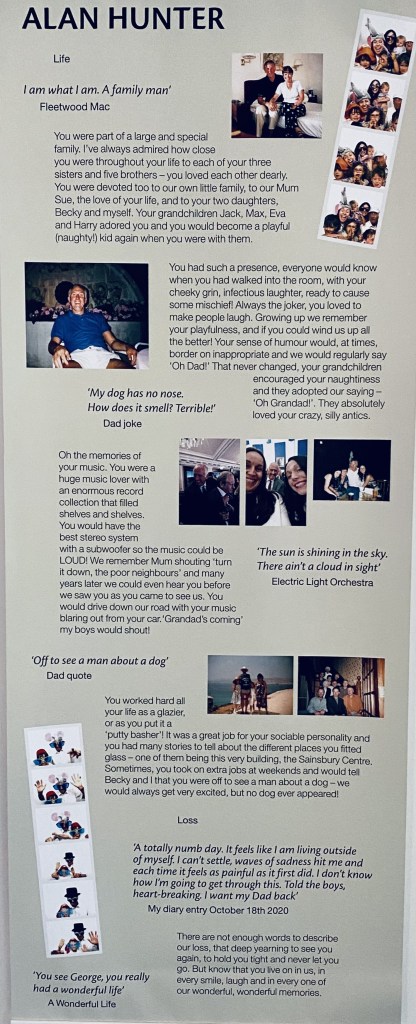
Then I noticed a table with buttons and it was, at this table, that I could contain my grief no longer. As I picked up a button, I sobbed like a child, for my friend Julia who had been taken from us barely a year ago and for all of those nameless people who had been devastated during those strange years. Then my thoughts turned to my Dad who had suddenly and unexpectedly died, 54 years earlier, when I was only 19 and also of my Mum, still alive, but in the twilight period of her life.
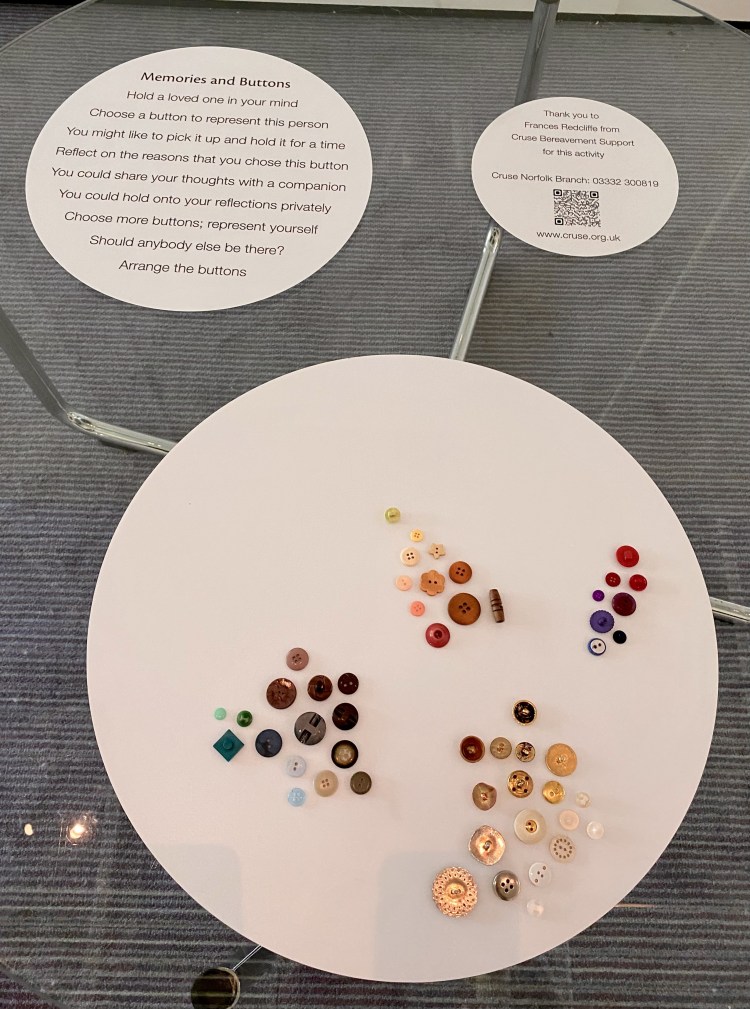
This unexpected outburst felt incredibly cathartic and liberating and, after a minute or so, I was able to return to myself and think with fondness of how Julia had brought such joy to the people around her and that it was a life well lived. Such is the power of art, giving hope in the midst of grief.
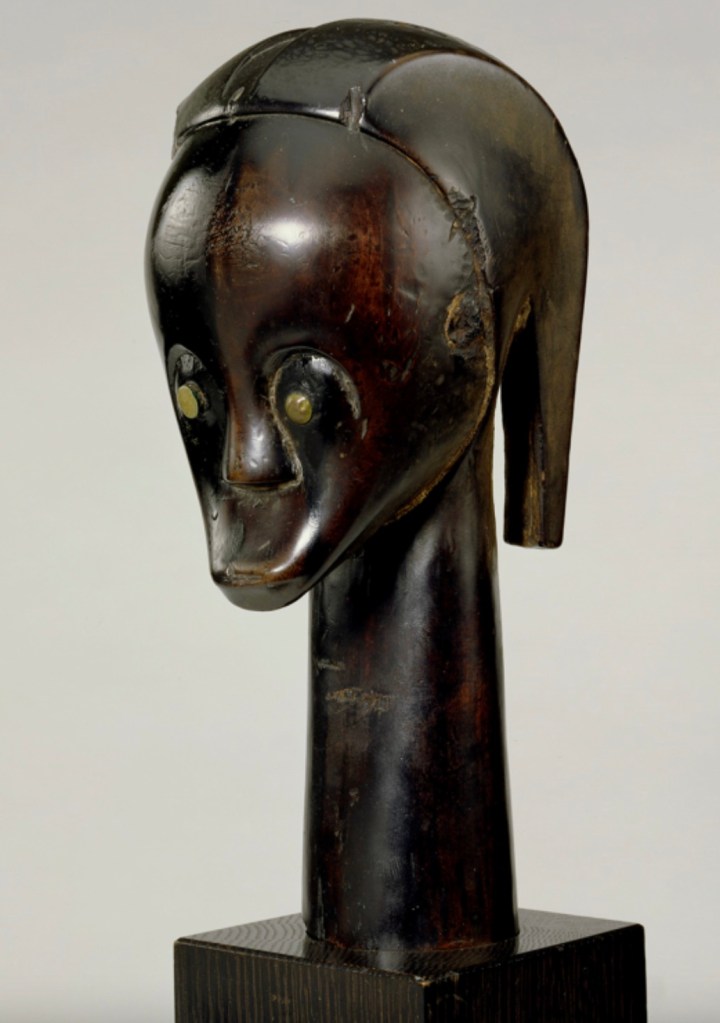
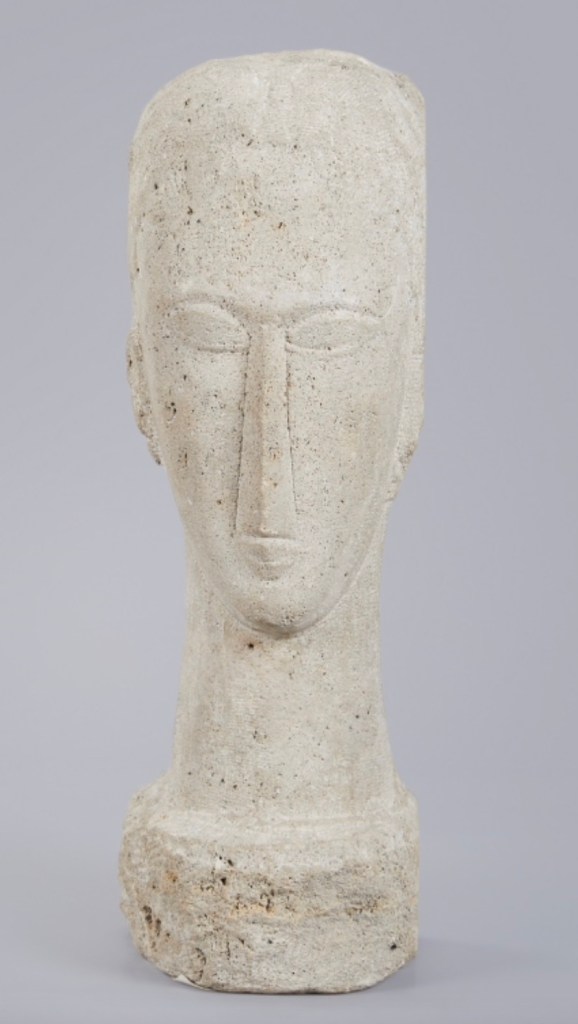
I started out writing an account of a visit to a Museum and it ended up as eulogy to the passing of a friend, this is how these things happen sometimes. But to finish on a hopeful note, I want to return to the gallery collection. To conclude, I have chosen two pieces with real resonance for me and an emotional connection to each other. One is an anonymous carved wooden head by a member of the Fang tribe in Gabon in the late 19th century and the other a carved stone bust by the early Twentieth Century artist, Amedeo Modigliani, made around 1910. One was made as a tribal artefact to guard ancestral bones and the other as a piece of fine art, both are beautiful objects in their own right.
There is no question, in my mind, that there is a direct connection between the two pieces. Modigliani would have known this particular Fang head, as it was in the possession of his good friend, the art dealer, Paul Guillaume.
Both heads are intensely beautiful and serene, and in some mysterious way, they seem to convey what it means to be human. It feels like a fitting tribute to Julia and a celebration of her life.
Note: All images in this article are reproduced with the kind permission of the Sainsbury Centre
In Loving Memory of Julia Whittaker 10 June 1955 -14 June 2022
 Life on the Edge
A marvelous and moving post. Thank you John
LikeLiked by 1 person
Thank you David.
LikeLike
Hi John, very interesting. I’ll have to visit the Sainsbury on my next trip to the UK. Norman Foster also designed my favourite building – the Gherkin in London.
LikeLiked by 1 person
Thanks Alan, glad you liked it
LikeLike
Meget spændende, John. Tak for en grundig og interessant artikel. Tag mig med til Sainsbury centre næste gang jeg er i Uk. Ses snart i DK.
LikeLike