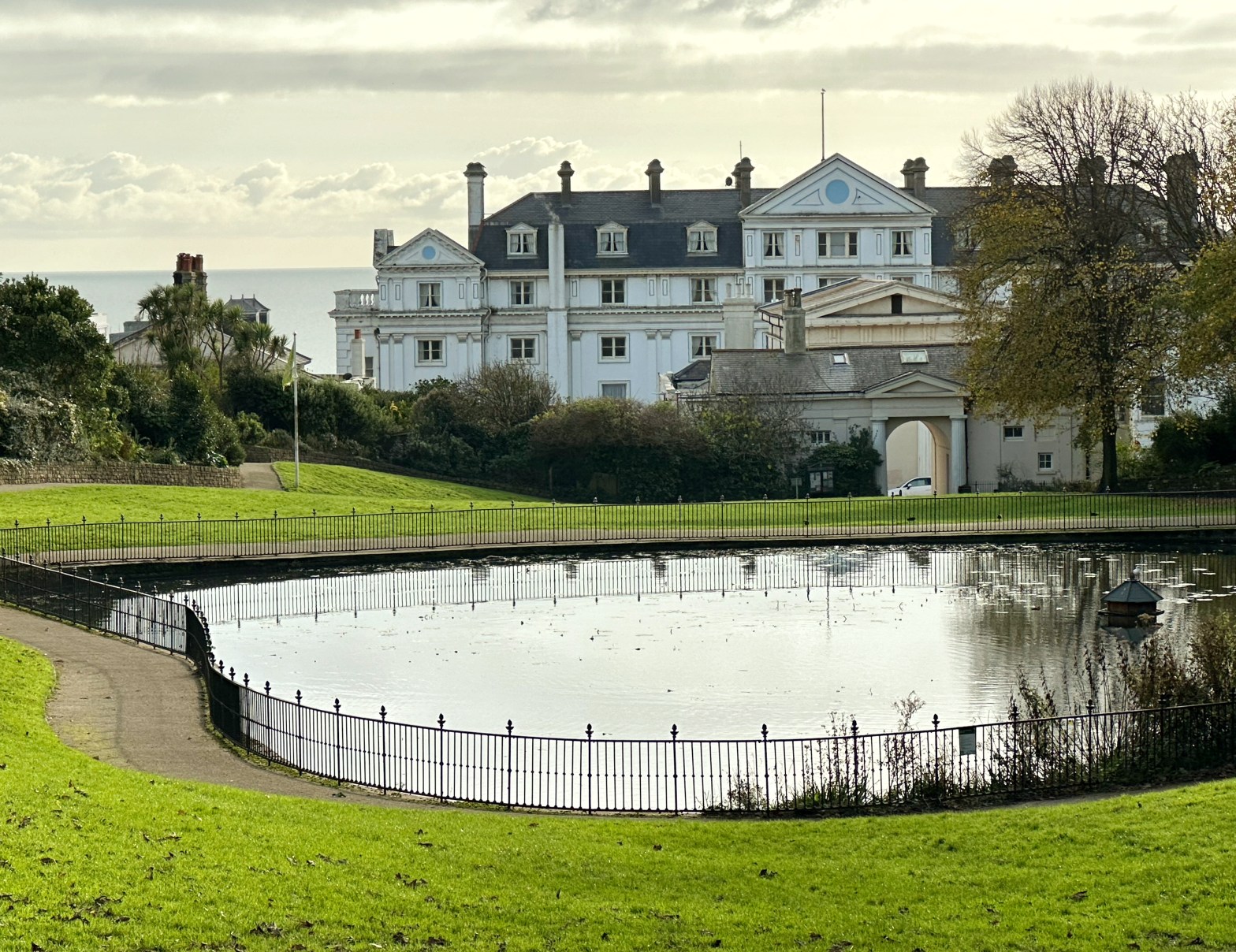
During the early days of Covid in the Spring of 2020, when paranoia and fear was the order of the day, and people crossed the road to avoid their neighbours, my wife and I found solace and peace, walking in some beautiful gardens close to our home in St. Leonards on Sea. At that bleak time, the gardens were practically deserted, but even today, in more normal times, the gardens are incredibly peaceful, only frequented by the occasional dog walker or a small family group.
It is a place I go to, when craving solitude, or when I am feeling the deadening effect of the onset of winter. This 4.5 acre public park, St. Leonards Gardens, is one of the best kept secrets and the jewel in the crown, of our beautiful home town, with views and vistas that are practically unchanged from when it was first constructed nearly 200 years ago.
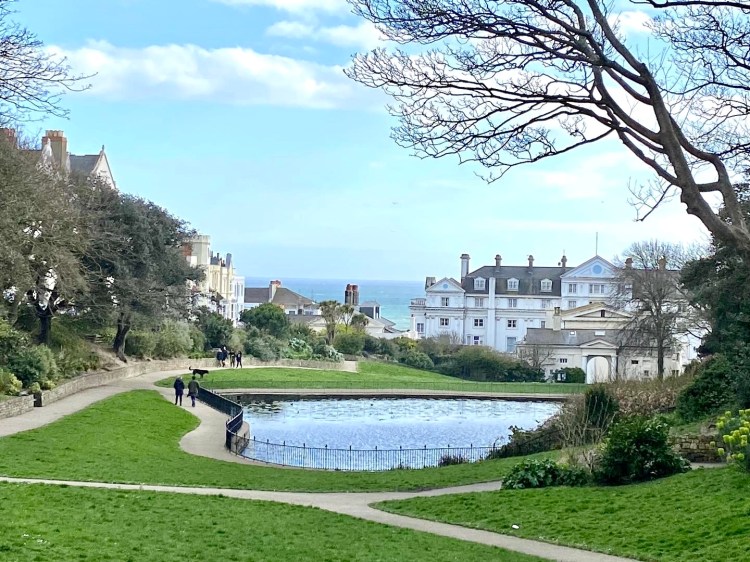

St. Leonards Gardens form the heart of the original town of Burton St. Leonards, a new resort, the construction of which commenced in 1827 by the developer James Burton and which was later completed by his son Decimus Burton.
James Burton had already developed large parts Georgian London including Bloomsbury and Regents Park, but he had a vision of creating a new seaside resort for rich Londoners, who wished to spend the summer months near the water and he settled on St Leonards a small hamlet near Hastings. He purchased a large piece of land and set about creating his vision; his first task was to transform a wooded valley, reaching down towards the seashore, into formal gardens surrounded by prestigious villas and so St. Leonards Gardens were born.
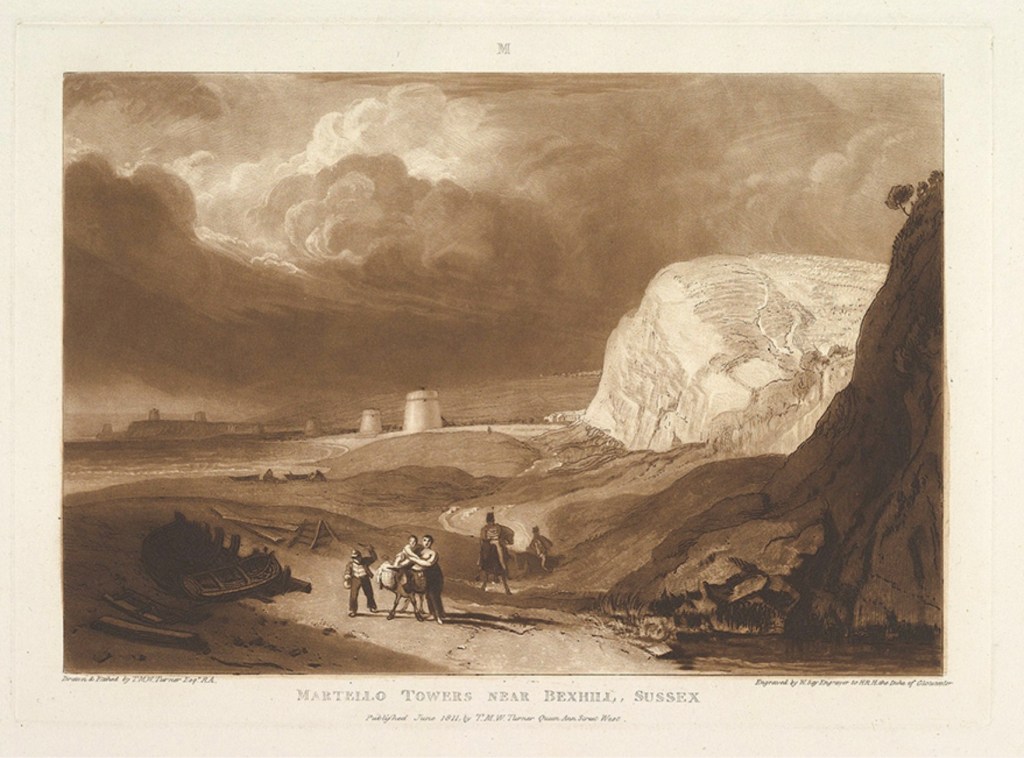
The following engraving by J.M.W. Turner entitled ‘Martello Towers near Bexhill, Sussex’ from 1808, gives some impression of what St. Leonards was like before Burton arrived, a blank canvas for him to work with.
The gardens were originally subscription only, but in 1880 were purchased by Hastings Corporation and have been open to the public from that time, and more recently, according to Hastings Borough Council:-
“St Leonards Gardens was renovated with the aid of a Heritage Lottery Fund grant in 2007, the Gardens today offer a tranquil oasis in the Maze Hill area of St Leonards, with views to the sea. The scheme has been designed to provide colour all year round with a mixture of herbaceous plants, shrubs, bulbs and trees clustered together.
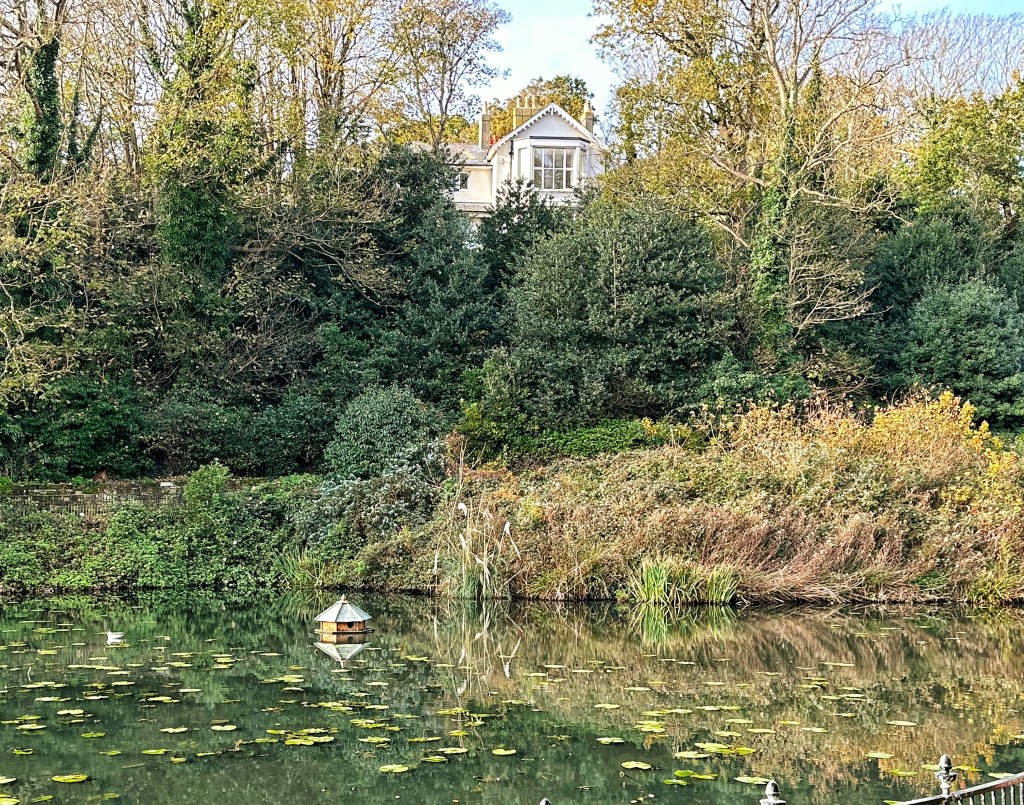
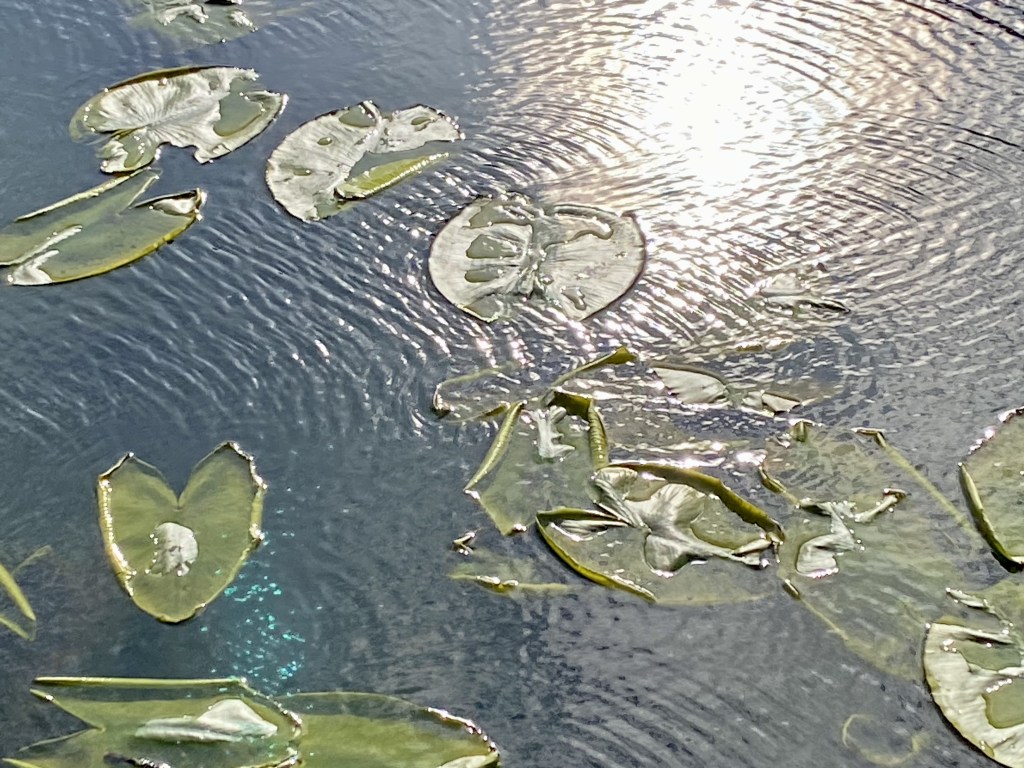
A central feature is the ornamental pond with water lilies. The park is also rich with wildlife.“
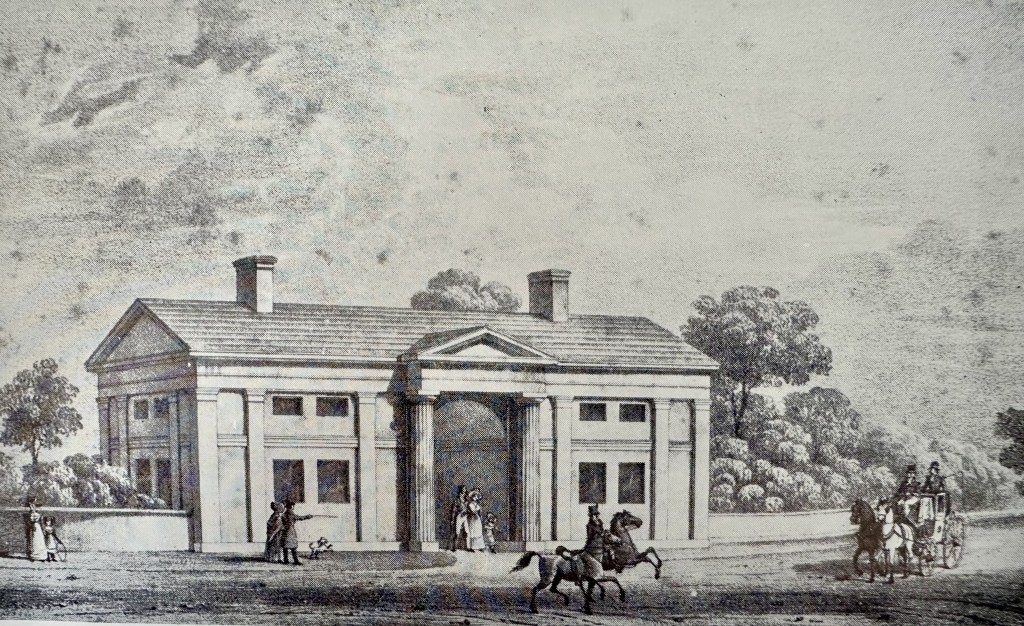
Today, access to the gardens are through the South lodge, a grand Palladian structure, which can been seen in a lithograph below, from 1829.
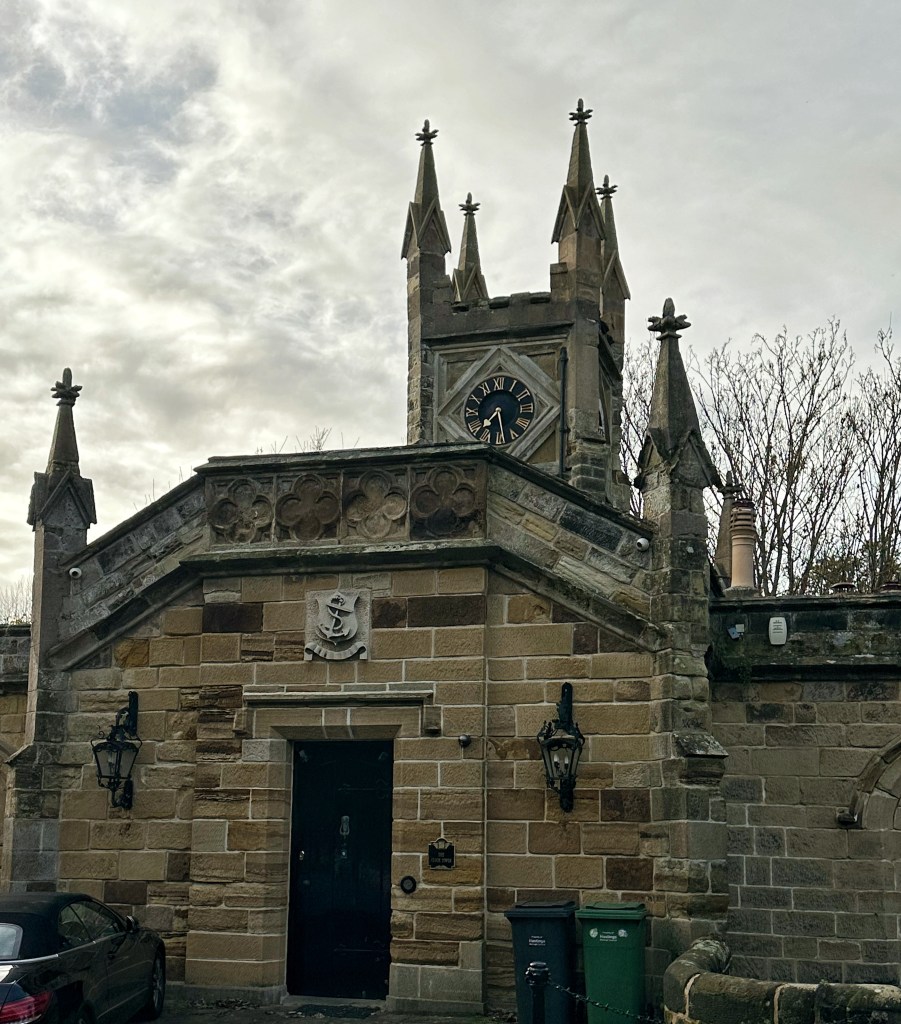
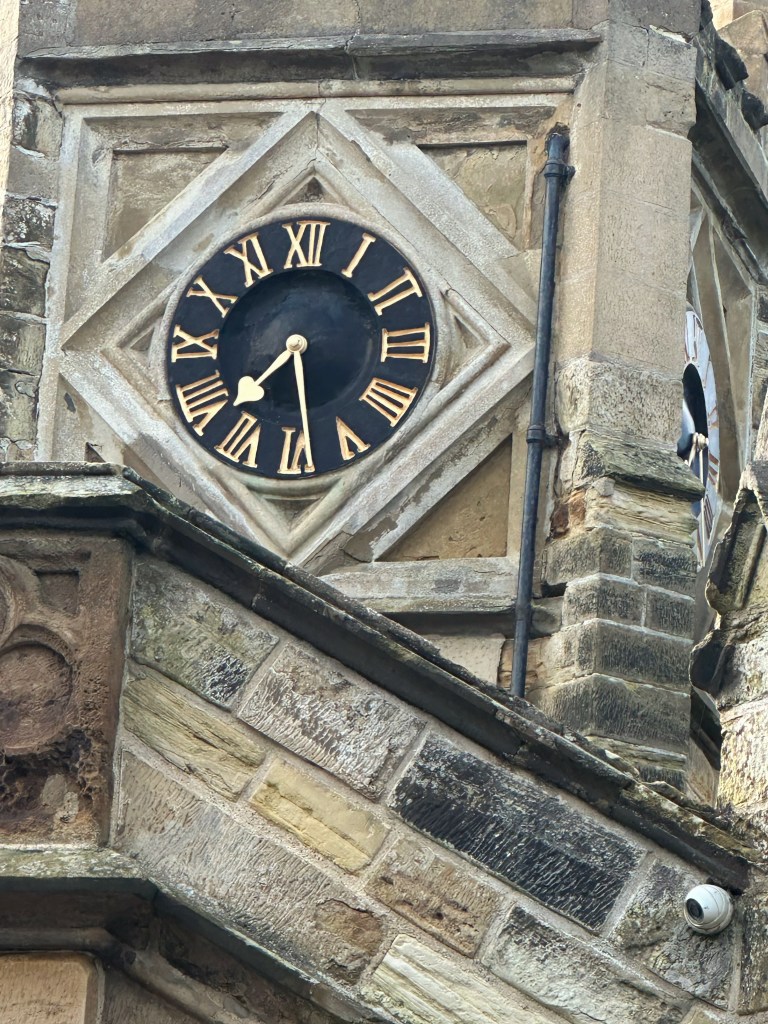
As you enter the South Gate, you are treated to a glorious view of the gardens as they slope upwards and you can just about glimpse the four turrets to the impressive gothic Clock House, one of the original Burton buildings from 1830.

The ornamental pond is in the centre of the park and the water lilies are a glorious site during the summer months. The uniqueness of the park is that all the original Burton designed buildings surrounding the gardens are intact, the Clock House, Gloucester Lodge and Allegria Court, so that the the vista is almost unchanged since Burton’s time.
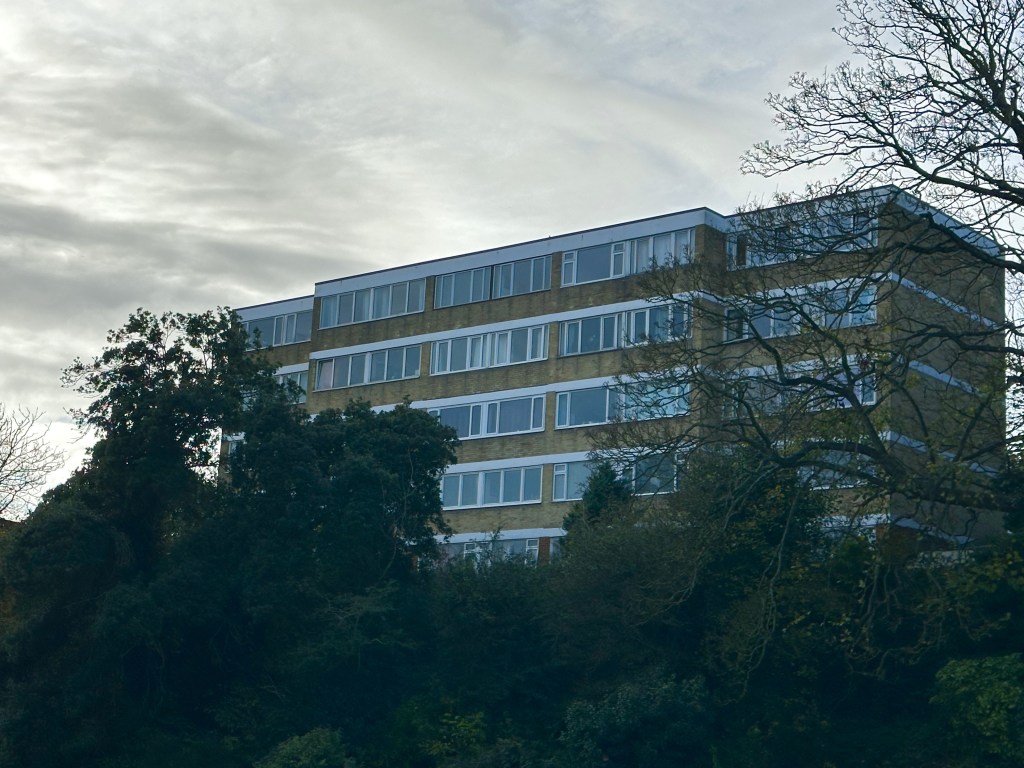
The only jarring feature is a large 1960’s block of flats overlooking the park, which is hard to avoid, when looking Westwards and totally out of keeping with the rest of the gardens.
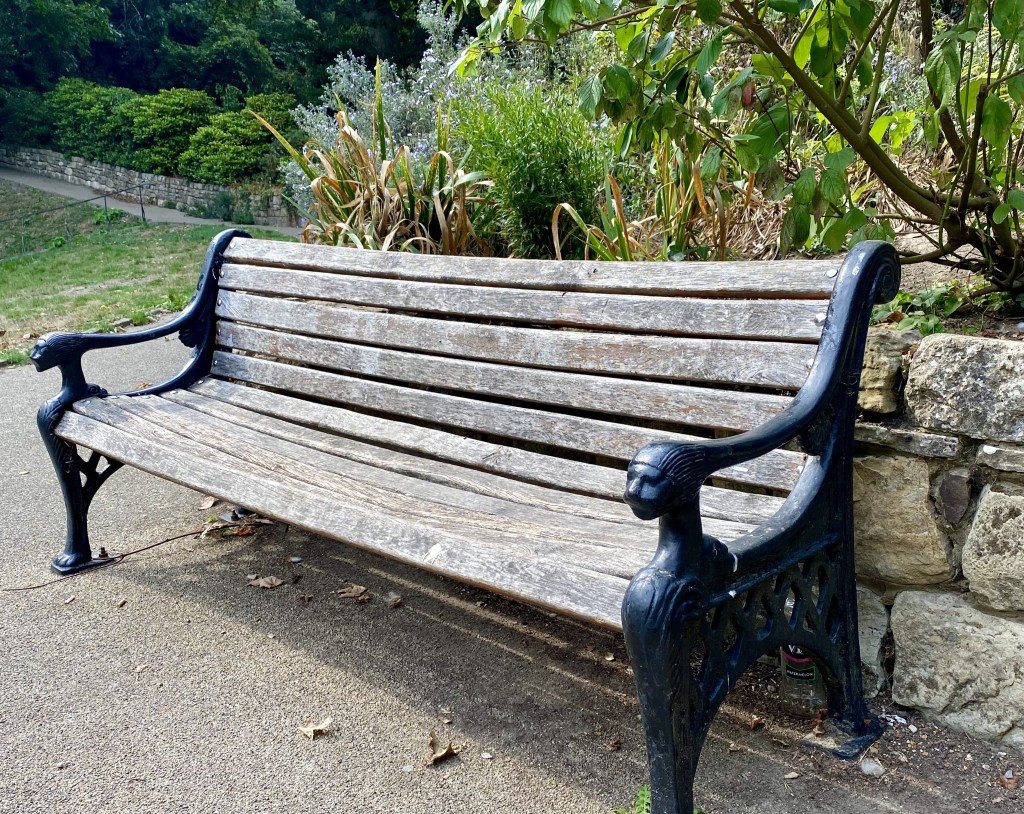
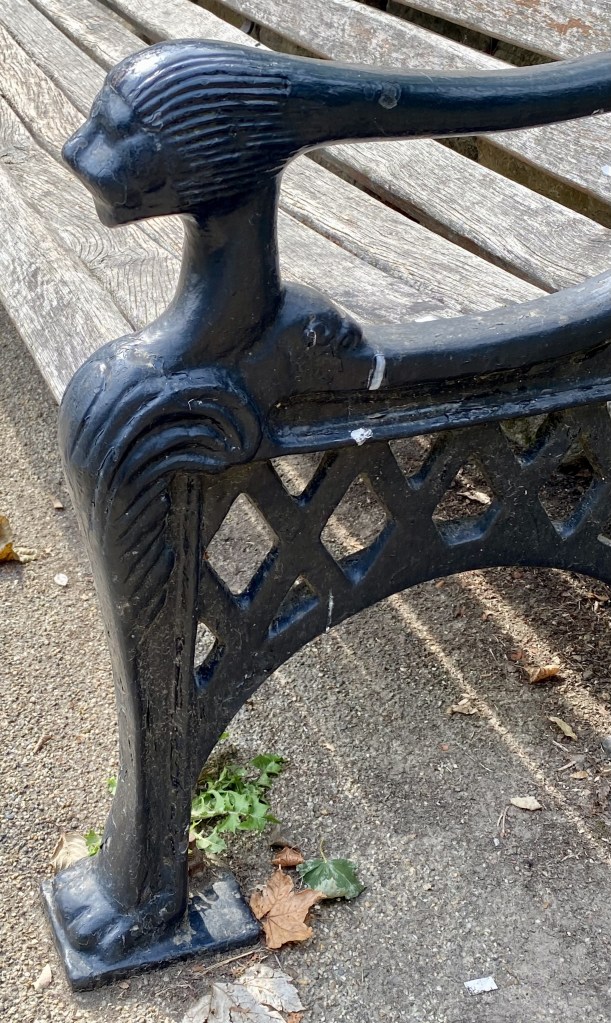
One of the striking features in the gardens are the park benches with their unique ‘Sphinx’ style Egyptian designs. I assume that these date from some time in the 19th century, but I have been unable to ascertain any further information about them. I have never come across any other garden benches with this type of feature.
One of the very first buildings to be constructed in the gardens was The Clock Tower, which was later adapted into a 3 story villa, which looms menacingly over the garden. James Burton seemed to have worked in two distinct architectural styles, Gothic and Classical and this building definitely belongs in the Gothic genre.
Today, the building peers through the foliage, church-like, watching over the gardens, like the ghost of Burton himself, making sure that his legacy is safe.
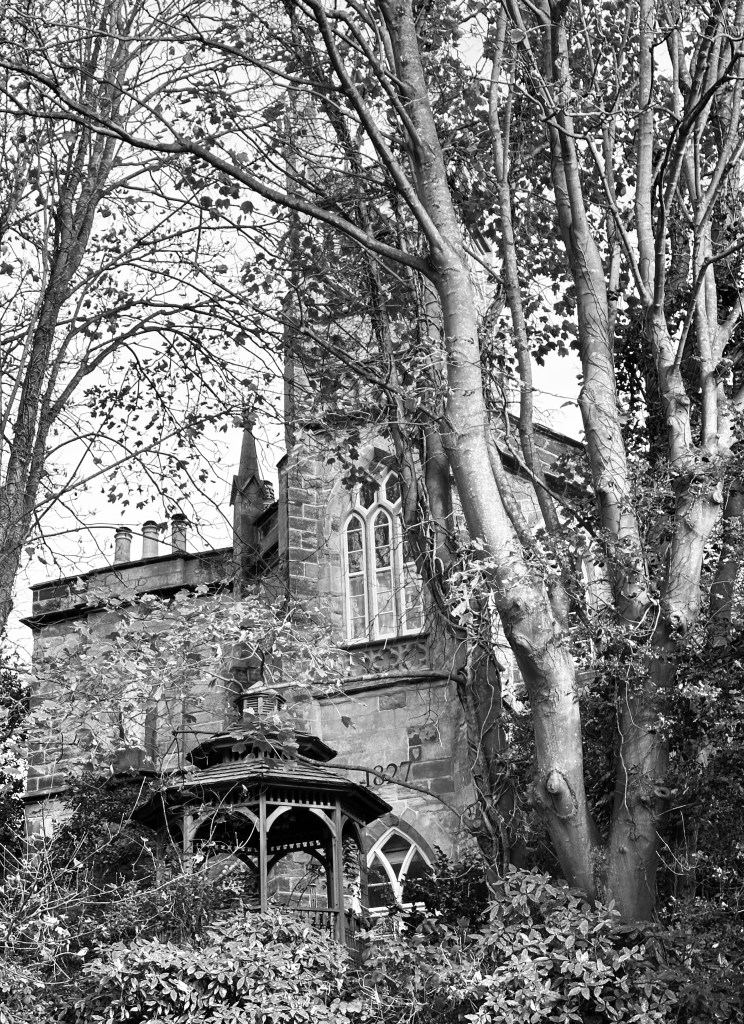
Seen from the road, the clock house appears less menacing, but is still a powerful and impressive building and has also been restored internally to reflect its Ecclesiastical and Gothic style by the present owners. The house was recently up for sale in 2022 and this article in the Standard Newspaper shows some photographs from the interior in all its glory. It is certainly not to everyone’s taste, but it is certainly unique.
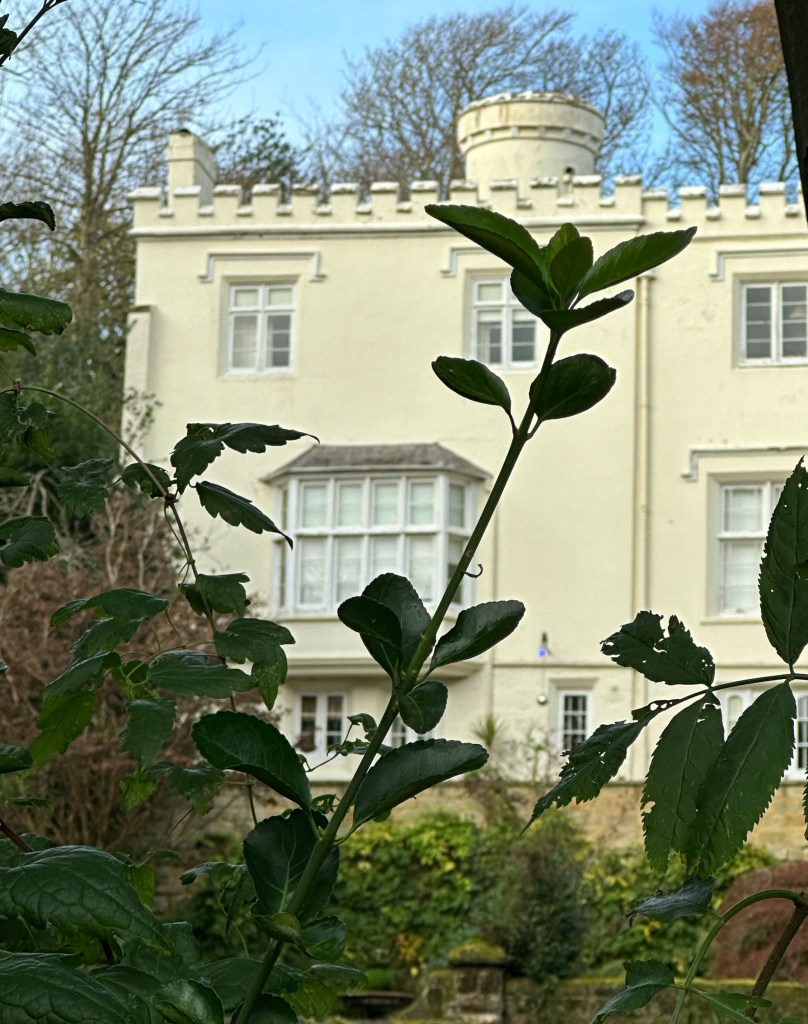
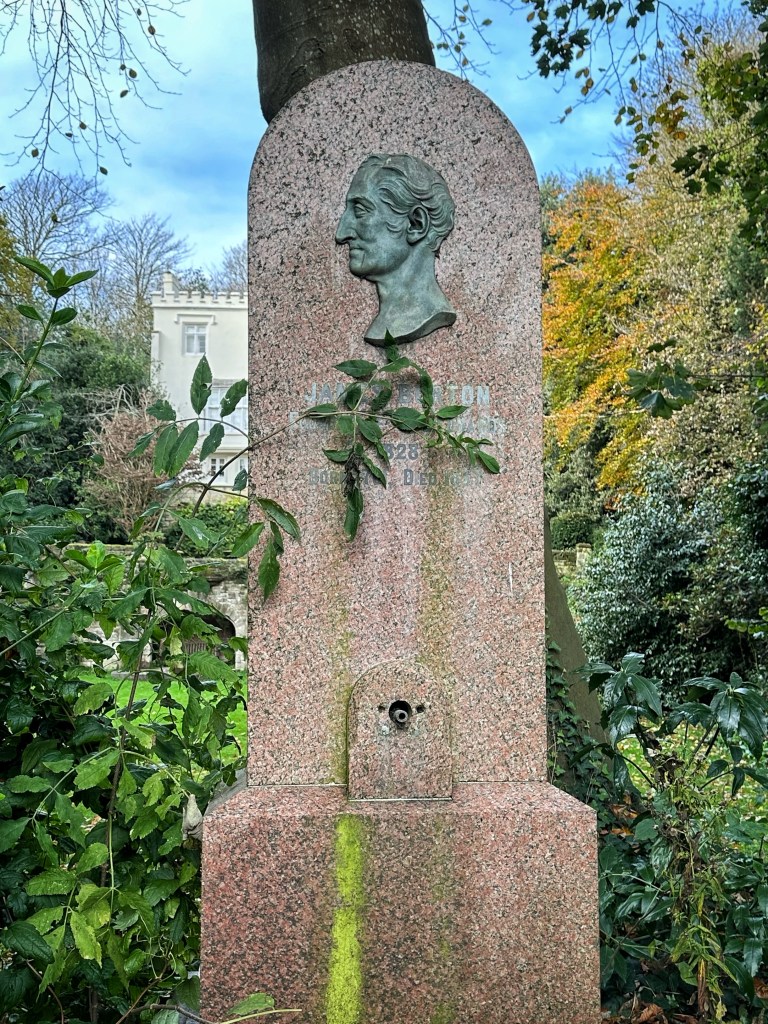
The other great building that dominates the the upper part of the gardens in Gloucester Lodge, originally titled the Castellated Villa, for obvious reasons, but was renamed Gloucester Lodge after its first occupant, Princess Sophia of Gloucester. It is still impressive to this day and also has some fine gardens, within its boundary. Hidden, amongst foliage, just inside the boundary fence of Gloucester Lodge, I discovered a granite water fountain (long since dried up) with the words “James Burton, Founder of St Leonards, 1828. Born 1761. Died 1837” and with bronze plaque of the great man, looking every bit the Roman Emperor.
This memorial to the founder of St. Leonards, can only be found by accident, or with some determined searching and I feel it would be more fitting if it was sited in a prominent position somewhere within the gardens for all to see and admire.
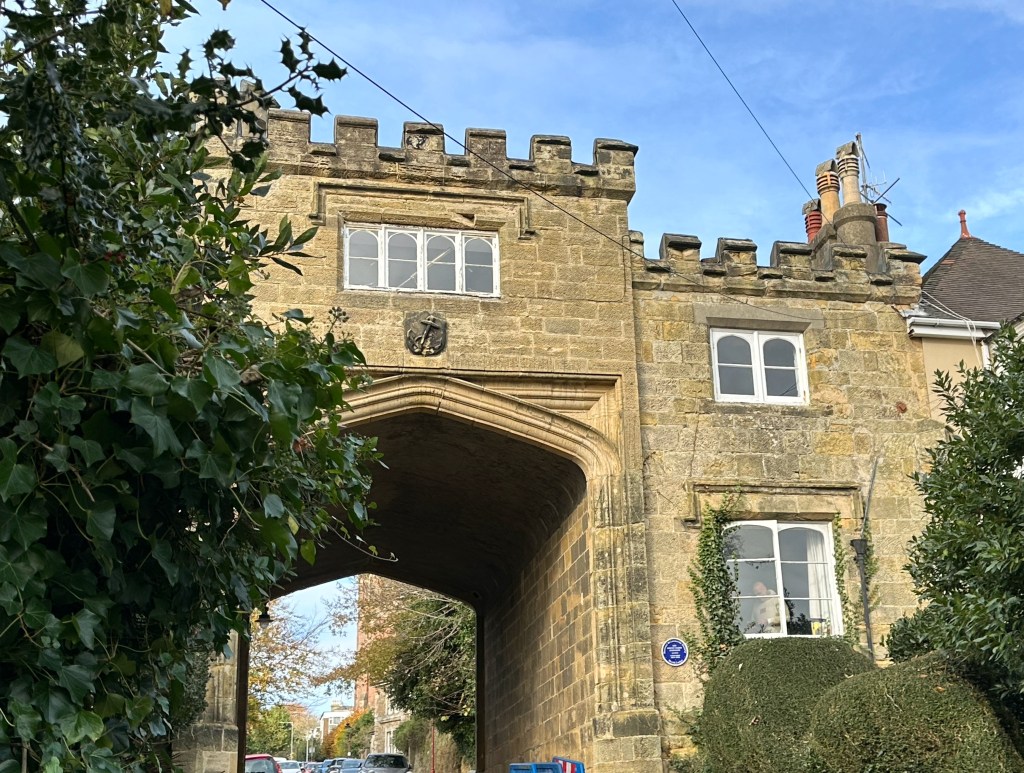
As you exit the gardens, through another building, the North lodge, which unlike the South Lodge, was built in the mock ‘highland castle’ style popular at that time and marks the original boundary of Burton’s new town. It was built to incorporate a family dwelling and, as can be seen on the plaque was lived in for 5 years by Rider Haggard, the celebrated Victorian author of melodramatic adventure tales such as ‘King Solomon’s Mines’ and ‘She’ amongst others.

Rider Haggard specialised in the fashionable ‘Lost World’ genre of the time, which was almost invented during this era by himself together with Arthur Conan Doyle and Jules Verne, where a group of intrepid explorers discover a long lost civilisation in the middle of a primitive area in some remote part of the world.
As was typical of the Victorian and Edwardian colonial period, these works were full of racist tropes, often depicting the inhabitants of Asia and Africa as primitive savages. Although the books have gone out of fashion, the films based on ‘She’ have been, for some strange reason, perennially popular and there have been eight films made in all, five during the silent era. This excerpt from Wikipedia gives you a taste of the story.
“After receiving honourable discharges from the British Army in Palestine in 1918, Professor Holly, young Leo Vincey and their orderly Job embark on an expedition into a previously unexplored region of central-east Africa. They discover the lost city of Kuma after Leo receives a mysterious map revealing the city’s whereabouts.
This lost realm is ruled by Ayesha, who is also known as “She-Who-Waits” and “She-Who-Must-Be-Obeyed.” Ayesha is a beautiful, immortal queen, who believes Leo is the reincarnation of her former lover, the priest Kallikratees, whom she had killed two thousand years before when she found him in the intimate embrace of another woman.”
You can get the gist of the plot, melodramatic tripe you may say, but for some reason the Hammer film’s slightly kitch 1965 version of ‘She’ had a big effect on a young adolescent boy. I now realise, that at such a tender age, my raging hormones could not resist the temptation of Ursula Andress luring me into the blue fire to share eternity with her. I am happy to say that, today, I can easily resist the charms of ‘She who must be obeyed’.

Finally just outside the North lodge is Baston lodge and I was delighted to discover, when I first moved to St Leonards, that a great hero of mine, Alan Turing, had spent his formative years in this house.
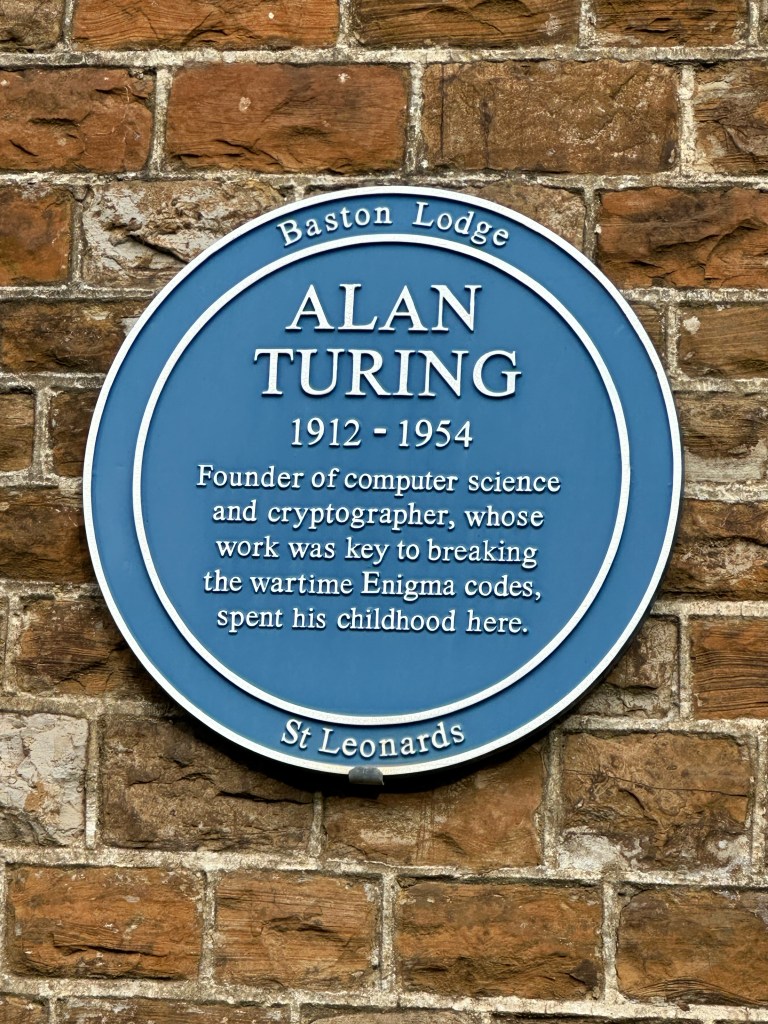
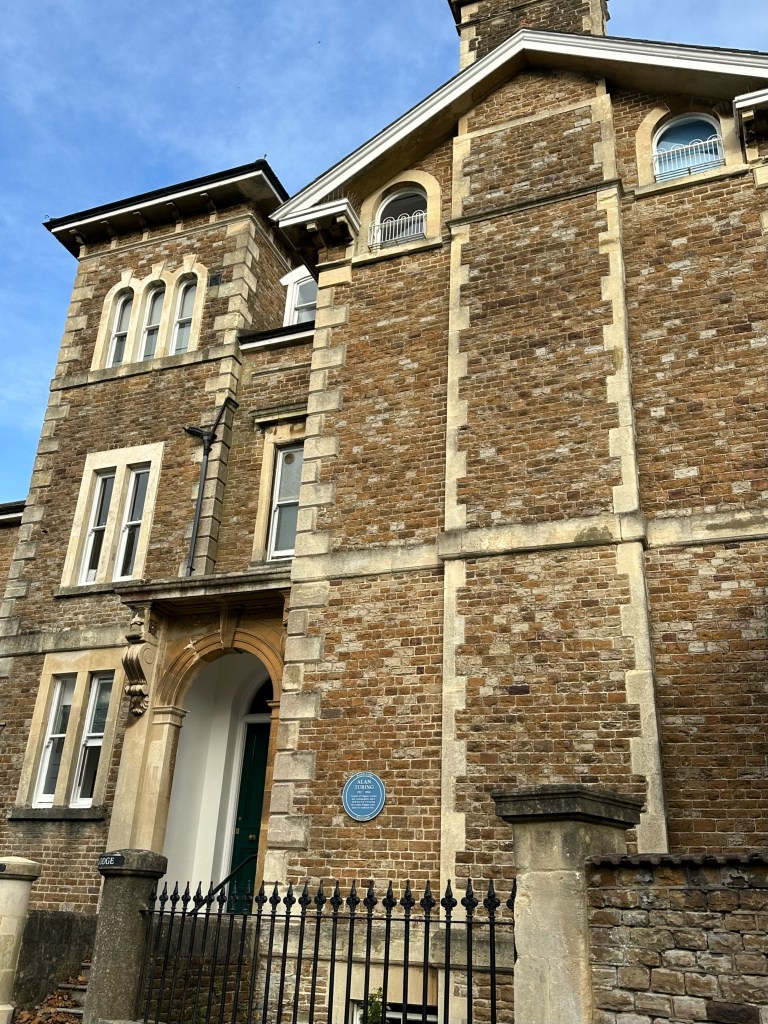
Most people know of how, during World War 2, Turing, together with a crack team of code breakers, solved the German enigma code and in doing so, probably shortened the war by a several years and saved countless lives.
However, this mathematical genius was also much, much more than that, he was a computer scientist, logician, cryptanalyst, philosopher and theoretical biologist. He was pioneer of early computer design and one of the driving forces behind the development of Artificial Intelligence.
And how did we honour this British genius? There was no happy ending for Alan Turing, as he was unlucky enough to be a gay man in an era of homosexual oppression. There is a strain of vicious hypocrisy in British society, of which Turing was a victim. In 1951 after reporting burglary at his house, instead of investigating the crime, Turing and another man were arrested and charged with having a homosexual relationship. His partner was given a suspended sentence, but Turing was given the choice of prison or to have chemical castration. He had no real choice, but to accept the latter.
From there on, everything went downhill, he was denied security clearance and also denied entry to the United States. All of these actions meant that effectively his stellar career was over and in 1954 he was found dead in his house, after consuming cyanide. It still makes my blood boil to this day, how society treated our best and brightest, in this wicked and shameful way.
After the above diversions, we might just turn around and go back down to the gardens, sit by the ornamental lake, and spend a few minutes in quiet contemplation, before we return to the hustle and bustle of modern life.
James Burton died in 1837, but his son Decimus Burton continued the vision of his father in building a seaside resort for the ages, which extended far beyond the confines of the gardens and its environs. He went on to become one of the most renowned Architects of the Victorian era, some of his famous buildings include the Palm house in Kew Gardens, the Wellington Arch outside Hyde Park and swathes of Tunbridge Wells, but that is a story for another time.
 Life on the Edge