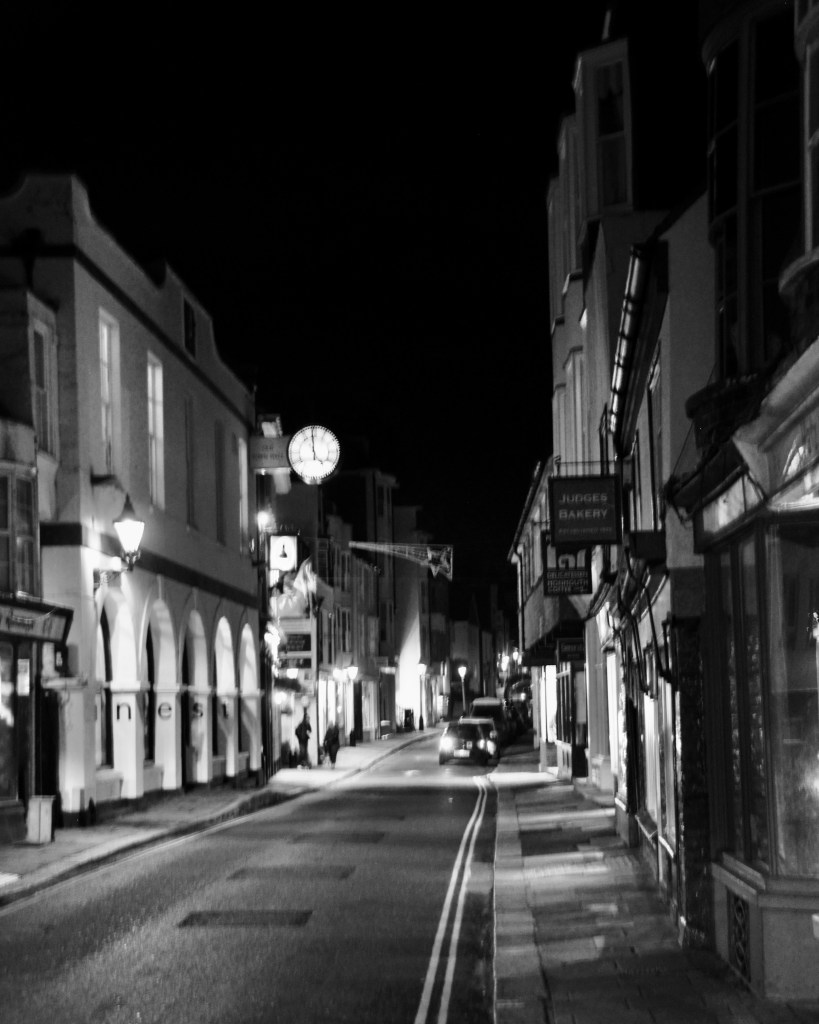
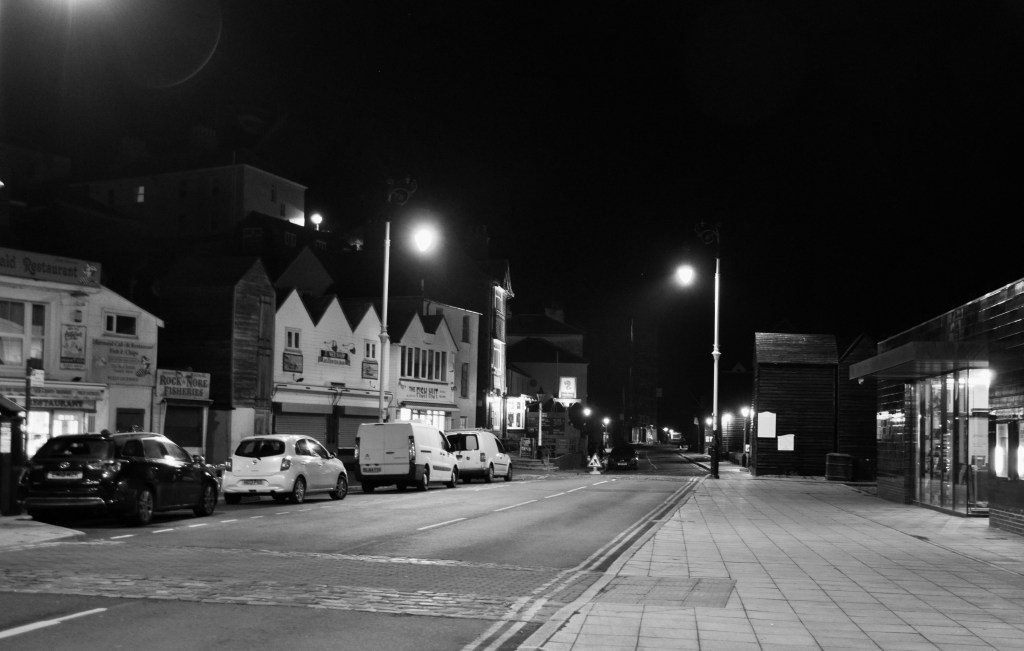
The last summer visitors have left, the children have returned to school and the tourist coaches have departed for another season. As the days shorten, the clocks go back and the dark nights close in, something else starts happening. A vague sadness begins to creep over the landscape; the streets seem empty and forlorn; the promenade is mainly empty except for the occasional couple huddled up together against the wind and rain; the waves crash relentlessly over the pebbles; the graffiti covered shelters along the sea front are empty, except for the occasional sleeping bag filled by a lonely figure. Seaside Melancholy has returned.
Where the sea meets the moon-blanched land,
Listen! you hear the grating roar
Of pebbles which the waves draw back, and fling,
At their return, up the high strand,
Begin, and cease, and then again begin,
With tremulous cadence slow, and bring
The eternal note of sadness in.
Extract from ‘Dover Beach’ by Matthew Arnold, 1867
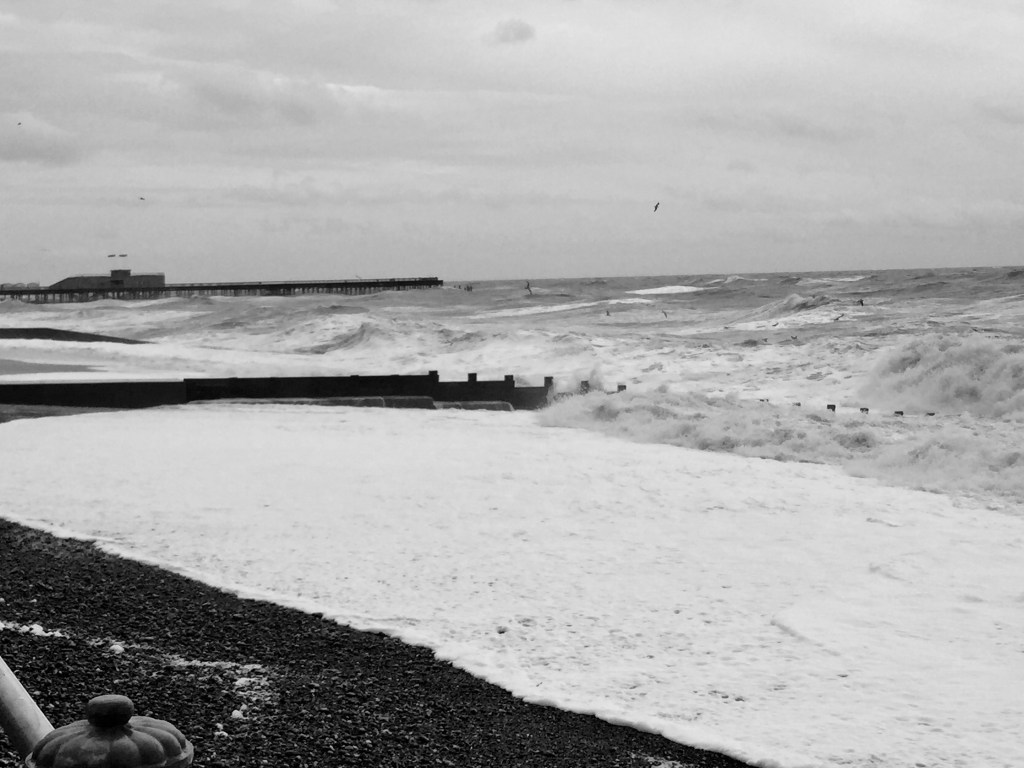
When looking at the graffiti covered shelter, in my home town of St. Leonards on Sea, I am also reminded that T.S Eliot wrote his groundbreaking poem ‘The Waste Land’ in just such a shelter in Margate in 1921. This pessimistic poem of alienation was written while Eliot was recovering from a nervous breakdown and he chose Margate, of all places, to recuperate. :-
‘On Margate Sands.
I can connect
Nothing with nothing.
The broken fingernails of dirty hands.
My people humble people who expect
Nothing.’
Extract from ‘The Waste Land’ by T.S Eliot, 1921
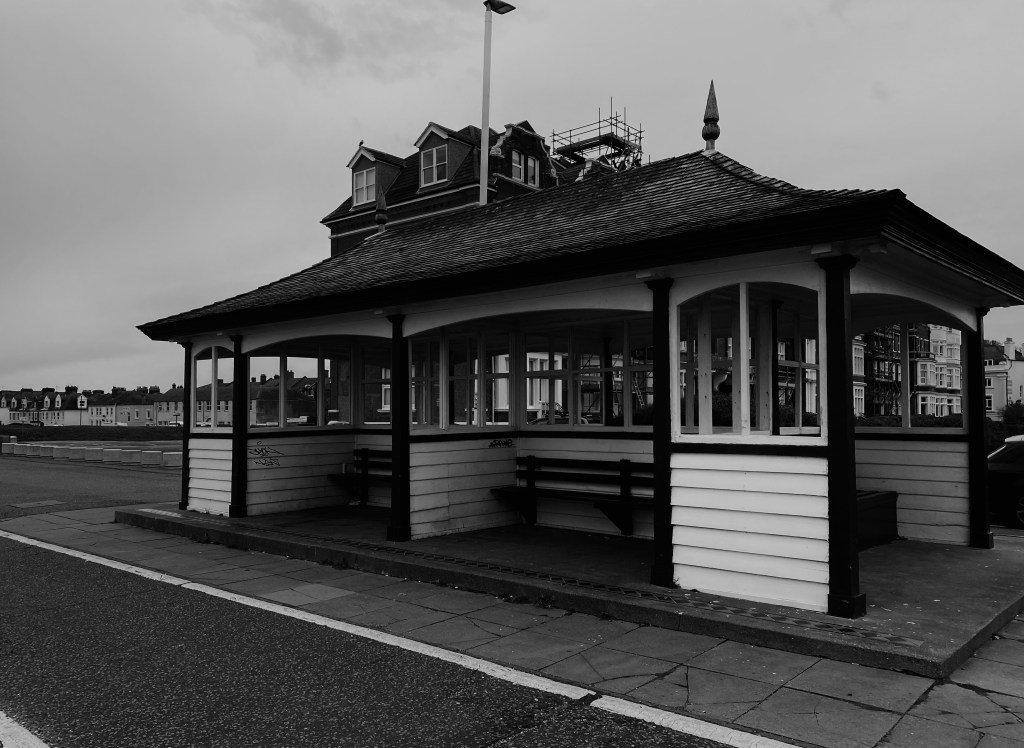
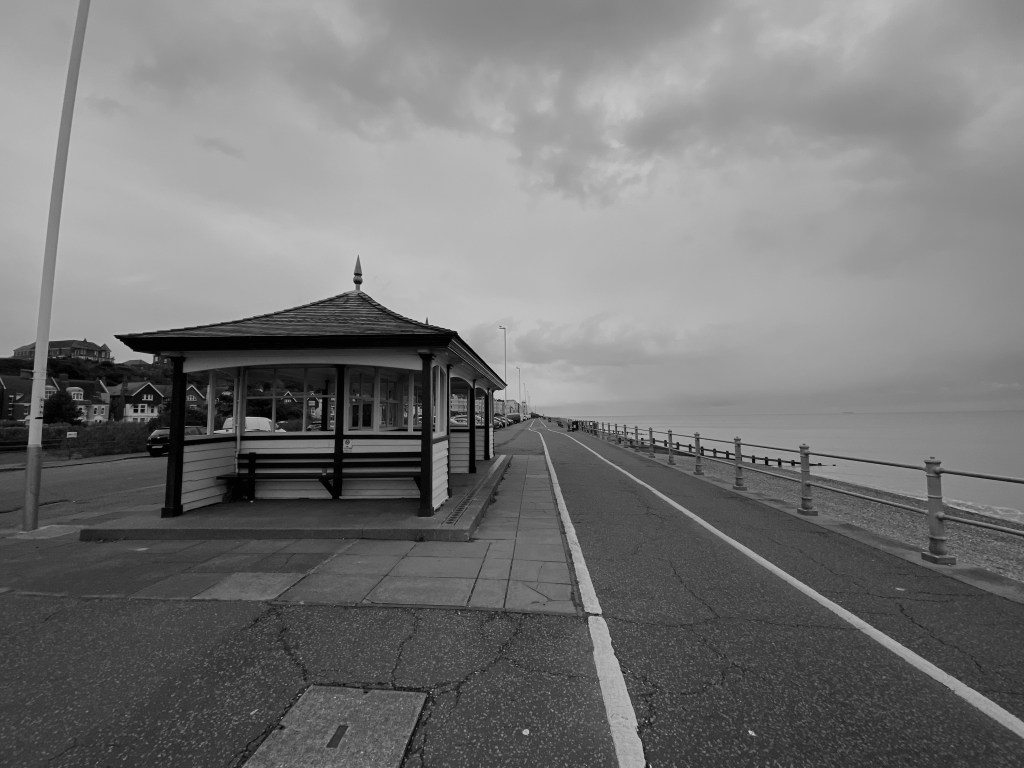
This desolate vision is unsettling and I have to take stock and remind myself that it was it was only a short time ago, that this area was full of life and laughter, full of families enjoying the strand and sounds of happiness filling the air. I know in my heart that it will come back to life, but for now it seems forever locked in a permanent darkness.
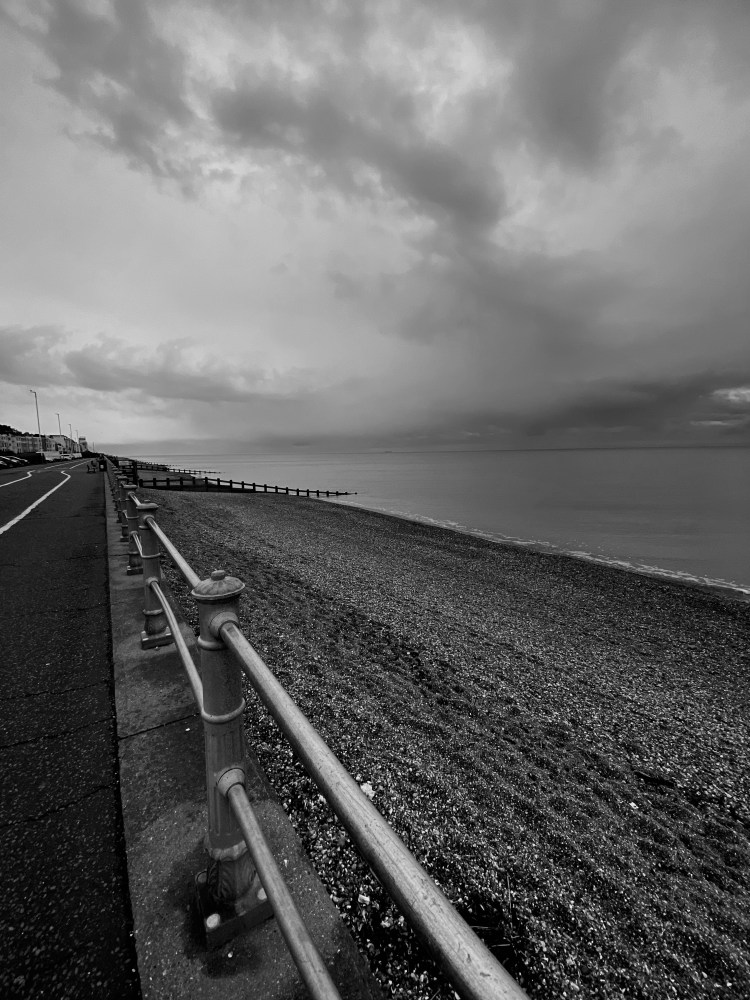
It is late November, coming on December, almost the darkest time of the year. Winter storms have already started and this year seems especially bad, no doubt due to global warming and climate change. The world is out of kilter, and things appear to be unravelling, out of control, with horrific wars in Gaza and Ukraine. Our very future appears under threat.
“Things fall apart, the centre cannot hold;
Extract from ‘The second coming’ by W.B .Yeats 1919
Mere anarchy is loosed upon the world.”
This extract from W. B. Yeats poem ‘The Second Coming’ written in 1919, just a year after the end of the First World War gives voice to the general feeling of hopelessness that I feel at the present time.
Many people in Northern climes, at this time of year, feel the life draining out of them, as the sun weakens and loses its strength. It even has a clinical name Seasonable Affective Disorder (SAD). I would not say that I am particularly prone to depression, but I do have a streak of melancholy running through me, which surfaces at times, especially at this time of the year. It gives me a little bit of insight and empathy for those people, who suffer from terrible life crippling depression.
How do people define Melancholy and how is that different from Depression? In modern medicine, Melancholia is now regarded as a separate condition to Depression, but with a distinct set of symptoms.
However, I wish to investigate further Melancholy as it is generally understood historically. The dictionary definition of Melancholy is ‘a feeling of pensive sadness, typically with no obvious cause.’
The word Melancholy has its roots in Ancient Greek, where it is translates directly as ‘black bile’, and the condition was first described by Hippocrates, the father of modern medicine.
Throughout the centuries, this feeling of sadness and despair has been discussed and dissected by philosophers, medics and creative people in order to try and make sense of the human condition. However, from the Renaissance onwards, the condition of Melancholy further developed into a cultural and social phenomenon, almost a cult, embraced by artists, musicians and poets alike.
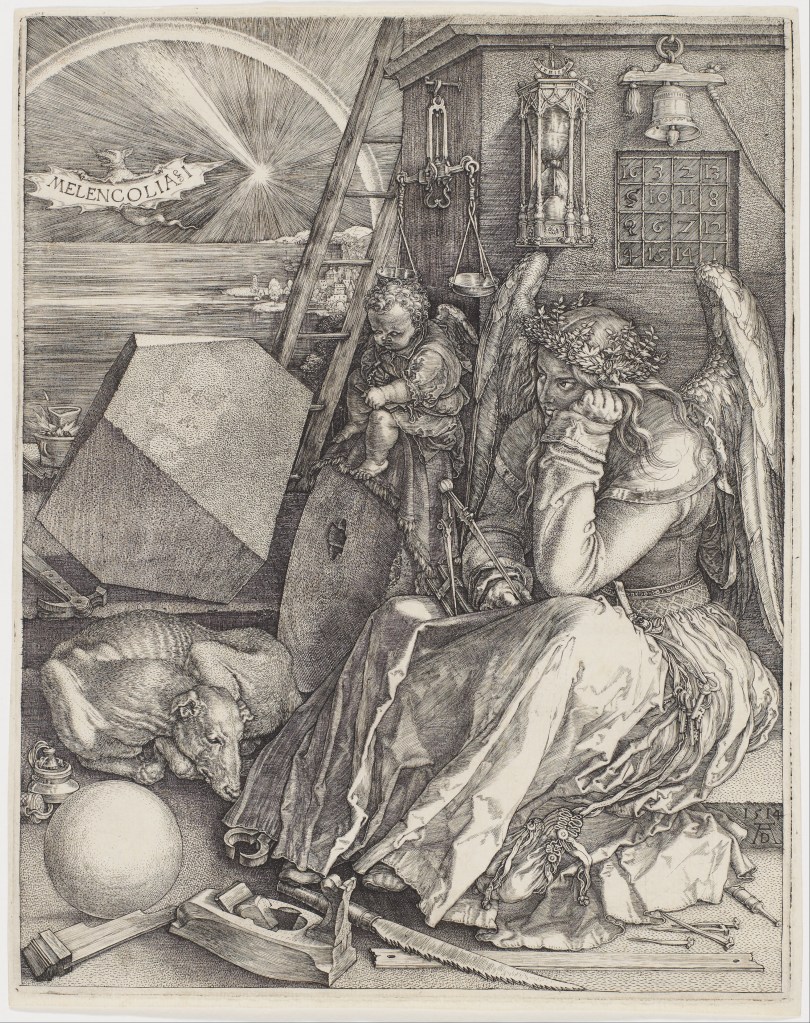
The great 16th century artist Albrecht Durer produced a famous etching in 1516 entitled ‘Melencolia’ showing a gloomy angel, one of the first artistic expressions of sadness. There are so many things going on in this picture, which is full of symbolism, that it has been argued about for centuries. Today we are none the wiser and are still discussing the inner meaning of this enigmatic etching.
In 1621, Robert Burton wrote a vast philosophical and psychological treatise ‘Anatomy of Melancholy’ in which he attempted to get to grips with the idea of melancholy and sadness. This monumental work of 1500 pages has had an enormous influence on the way melancholy was treated in subsequent centuries.
And in Elizabethan times there was a strong vein of melancholy running through the arts, particularly in music, the most famous practitioner being the composer, lutenist and singer, John Dowland. He was the rock star of his day, often singing of his unrequited love. Here is Andreas Scholl singing ‘In Darkness Let me Dwell’, probably one of the gloomiest songs ever written, but also one of the most heartbreakingly beautiful as well.
The cult of melancholy climaxed in the 18th Century, at the height of the Romantic movement in poetry, when John Keats wrote ‘Ode on Melancholy’ and Goethe ‘The Sorrows of Young Werther’. This was the height of centuries of artistic obsession with melancholy and its relationship with creativity.
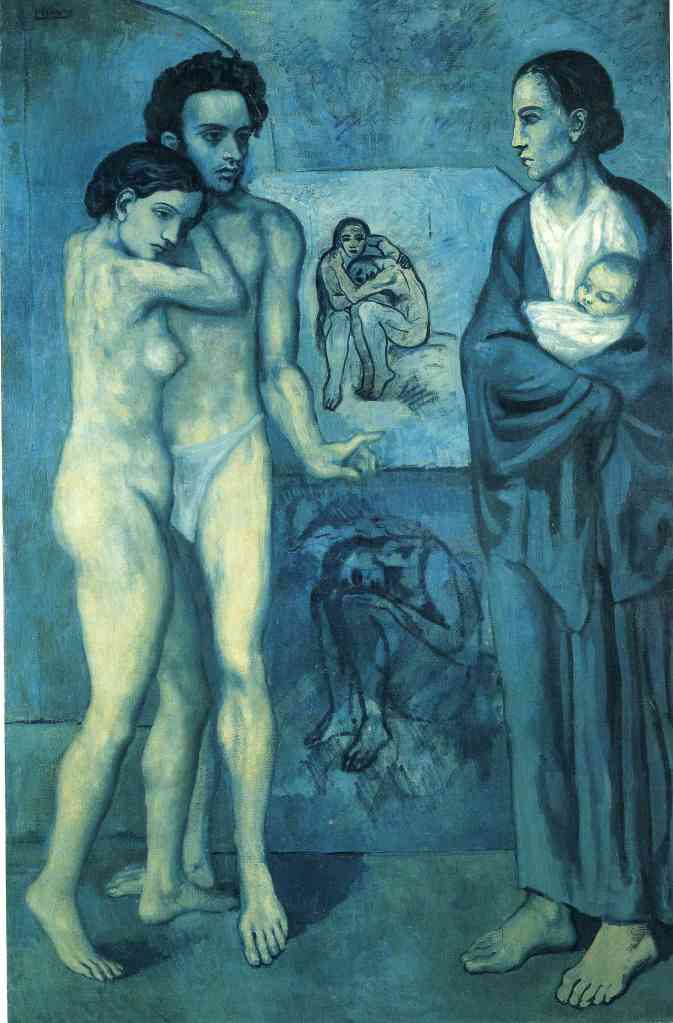
Melancholy has a colour and that colour is blue. It is no surprise to me that my first musical love, which still inspires me, was the Blues and, to this day, blue is still my favourite colour. Picasso had a blue period, when melancholy got the better of him and produced some of the greatest paintings of the early 20th century.
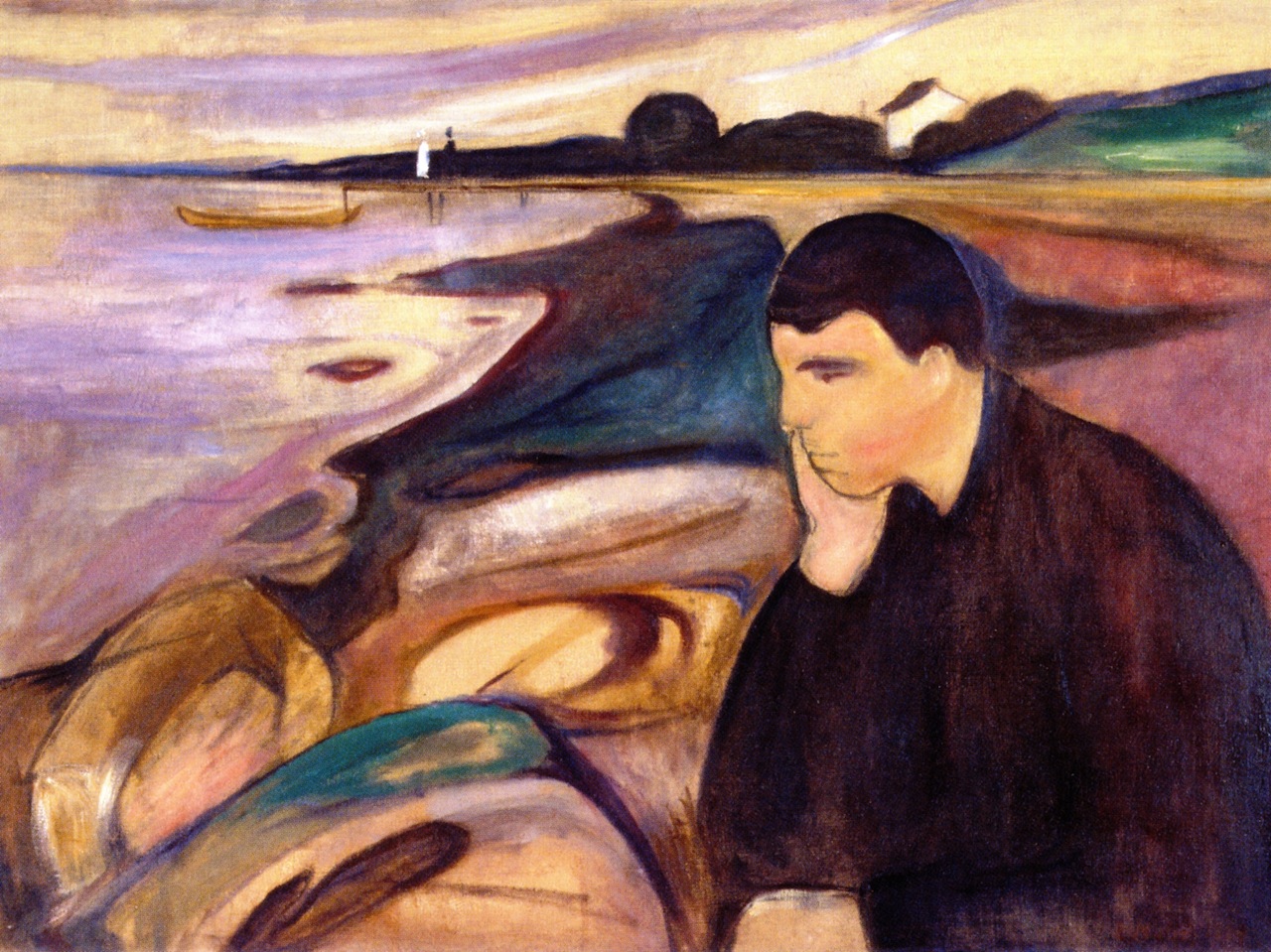
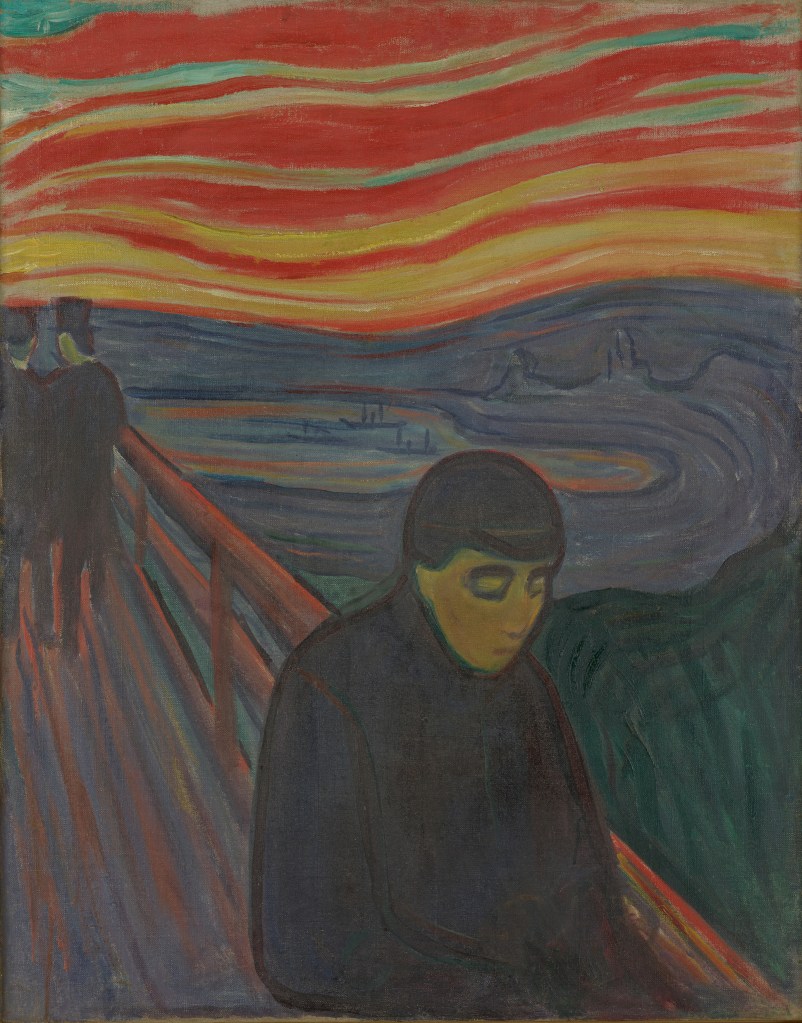
In the modern world, melancholy has continued to be embraced and used by various artists as a means of expressing their deepest hopes and fears. Probably the greatest and bravest of all modern artists to confront head on his own sadness and depression, was that wonderful artist, Norwegian Edvard Munch, whose many paintings chart his own fragile mental health. The cover picture is of Munch’s painting entitled ‘Melancholy’ from 1891, the ultimate expression of Seaside Melancholy and below his painting ‘Despair’, which is equally heartrending, a window into Munch’s suffering.
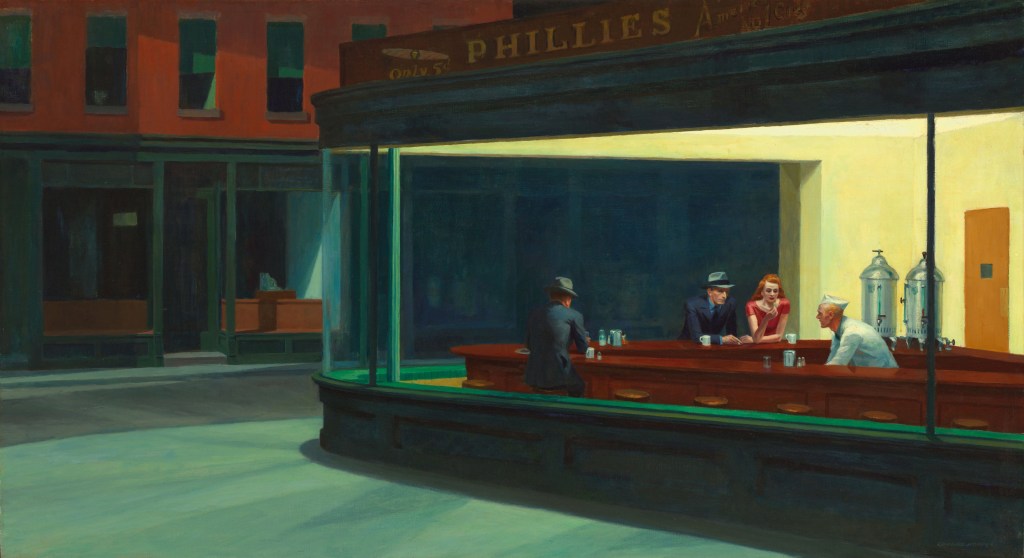
But we must not forget the American artist Edward Hopper, whose iconic paintings, often looking like a Hollywood movie still, captured the loneliness of life in urban America. His most famous painting has to be ‘Nighthawks’ one of the most melancholy depictions of urban alienation ever created.
In my youth, there was a strain of melancholy running through popular music, with the likes of Leonard Cohen and Nick Drake and, surprisingly, even in mainstream groups like the Carpenters, where Karen Carpenter’s pure and bell-like voice filled the air with echoes of sadness.
However, melancholy is viewed in a totally different light in our 21st century digital age. In the brave new world of social media, we are constantly encouraged to be positive, optimistic, and deliriously happy, even when the circumstances don’t merit this. In this artificial world there appears to be little or no room allowed for thoughtfulness, reflection or sadness.
There is a term called ‘Toxic Positivity’ which has been defined by Wikipedia as a “pressure to stay upbeat no matter how dire one’s circumstance is, which may prevent emotional coping by feeling otherwise natural emotions. Toxic positivity happens when people believe that negative thoughts about anything should be avoided. Even in response to events which normally would evoke sadness, such as loss or hardships, positivity is encouraged as a means to cope, but tends to overlook and dismiss true expression.”
Dorthe Nors, the Danish writer has written movingly on what she calls the tyranny of ‘Hygge’, which is the Nordic equivalent of Toxic Positivity.
“Hygge is a very big export business. The side we are exporting is the superficial side — of knitted socks, the nice cups of cocoa by the fire and cuddling up in the winter. It’s a combination of Denmark being a farm country and living in a cold climate. In reality, hygge is a social control system. Farm cultures are always nervous of intruders and people who are disturbing the balance of things — we don’t want any conflicts. To talk about emotional problems and conflicts is considered ‘spoiling the hygge.’ That sometimes means you can’t talk about problems. And of course, as a writer, I want to wreck the hygge.” From Hans Christian Andersen to hygge — Dorthe Nors on the Danish psyche
In this article, I have tried to make the case for melancholy and how it informs us on what it means to be human. All life consists of shades of colour, and we need to have a balance in our lives, from the blackness of winter despair to the bright sunny uplands of a summer’s day.
It is inevitable, in our lives, that we will experience pain and sadness, but conversely we will all experience happiness and joy, however fleeting, and unless one experiences the darkness, it is impossible to appreciate the light. The darkest hour is just before the dawn and that is where hope arises; the sun will shine again.
There is a crack, a crack in everything
Extract from ‘Anthem’ by leonard Cohen ©
That’s how the light gets in
 Life on the Edge